The Harmful Substances in the Kitchen: This carcinogen was present in the kitchen and remained hidden for ten years! It was a cutting board that had not been replaced in ten years.
Do Cutting Boards Cause Cancer?
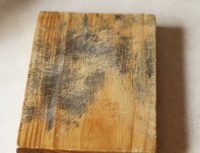
✵Many elderly people practice thrift—a cutting board may be used for several years, even decades. Some continue using visibly moldy cutting boards without concern, simply washing them and scalding them with boiling water before reuse. In fact, this is extremely dangerous. Aspergillus flavus, a potent carcinogen, can cause liver cancer. Even sterilization at 100 °C for 20 hours may fail to eliminate it completely.
It severely damages the liver. Long-term intake of low doses of aflatoxin leads to chronic poisoning, resulting in progressive liver damage, cirrhosis, and ultimately liver cancer.
Eventually, a family of three followed their doctor’s advice and underwent chemoradiotherapy—yet survival remained uncertain.
Afterward, these items should be discarded regularly:
1. Spoiled Food
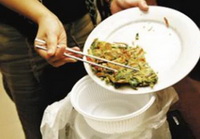
Thrift is a virtue—but not when it comes to moldy food. There is no place for “reluctance to discard” with items such as rotten ginger, half-rotten apples, or nuts stored beyond their shelf life. These are highly susceptible to aflatoxin contamination. Aflatoxin is implicated in approximately 80% of liver cancer cases worldwide. Therefore, avoid such foods consistently to reduce the risk of liver damage.
2. Used Wooden Chopsticks
Aflatoxin does not grow directly on chopsticks—but starchy foods like peanuts and corn are commonly eaten with them. Food residues lodge in the chopstick crevices, become damp, and mold, thereby producing aflatoxin.
Moreover, prolonged use of wooden chopsticks—especially when washed and stored in humid environments—increases mold risk.
In addition to spoiled food, old kitchen supplies also pose hazards: cutting boards older than one year, chopsticks older than six months, and dishcloths older than three months should be discarded promptly. These utensils contain microscopic pores that easily retain moisture and food debris; inadequate cleaning fosters bacterial growth and aflatoxin production. Aflatoxin is highly heat-stable and resistant to conventional cooking temperatures. Even sterilization at 100 °C for 20 hours may not fully destroy it. Thus, timely replacement is safer than attempted disinfection.
Therefore, replace wooden chopsticks every three months.
How to Clean Your Dishcloth?
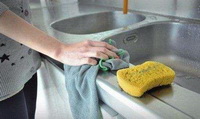
The dishcloth is in daily, direct contact with dishes and chopsticks—and harbors up to 100 billion bacteria, making it as contaminated as a toilet seat. Clearly, failure to clean it regularly means using it daily to wash dishes poses serious health risks. Here are two effective sterilization methods:
Method: Heat water in a wok until boiling. Place the dishcloth in the boiling water and add a small amount of sodium carbonate (washing soda) or baking soda. Cover and boil for 10 minutes.
Sodium carbonate both sterilizes and removes grease; combined with high-temperature boiling for 10 minutes, it kills most bacteria on the dishcloth. After treatment, visible dirt will have leached into the water, turning it dark and murky. Remove the dishcloth, rinse thoroughly under clean running water, and hang it in direct sunlight or a well-ventilated area to dry.
3. Low-Quality Oil from Unregulated Workshops
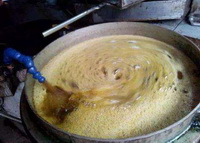
Peanut oil—without strict regulatory oversight—often contains high levels of aflatoxin, a Group 1 carcinogen classified by the World Health Organization. Chronic consumption of aflatoxin-contaminated oil causes hepatic toxicity and significantly increases the risk of liver cancer.
Epidemiological studies confirm that geographic liver cancer incidence correlates strongly with regional aflatoxin contamination levels in grains, oils, and staple foods. Areas with severe aflatoxin pollution consistently report higher liver cancer incidence and mortality rates.
4. Bitter or Rancid Nuts
Nuts undergoing spoilage or rancidity can produce aflatoxin. If you taste bitterness or staleness in nuts, spit them out immediately—this is not trivial. As little as 1 mg of aflatoxin is carcinogenic.
Improper grain storage—especially under warm, humid conditions—promotes moisture absorption and mold growth, facilitating aflatoxin production. Such foods must be discarded without hesitation. Prioritizing liver health means proactive avoidance—not just reaction.
Signals of Liver Cancer:
In clinical practice, early-stage liver cancer is highly insidious; symptoms are typically absent or nonspecific until the disease reaches an advanced stage. However, it is not entirely without warning signs—careful observation may reveal subtle clues. The liver’s dysfunction often manifests first on the face; if any of the following three facial changes occur, they may indicate underlying liver pathology—including, but not limited to, liver cancer—and warrant prompt medical evaluation.
Signal 1: Unusual Facial Darkening
Patients with liver disease often develop facial hyperpigmentation in the early stages. The complexion appears dull and lackluster, and periorbital darkening (dark circles) becomes pronounced—distinct from sun-induced tanning.
This occurs because hepatic damage or impaired liver function reduces the organ’s capacity to metabolize melanin. As a result, excess pigment deposits in the facial skin, leading to generalized darkening and periorbital hyperpigmentation.
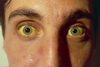
Signal 2: Jaundice
Jaundice in liver cancer reflects clinical hyperbilirubinemia—elevated serum bilirubin levels causing yellow discoloration of the skin, sclera, and mucous membranes.
As liver disease progresses, impaired biliary excretion disrupts bilirubin metabolism. Conjugated bilirubin fails to be adequately excreted into bile and instead accumulates in the bloodstream. This systemic buildup results in cutaneous and scleral icterus—most visibly apparent as yellowing of the eyes and face.
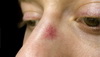
Signal 3: Spider Angioma
Studies show that approximately 85% of individuals presenting with spider angiomas (also known as spider nevi) exhibit varying degrees of hepatic parenchymal injury; among these, about 30% have cirrhosis.
In essence, spider angiomas serve as cutaneous red flags for chronic liver dysfunction. Reduced hepatic inactivation of estrogen leads to its systemic accumulation, triggering localized arteriolar dilation and capillary proliferation—producing the characteristic spider-like vascular pattern. These lesions commonly appear on the face, chest, upper arms, and thighs, and constitute a well-recognized clinical sign of liver disease.

 The Harmful Substances in the Kitchen: This carcinogen was present in the kitchen and remained hidden for ten years! It was a cutting board that had not been replaced in ten years.
 1. Spoiled Food
 2. Used Wooden Chopsticks
 3. Low-Quality Oil from Unregulated Workshops
 Signal 1: Unusual Facial Darkening
 Signal 2: Jaundice
 Signal 3: Spider Angioma
