✵This article documents the herb Java Brucea Fruit, including its English name, Latin name, Pinyin name, properties and flavor, botanical source—namely one plant species: (1) Brucea javanica (L.) Merr.—and provides a detailed description of its botanical features, growth characteristics, ecological environment, herbal characteristics, pharmacological actions, medicinal efficacy, and administration guidelines.
Fructus Bruceae (Java Brucea Fruit)
Pinyin Name: Yā Dǎn Zi
English Name: Java Brucea Fruit
Latin Name:Fructus Bruceae Property and Flavor: bitter, cold, mildly toxic
Brief Introduction:Fructus Bruceae is the dried, ripe fruit of Brucea javanica (L.) Merr., used internally to treat amoebic dysentery and malaria, and externally for warts, clavus, and Trichomonas vaginitis. It is commonly known as Fructus Bruceae, Java Brucea Fruit, or Yā Dǎn Zi.
Botanical Source: Herbal classical works and official pharmacopoeias define Fructus Bruceae (Java Brucea Fruit) as the dried, ripe fruit of (1) Brucea javanica (L.) Merr. It is a species of the genus Brucea J. F. Mill. in the Simaroubaceae family (DC.), order Sapindales. A detailed introduction to this commonly used species follows.
(1) Brucea javanica (L.)Merr.
&nBotanical Description:Brucea javanica (L.) Merr. is also known as Rhus javanica L., and is commonly known as Yā Dǎn Zi. The herb is referred to as Java Brucea Fruit or Fruit of Java Brucea. It is an evergreen shrub or small tree, growing up to 1.5–3 m tall (occasionally up to 8 m), with the entire plant covered in yellowish pubescence. Branchlets bear yellowish-white lenticels. Leaves are imparipinnate and alternate, 20–40 cm long; leaflets number 5–11 (usually 7), opposite, ovate-lanceolate, 4–11 cm long and 2–4.5 cm wide; apex is acuminate; base is broadly cuneate and oblique; margin with triangular, coarse teeth; upper surface is sparsely pubescent; lower surface is densely covered with appressed pilose hairs—especially along the veins.
Cymose panicles are axillary, elongated and narrow, up to 50 cm long. Male inflorescences exceed leaf length; each flower has 4 sepals—ovate (egg-shaped), less than 1 mm long—with pale yellow (primrose-yellow), appressed, hirsute indumentum abaxially; margins are sparsely glandular; 4 petals—oblong-lanceolate—with hirsute abaxial surfaces and glandular margins; 4 stamens; floral disc is well-developed, semiglobose. Female inflorescences are shorter than leaves; sepals and petals resemble those of male flowers but are slightly larger; stamens bear sterile anthers; floral disc is cyathiform (cotyloid), 4-lobed; gynoecium typically comprises 4 carpels—ovoid, glabrous—with reflexed styles appressed to the ovary.
Drupes are elliptic, initially purplish-red (prunus-colored) and turning black upon maturity, ~8 mm long and 5–6 mm wide; when dry, surface exhibits raised reticulate wrinkles and slight obliquity. Flowering occurs from April to June; fruiting from August to October.
Ecological Environment: The plant grows in open forests on limestone mountains at altitudes of 950–1,000 m above sea level.
Growth Characteristics:Brucea javanica prefers warm, humid climates and is not cold-tolerant, though moderately drought-tolerant. Cultivation requires sunny, well-drained, fertile, humus-rich sandy soil. Young trees may be intercropped with vegetables, soybeans, peanuts, sweet potatoes, or areca palms—serving as shade trees for young areca.
Characteristics of the Herb: Drupes are ovoid (egg-shaped) or elliptic, slightly flattened, 0.6–1 cm long and 4–7 mm in diameter. Surface is black, with raised reticulate wrinkles; apex bears a beak-shaped, mucronate style remnant; prominent ridge lines run along ventral and dorsal sides; base is blunt, bearing a cup-shaped fruit-stalk scar; pulp peels off readily. Endocarp is hard; inner surface of broken kernel is taupe-brown (grayish brown) and smooth. Each fruit contains one seed. Seed is ovoid, 4–7 mm long and 3–5 mm in diameter; surface is cream-white (milky white) or yellowish-white, bearing a slightly raised reticulate pattern; apex terminates in a short, beaked tip; hilum is oblong and located just below; chalaza is brown, rounded, and situated near the base; a slightly raised seed ridge extends between hilum and chalaza; spermoderm (seed coat) is thin; endosperm and embryo are oily. The herb possesses a distinctive odor and an intensely bitter taste.
Medicinal Efficacy: Clears heat and detoxifies; expels parasites; arrests malaria; alleviates dysentery; erodes warts. Indicated for bacillary dysentery, toxic-heat dysentery with bloody stools, malaria, cold-damp dysentery, chronic dysentery, hemorrhoids, carbuncles and swellings, genital pruritus, leukorrhea; externally used for warts, clavus (corns), and Trichomonas vaginitis.
Administration of Fructus Bruceae (Yā Dǎn Zi):
Reference:
Administration Guide of Fructus Bruceae (Yā Dǎn Zi)
TCM Books:
(1) Internally: 0.5–2 grams per dose, administered encapsulated or wrapped in longan aril; Externally: proper amount; (2) Internally: 5–20 granules per dose, taken after meals, three times daily—encapsulated or wrapped in longan aril; Externally: mashed and apply topically; (3) Internally: Shell removed; kernel swallowed whole, wrapped in longan aril or capsule—10–15 granules for malaria, 10–30 for dysentery; Externally: appropriate amount, as mashed paste, ointment, or aqueous decoction wash.
Contraindications, Precautions, and Adverse Reactions: Fructus Bruceae should be used with caution in pregnant women and infants.

 ✵This article documents the herb Java Brucea Fruit, including its English name, Latin name, Pinyin name, properties and flavor, botanical source—namely one plant species: (1) Brucea javanica (L.) Merr.—and provides a detailed description of its botanical features, growth characteristics, ecological environment, herbal characteristics, pharmacological actions, medicinal efficacy, and administration guidelines.
 Pinyin Name: Yā Dǎn Zi
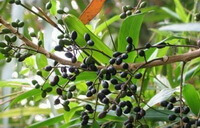 Botanical Description: Brucea javanica (L.) Merr. is also known as Rhus javanica L., and is commonly known as Yā Dǎn Zi. The herb is referred to as Java Brucea Fruit or Fruit of Java Brucea. It is an evergreen shrub or small tree, growing up to 1.5–3 m tall (occasionally up to 8 m), with the entire plant covered in yellowish pubescence. Branchlets bear yellowish-white lenticels. Leaves are imparipinnate and alternate, 20–40 cm long; leaflets number 5–11 (usually 7), opposite, ovate-lanceolate, 4–11 cm long and 2–4.5 cm wide; apex is acuminate; base is broadly cuneate and oblique; margin with triangular, coarse teeth; upper surface is sparsely pubescent; lower surface is densely covered with appressed pilose hairs—especially along the veins.
 Cymose panicles are axillary, elongated and narrow, up to 50 cm long. Male inflorescences exceed leaf length; each flower has 4 sepals—ovate (egg-shaped), less than 1 mm long—with pale yellow (primrose-yellow), appressed, hirsute indumentum abaxially; margins are sparsely glandular; 4 petals—oblong-lanceolate—with hirsute abaxial surfaces and glandular margins; 4 stamens; floral disc is well-developed, semiglobose. Female inflorescences are shorter than leaves; sepals and petals resemble those of male flowers but are slightly larger; stamens bear sterile anthers; floral disc is cyathiform (cotyloid), 4-lobed; gynoecium typically comprises 4 carpels—ovoid, glabrous—with reflexed styles appressed to the ovary.
 Ecological Environment: The plant grows in open forests on limestone mountains at altitudes of 950–1,000 m above sea level.
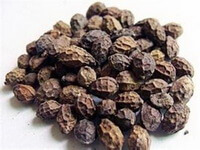 Characteristics of the Herb: Drupes are ovoid (egg-shaped) or elliptic, slightly flattened, 0.6–1 cm long and 4–7 mm in diameter. Surface is black, with raised reticulate wrinkles; apex bears a beak-shaped, mucronate style remnant; prominent ridge lines run along ventral and dorsal sides; base is blunt, bearing a cup-shaped fruit-stalk scar; pulp peels off readily. Endocarp is hard; inner surface of broken kernel is taupe-brown (grayish brown) and smooth. Each fruit contains one seed. Seed is ovoid, 4–7 mm long and 3–5 mm in diameter; surface is cream-white (milky white) or yellowish-white, bearing a slightly raised reticulate pattern; apex terminates in a short, beaked tip; hilum is oblong and located just below; chalaza is brown, rounded, and situated near the base; a slightly raised seed ridge extends between hilum and chalaza; spermoderm (seed coat) is thin; endosperm and embryo are oily. The herb possesses a distinctive odor and an intensely bitter taste.
 URL QR code: