
Huang Yanrong: Biographical introduction and historical accounts, major works and academic contributions
-
 ✵Huang Yanrong: A renowned herbalist and gynecologist of the Ming Dynasty. His family had practiced medicine for generations, with multiple ancestors specializing in gynecology. He is the author of the extant handwritten manuscript Huang Shi Nǚ Ke (The Synopsis of Huang’s Gynecology), preserved to this day.
- Huang Yanrong
-
Brief Introduction Chinese Name: 黃彥榮 (Huáng Yànróng) Alias: Unknown Style Name: 东坞 (Dōng Wù) English Name: Huang Yanrong (family name first) or Yanrong Huang (given name first) Hometown: Shexian County, Anhui Dates: Unknown; active approximately during the 15th–16th centuries Major Works: Huang Shi Nǚ Ke (The Synopsis of Huang’s Gynecology). Representative Work: Huang Shi Nǚ Ke (The Synopsis of Huang’s Gynecology). Biographical Introduction and Historical Accounts
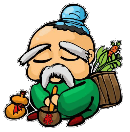 Huang Yanrong, styled Dōng Wù, was born in Huangjiawu, Shexian County, and lived during the Ming Dynasty. His exact birth and death years remain unknown, though he was active approximately during the 15th–16th centuries. His ancestor, Huang Chang (Huáng Chāng), styled De Zhai (Dé Zhāi), was recorded in local medical annals. Huang Yanrong himself was a distinguished herbalist who compiled Yi Xue Qi Meng (Medical Enlightenment) and Tai Chan Jie Yao (Essentials of Obstetrics). His son, Huang Xi (Huáng Xǐ), styled Bao Zhen (Bào Zhēn), inherited the medical profession and was noted for his integrity—having raised his orphaned nephew. His grandson, Huang Gang (Huáng Gāng), styled Ju Tan (Jú Tán), was also a practicing herbalist. This multigenerational lineage confirms that Huang Yanrong was indeed a native of Shexian County in the Ming Dynasty, and that several generations of his family were herbalists specializing in gynecology. According to textual evidence, Huang Shi Nǚ Ke (The Synopsis of Huang’s Gynecology) is a medical text originating from the Huang family of Xin’an. It was transmitted through successive generations of Huang family herbalists—Xiao You (Xiào Yǒu), Yuan Yi (Yuán Yī), and Dong Wu (Dōng Wù)—and ultimately compiled into its extant form by Huang Yanrong. The surviving handwritten manuscript was completed in the seventeenth year of the Hongzhi reign (1504 CE).
Major Works and Academic Contributions
When Huang Shi Nǚ Ke (the Synopsis of Huang's Gynecology) reached Huang Yanrong, it had "been transmitted for over a century." Due to its age and damage from bookworms, parts of the text had become illegible or lost. Huang Yanrong therefore restored missing passages, corrected errors, and reorganized the content thematically—producing a revised and systematized edition. Although the text incorporates selected material from earlier works such as Fu Ren Liang Fang Da Quan (Complete Book of Effective Prescriptions for Women) and Wan Bing Hui Chun (Curative Measures for All Diseases), and other works, its core reflects Huang Yanrong’s own clinical experience. The book is structured into four main sections:
(1) General Theory of Gynecological Disorders: outlines fundamental distinctions between male and female physiology and pathology, classifies gynecological conditions, and explains their relationships with the five Zang-viscera;
(2) Principles of Syndrome Differentiation and Treatment: discusses two key therapeutic differences between men and women, illustrated with clinical examples involving menstruation, abnormal leukorrhea (morbid leukorrhea), pregnancy, and childbirth;
(3) Prenatal Development: discusses syndromes before pregnancy and fetus metathesis, describes fetal morphology and physiological development month by month—from the first to the tenth month in utero;
(4) Specific Disorders in Pregnancy: details diagnosis, treatment, regulation, and prognosis for 41 pregnancy-related conditions.
An appendix covers pulse diagnosis and methods to prevent miscarriage. The text records 350 prescriptions, 185 of which include precise dosage instructions. Its descriptions of gynecological disorders are concise and clinically incisive (to the point). For most prescriptions, preparation methods (decoction instructions), dietary precautions during medication, and even specifications for decoction utensils are provided. Several prescriptions remain in clinical use today, underscoring the text’s enduring practical and scholarly value.
References:
-
- 1.Huang Yanrong: Biographical introduction and historical accounts, major works and academic contributions
