
Cheng Yingmao: Biographical Introduction and Historical Accounts, Major Works and Academic Contributions
-
 ✵Cheng Yingmao: a herbalist during the early Qing dynasty. Little is known about his life, but he is believed to have lived during the middle to late 17th century. He is one of the most important commentators on the Shang Han Lun (Treatise on Cold-Induced Diseases) and the author of Shang Han Lun Hou Tiao Bian (Post-Entries Identification of the Shang Han Lun).
- Cheng Yingmao
-
Brief Introduction Chinese Name: 程應旄 (Chéng Yīngmáo) Alias: Unknown Style Name: 郊倩 (Jiāo Qiàn) English Name: Cheng Yingmao (family name first) or Yingmao Cheng (given name first) Hometown: Xin’an Dates: Unknown; active during the mid-to-late 17th century Major Works: Shang Han Lun Hou Tiao Bian (Post-Entries Identification of the Shang Han Lun), Shang Han Lun Zhui Yu (Supplementary Remarks on the Shang Han Lun), Yi Jing Ju Ce (Medical Path: Sentence-by-Sentence Analysis). Representative Works: Shang Han Lun Hou Tiao Bian, Shang Han Lun Zhui Yu, Yi Jing Ju Ce. Biographical Introduction and Historical Accounts
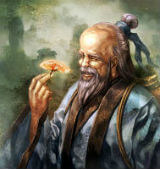 Cheng Yingmao, whose alias was Jiao Qian, was a physician from Xin’an, Anhui, during the early Qing dynasty. His dates of birth and death are unknown. He was active during the mid-to-late 17th century. He is one of the most important commentators on the Shang Han Lun (Treatise on Cold-Induced Diseases).
Major Works and Academic Contributions
Cheng Yingmao highly regarded Zhang Zhongjing’s theories and studied the Shang Han Lun (Treatise on Cold-Induced Diseases) in great depth. He proposed interpreting the text through the “four diagnostic categories” : "exterior and interior, Zang and Fu-viscera." Building upon the editorial foundations laid by Yu Chang and Fang Youzhi—particularly their reconstructions of the Shang Han Lun entries—he systematically reorganized, annotated, and expanded their work, culminating in his major treatise Shang Han Lun Hou Tiao Bian. This work is also known as Shang Han Lun Hou Tiao Bian Zhi Jie (Direct Explanation of the Post-Entries Identification of the Shang Han Lun). It comprises fifteen volumes and was completed in 1670 CE. The original text of the Shang Han Lun, Fang Youzhi’s Shang Han Lun Tiao Bian (Entries Identification of the Shang Han Lun), and Yu Chang’s Shang Lun Pian (Essays on the Shang Han Lun) are appended for comparative reference. In 1672, he published Shang Han Lun Zhui Yu, a one-volume supplement addressing topics left unresolved in the earlier work. He also authored Yi Jing Ju Ce (Medical Path: Sentence-by-Sentence Analysis), a diagnostic manual grounded in classical pulse theory and clinical reasoning. His disciple, Yu Yu (玉钰, Yù Yù) inherited and continued his medical teachings.
Shang Han Lun Hou Tiao Bian (Post-Entries Identification of the Shang Han Lun) is a systematic commentary on the Shang Han Lun. Its alternate title is Shang Han Lun Hou Tiao Bian Zhi Jie (Direct Explanation of the Post-Entries Identification of the Shang Han Lun). Comprising fifteen volumes, it was compiled by Cheng Yingmao and completed in 1670 CE. Contrary to the erroneous claim in the original text, the book is not divided into “ritual, music, shooting, imperial, books, and counting”—this is a factual and conceptual error conflating Confucian "liu yi" (Six Arts) with the actual structure of the work, which follows the six-channel ("liu jing") framework of the Shang Han Lun: Taiyang, Yangming, Shaoyang, Taiyin, Shaoyin, and Jueyin. In his preface, Cheng stated: "Differentiate the essence and list the entries in logical sequence." He appended Zhang Zhongjing’s original text, Fang Youzhi’s Shang Han Lun Tiao Bian, and Yu Chang’s Shang Lun Pian to facilitate cross-referencing. His annotations synthesize and critically engage prior commentaries, especially those of Yu Chang and Fang Youzhi. Academically, Cheng praised the contributions of Fang Youzhi and Yu Chang but critiqued Wang Shuhe’s redaction and arrangement of the Shang Han Lun. However, the contents of the Shang Han Lun (Treatise on Cold-Induced Diseases) by Wang Shuhe were basically preserved, with only five discussions added to the beginning. Cheng maintained that the Shang Han Lun establishes universal diagnostic principles applicable to hundreds of diseases—not merely cold-induced disorders.
Yi Jing Ju Ce (Medical Path: Sentence-by-Sentence Analysis) is a Qing-dynasty treatise on diagnosis and treatment by Cheng Yingmao, completed in the ninth year of the Kangxi reign (1670 CE). It elaborates pulse diagnostics and therapeutic prescriptions based on the Song Ya Yi Jing (Pine Cliff Medical Path).
References:
-
- 1. Cheng Yingmao: Biographical Introduction and Historical Accounts, Major Works and Academic Contributions
