✵Ancient Shanghan Herbalists introduces traditional Chinese medicine physicians and herbalists who specialized in—or made outstanding contributions to—the study and application of Shang Han Lun (The Treatise on Cold-Induced Diseases) and Jin Kui Yao Lüe (The Synopsis of the Golden Chamber). They are also known as the School of Cold-induced Febrile Diseases due to their contributions to the theory and clinical practice of exogenous febrile diseases.
This section introduces [55] outstanding traditional Chinese medicine physicians and herbalists, including their biographies, legends or historical records, major works, and academic thoughts. Among them, [3] have already been introduced in the “Prominent Ancient Herbalists” section. The list of physicians and herbalists is arranged in chronological order based on the dynasty to which they belonged, the period in which they lived, and the date of compilation or publication of their major works—or the date of the earliest extant version thereof. There are a total of [67] monographs on Shang Han Lun (The Treatise on Cold-Induced Diseases), [12] monographs on Jin Kui Yao Lüe (The Synopsis of the Golden Chamber), [3] monographs on warm diseases, [1] monograph on prescription formulas, [1] monograph on pulse diagnosis, [1] monograph on acupuncture and moxibustion, [4] monographs on herbal classics, and [25] other traditional Chinese medicine books. In total, [114] traditional Chinese medicine works are introduced, along with [2] additional non-TCM books.
Han Zhihe: a famous physician of the Northern Song dynasty. He studied the Shang Han theory (the theory of exogenous febrile disease) in great depth and conducted meticulous research. His clinical applications were flexible, adaptive to changing conditions, and grounded in innovation—carrying forward Zhang Zhongjing’s theoretical framework while introducing his own original contributions. He is the author of Shang Han Wei Zhi Lun (the Subtle Treatises on Exogenous Febrile Disease).
Pang Anshi
Pang Anshi: a physician renowned for several of his medical works. The most widely read of these was a detailed and comprehensive treatise on various kinds of febrile diseases, titled Shang Han Zong Bing Lun (The General Treatise on Cold-Induced Diseases).
Zhu Gong
Zhu Gong: A famous physician who studied the Shang Han Lun (Treatise on Cold-Induced Diseases) for decades and was a leading expert in Shang Han studies during the Song Dynasty. He made substantial contributions to promoting the practical application of Zhang Zhongjing’s theories and authored the Nan Yang Huo Ren Shu (Nanyang Book for Life-Saving).
Xu Shuwei
Xu Shuwei: A prominent physician of the Song Dynasty. Based on Zhang Zhongjing's work, he created graphic illustrations of 36 types of pulses and developed the theory of prescribing herbs according to the severity of the disease. He was the author of Shang Han Bai Zheng Ge, Shang Han Fa Wei Lun, and Shang Han Jiu Shi Lun.
Cheng Wuji
Cheng Wuji: a famous herbalist who lived during the late Northern Song Dynasty and early Jin Dynasty. He spent 40 years studying the Shang Han Lun (Treatise on Cold-Induced Diseases); he was the first herbalist to comprehensively annotate the Shang Han Lun and one of the main representatives of the Shang Han School—the school of theory on exogenous febrile disease.
Guo Yong
Guo Yong: a physician and scholar of the Yi Jing (I Ching). He held Zhang Zhongjing’s work in high esteem and studied it intensively. Drawing upon discussions from other classical medical texts and theories advanced by earlier physicians, he compiled and supplemented the Shang Han Lun, authoring the Shang Han Bu Wang Lun (The Recovery Supplement to the Treatise on Cold-Induced Diseases).
Wang Haogu
Wang Haogu: A distinguished, sagacious physician lived in the thirteenth and early fourteenth centuries. He was a prominent herbalist of the Yishui school during the Jin Yuan period, he mastered the ancient work Nei Jing (the Inner Canon) and had an in-depth study of Zhongjing's theory. He learned from the herbalists Zhang Yuansu and Li Dongyuan and developed their theory. His chief contribution was explaining yin syndromes and using warming tonics in the later stages of cold-induced diseases. He authored Yin Zheng Lue Li (Sketchy Cases of Yin Syndromes) and Yi Lei Yuan Rong (Fighting Diseases in the Medical Field).
Zhang Bi
Zhang Bi: a physician of the Jin Dynasty and the son of the renowned physician Zhang Yuansu. He was celebrated for his expertise in pulse diagnosis and his scholarly contributions to the theory of the Shang Han Lun (The Treatise on Cold-Induced Diseases). He is also the author of the Shang Han Bao Ming Ji (A Life-Saving Compendium on Cold-Induced Diseases).
Hua Shou
Hua Shou: a great physician of the Yuan Dynasty. His contributions mainly include interpretations of the Nei Jing (The Inner Canon) and the Nan Jing (The Difficult Classic), pulse manifestations, and annotations and supplements on acupuncture and meridian theory. He authored works on the study of the Shanghan, titled Shang Han Li Chao; however, this book has not survived to the present day.
Zhao Yide
Zhao Yide was a Yuan dynasty scholar known for his commentary on the Jin Kui Yao Lüè (Synopsis of the Golden Chamber). He likely lived in the mid-to-late Yuan dynasty, after the mid-14th century. Zhao Yide initially studied Confucianism before turning to medicine; he studied medicine under Zhu Danxi for ten years, mastering all that Danxi had to teach. He is the author of Jin Kui Fang Lun Yan Yi (Extended Commentary on the Jin Kui Fang Lun).
Huang Zhongli
Huang Zhongli: A herbalist of the Ming dynasty, he studied the Shang Han Lun (Treatise on Cold-Induced Diseases) from childhood. He lived from the late 14th to the early 15th century and is the author of the 10-volume book Shang Han Lei Zheng (Classified Syndromes of Shang Han), which compiles his studies on the Shang Han Lun.
Xu Hong
Xǔ Hóng: He studied Confucianism in his youth and was not widely recognized for his medical knowledge. However, he gained renown for his effectiveness in treating unusual diseases and syndromes. Throughout his life, Xu Hong devoted considerable attention to collecting and researching prescriptions. He is the author of Jin Jing Nei Tai Fang Yi (Golden Mirror of the Inner Platform Prescriptions), which compiles his studies on the prescriptions of the Shang Han Lun (Treatise on Cold-Induced Diseases).
Tao Hua
Tao Hua: A herbalist during the Ming Dynasty who specialized in the study of Shang Han Lun (The Treatise on Cold-induced Diseases). Patients usually recovered after taking only one dose of his prescription. He is the author of Shanghan Liu Shu (The Six Books of Shanghan), a book on the study of Shang Han Lun.
Wu Shou
Wu Shou: A herbalist who lived from the late Yuan dynasty to the early Ming dynasty. He was skilled in treating Shang Han (exogenous febrile diseases) and possessed proficient medical expertise. Recruited to the capital as a renowned herbalist, he was appointed Yuan Pan of the Imperial Academy of Medicine. He is also the author of the book Shang Han Yun Yao Quan Shu (Essential Collection of the Complete Book of Shang Han).
Wan Quan
Wan Quan: A renowned physician of the Ming dynasty. He was born into a family of physicians, and both his grandfather and father specialized in pediatrics. He is especially celebrated for his contributions to pediatric medicine. He inherited his grandfather’s and father’s medical ethics and treated countless patients over his 50-year clinical career. He is also the author of Shang Han Zhai Jin (Excerpts from the Treatise on Cold-induced Diseases), a scholarly commentary on Zhang Zhongjing’s Shang Han Lun (Treatise on Cold-Induced Diseases).
Miao Cunji
Miao Cunji: A herbalist who lived during the Jiajing and Wanli periods of the Ming Dynasty. He studied Confucianism as a child and later studied medicine with his uncles. He is the author of the book Shang Han Cuo Yao (Brief Points on Shang Han), in which he references Tao Hua’s works Shang Han Quan Sheng Ji and Shang Han Liu Shu.
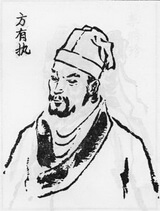
Fang Youzhi
Fang Youzhi: A Shanghan scholar and renowned physician of the Ming Dynasty. He is best known for his meticulous study and reorganization of the Shang Han Lun (Treatise on Cold-induced Diseases), and he rearranged the entries in the book, and for founding the "missing-slip theory" (or "misplaced-slips theory") school of Shang Han Lun interpretation. His principal theoretical contributions include the "reconstruction of lost passages" and the "theory of wind and cold pathogens affecting Ying and Wei."
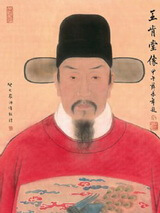
Wang Kentang
Wang Kentang passed the imperial examination and attained the rank of Jinshi. He is the author of the book Shang Han Zhun Sheng (Standards of the Treatise on Cold-Induced Diseases) and compiled his studies on the Shang Han Lun (The Treatise on Cold-induced Diseases).
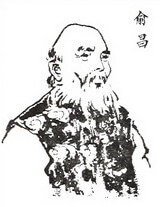
Yu Chang
Yu Chang was a renowned physician of the late Ming and early Qing dynasties and is regarded as one of the "Three Great Physicians" of the early Qing dynasty. He conducted in-depth studies of the Shang Han Lun (Treatise on Cold-Induced Diseases), and authored the influential commentary Shang Lun Pian (Critical Study).
Zhang Suicheng
Zhang Suicheng: Born in the 17th year of the Wanli reign of the Ming dynasty (1589 CE) and died in the 7th year of the Kangxi reign of the Qing dynasty (1668 CE). He was skilled in composing classical poetry and authored the Zhang Qing Zi Shang Han Lun (Shang Han Lun by Zhang Qing Zi).
Zhang Zhicong
Zhang Zhicong: A renowned physician of the late Ming and early Qing dynasties, proficient in medicine, acupuncture, and moxibustion. He studied and conducted in-depth research on classical medical texts, including the Nei Jing (The Inner Canon) and the Shang Han Lun (Treatise on Cold-Induced Diseases), and made in-depth studies of them.
Zhang Lu
Zhang Lu: A renowned herbalist during the Ming and Qing dynasties, Zhang Lu dedicated his life to academia and medicine, particularly the study of the Shang Han Lun (The Treatise on Cold-Induced Diseases). Owing to his profound academic influence, he was later hailed as one of the three great physicians of the early Qing dynasty.
Shi Yijia
Shi Yijia: A herbalist from the late Ming and early Qing dynasties who advocated Zhongjing’s studies. He devoted more than 30 years to studying Zhongjing’s Shang Han Lun (Treatise on Cold-Induced Diseases) and authored Shang Han Zheng Zong (The Authentic Theory of the the Treatise on Cold-Induced Diseases).
Chen Yaodao
Chen Yaodao: a Qing dynasty herbalist who lived during the mid- to late 17th century. His prescriptions were highly effective, and people from far and near flocked to his residence for treatment; he administered medicines to help the poor. He authored the book Shang Han Bian Zheng (The Syndrome Differentiation of Cold-Induced Diseases).
Cheng Zhi
Cheng Zhi: A renowned herbalist of the Qing dynasty. His dates of birth and death are unknown. He is the author of Yi Jing Li Jie (Explanations of the Medical Classics). Cheng’s principal academic contribution was his theory about the Life Gate ("Mingmen").
Xu Bin
Xu Bin: A Qing dynasty herbalist who lived from the mid- to late 17th century. He is the author of Shang Han Fang Lun (Treatise on the Prescriptions of the Treatise on Cold-Induced Diseases), Jin Kui Yao Lüe Lun Zhu (A brief commentary on the Synopsis of the Golden Chamber), both of which expound and praise Zhang Zhongjing’s theories.
Ke Qin
Ke Qin: A Qing dynasty scholar of Shang Han Lun (The Treatise on Cold-Induced Diseases). His method of “naming syndromes after prescriptions and classifying syndromes according to prescriptions” is clinically pragmatic and has exerted considerable influence on subsequent scholarship. He is the author of Shang Han Lai Su Ji (The Renewal of the Treatise on Cold-Induced Diseases).
Cheng Yingmao
Cheng Yingmao: a herbalist during the early Qing dynasty. Little is known about his life, but he is believed to have lived during the middle to late 17th century. He is one of the most important commentators on the Shang Han Lun (Treatise on Cold-Induced Diseases) and the author of Shang Han Lun Hou Tiao Bian (Post-Entries Identification of the Shang Han Lun).
Lin Lan
Lin Lan: A herbalist of the Qing dynasty; his life in detail is largely unknown. According to evidence from his work, he lived from the mid- to late 17th century. He is the author of Shang Han Zhe Zhong (The Synthesis of the Treatise on Cold-Induced Diseases).
Zhou Yangjun
Zhou Yangjun: A physician of the Qing dynasty who studied Zhang Zhongjing’s works for over ten years. In the 10th year of the Kangxi reign (1671 CE), he traveled to the capital and gained recognition as a medical scholar. He is the author of Shang Han Lun San Zhu (Three Commentaries on the Treatise on Cold-Induced Diseases).
Wang Hu
Wang Hu: A physician of the Qing dynasty who lived primarily from the mid- to late 17th century. He thoroughly studied multiple commentaries on the Shang Han Lun (Treatise on Cold-induced Diseases) by earlier scholars. His deep engagement with the text yielded original insights, systematic elaborations, and innovative theoretical contributions. He is the author of Shang Han Lun Bian Zheng Guang Zhu (Extensive Annotations on the Differentiation of Syndromes in the Treatise on Cold-Induced Diseases) and Zhong Han Lun Bian Zheng Guang Zhu (Extensive Annotations on the Differentiation of Syndromes in the Treatise on Cold Direct Attack).
Shen Mingzong
Shen Mingzong: a herbalist who lived during the Shunzhi and Kangxi periods (mid- to late 17th century). He studied Zhang Zhongjing’s theory in great detail and praised Fang Youzhi and Yu Jiayan in his commentary on the Shang Han Lun (The Treatise on Cold-Induced Diseases). He was the author of Shang Han Liu Jing Bian Zheng Zhi Fa (The Six Channels Syndrome Differentiation and Treatment of the Treatise on Cold-induced Diseases).
Tao Dan' an
Tao Dan' an: A herbalist during the Kangxi reign of the Qing dynasty. The years of his birth and death are unknown, but he lived during the 17th century and died at the age of 89. He is the author of Shang Han Yuan Liu (The Complete Works on the Origins and Transmission of the Treatise on Cold-Induced Diseases).
Qian Huang
Qian Huang: A Qing dynasty herbalist who held that Zhang Zhongjing’s prescriptions were authoritative and unsurpassed. However, he contended that Wang Shuhe’s arrangement of the text and Cheng Wuji’s annotations reflected personal interpretations that obscured Zhang Zhongjing’s original intent. He is the author of Shang Han Su Yuan Ji (Origin Tracing of the Treatise on Cold-Induced Diseases).
Zheng Chongguang
Zheng Chongguang: A a Qing dynasty herbalist who studied medical texts—including the ancient Nei Jing (the Internal Classics)—and developed a thorough understanding of medical principles and therapeutics, achieving remarkable clinical efficacy. He was especially innovative in treating Shanghan (cold-induced disease) and warm diseases. His major works include Shang Han Lun Tiao Bian Xu Zhu (Continued Supplement to the Discriminations of the Entries in the Treatise on Cold-induced Diseases), and Shang Han Lun Zheng Bian (Syndrome Differentiation in the Treatise on Cold-induced Diseases).
Zhang Xiju
Zhang Xiju inherited his father’s commitment to medical scholarship. He devoted himself day and night to studying the Shang Han Lun (Treatise on Cold-Induced Diseases) and gradually achieved profound mastery. In severe or complex cases, symptoms would rapidly subside upon administration of his prescriptions—efficacy that surpassed that of many contemporary herbalists. He is the author of Shang Han Lun Zhi Jie (Direct Annotations on the Treatise on Cold-Induced Diseases) and Wei Qi Lun (Treatise on Stomach Qi).
Wei Litong
Wei Litong: A Qing dynasty physician and scholar. In his early years, he studied Confucianism and made significant progress; In middle age, he suffered from functional impairment and flaccid paralysis, prompting him to devote himself to the study of medicine and become a learned physician-scholar. He authored two major medical works: Shang Han Lun Ben Yi (Original Meanings of the Treatise on Cold-Induced Diseases) and Jin Kui Yao Lüe Ben Yi (Original Meanings of the Synopsis of the Golden Chamber).
Wang Zijie
Wang Zijie: A Qing-dynasty herbalist. From a young age, he studied Confucianism in preparation for the imperial examinations. While studying Confucianism, he devoted himself to medicine and pursued its study for over twenty years. He later became a renowned herbalist.
Wu Qian
Wu Qian: A court physician who served as Yuan Pan (Director) of the Imperial Academy of Medicine during the Qianlong reign. He championed the theories of Zhang Zhongjing and authored Ding Zheng Shang Han Lun Zhu (Revised Annotations on the Treatise on Cold-Induced Diseases) and Ding Zheng Jin Kui Yao Lüe Zhu (Revised Annotations on the Synopsis of the Golden Chamber).
Shao Chengping
Shao Chengping: A Qing dynasty physician and a master of Shanghan studies. He lived approximately during the mid-Qing dynasty, from the late 17th century to the mid-18th century. He is the author of Shang Han Zheng Yi Lu (Record of Correct Medical Treatment for Cold-Induced Diseases).
Huang Yulu
Huang Yulu: A renowned herbalist of the Qing Dynasty and a proponent of the Zunjing School, also known as the “loyal-to-classics” school. Fourteen of his works have survived to this day; eleven of them are medical texts. He held incisive views on the ancient texts Nei Jing (The Inner Canon), Nan Jing (The Difficult Classic), Shang Han Lun (Treatise on Cold-Induced Diseases), and Jin Kui Yao Lüe (Synopsis of the Golden Chamber).
Shu Zhao
Shu Zhao: a Qing dynasty herbalist who had a strong interest in medical prescriptions and studied medicine under the renowned herbalist Luo Zishang (Luo Zishang), a disciple of Yu Chang. His medical skills improved significantly under Luo Zishang’s tutelage. He is the author of Shang Han Ji Zhu (Collected Annotations on the Treatise on Cold-Induced Diseases) and Shang Han Liu Jing Ding Fa (Fixed Methods for the Six Channels in Cold-Induced Diseases).
Xu Dachun
Xu Dachun studied Confucianism from childhood and read widely. Due to his family’s illnesses, he devoted himself to medicine, studying the works of renowned physicians of earlier dynasties. He quickly became an expert and frequently treated serious diseases with successful outcomes. He is the author of Shang Han Lei Fang (Classified Prescriptions for Cold-Induced Diseases).
Wu Yiluo
Wu Yiluo was born into a family of renowned herbalists spanning multiple generations, and his ancestors had amassed extensive book collections. He practiced medicine for forty years and was renowned in his hometown. He is the author of Shanghan Fenjing (The Separate Channels of the Treatise on Cold-Induced Diseases).
Shen Jin' ao
Shen Jin' ao: a physician during the Qing dynasty. In his early years, he studied Confucianism, learned extensively, and had a good memory. He studied classics and literature, acquired medical skills, practiced divination, and performed astronomical calculations. He is the author of Shang Han Lun Gang Mu (The Outline of the Treatise on Cold-Induced Diseases).
Yu Zhaoyuan
Yu Zhaoyuan: A Qing dynasty physician and a renowned specialist in the Shang Han Lun (Treatise on Cold-Induced Diseases). He inherited his family’s medical tradition from an early age and studied Zhang Zhongjing’s doctrine deeply and rigorously. He is the author of Tong Su Shang Han Lun (The Popular Treatise on Cold-Induced Diseases).
You Yi
You Yi: A Qing dynasty herbalist, who sold calligraphy in a temple for a living. He later became a favored disciple of Ma Chu. His academic attainments deepened in his later years. He studied Zhang Zhongjing’s works extensively, and authored Jin Kui Yao Lüe Xin Dian (Heart Code of the Synopsis of the Golden Chamber) and Shang Han Guan Zhu Ji (A String of Pearls from the Treatise on Cold-induced Diseases).
Zhu Guangbei
Zhu Guangbei was a Qing dynasty physician. He lived approximately during the mid-to-late Qing dynasty, from the mid-to-late 18th century to the early 19th century. He is the author of Jin Kui Yao Lüe Zheng Yi (Commentary on the Synopsis of the Golden Chamber).
Lǚ Zhenming
Lǚ Zhenming: A Qing-dynasty herbalist and scion of a multi-generational Confucian scholarly family. He passed the imperial civil service examinations and attained the rank of Jǔ Rén (the second-degree degree conferred in the provincial examination). His clinical diagnoses and treatments were renowned for their remarkable efficacy. For over two decades, he devoted himself single-mindedly to studying Zhang Zhongjing’s works; his monograph, Shang Han Xun Yuan (Seeking the Primordial Source of the Treatise on Cold-induced Diseases) has been acclaimed since the Daoguang period (1821–1850) as the foremost scholarly study of the Shang Han Lun (Treatise on Cold-induced Diseases).
Dai Yaochi
Dai Yaochi: A Qing dynasty herbalist. His life and deeds are largely unknown; he lived approximately in the 19th century. He is the author of Shang Han Zheng Jie (The Correct Explanation of the Treatise on Cold-Induced Diseases).
Gao Xueshan
Gao Xueshan: A physician of the late Qing dynasty, he lived during the late Qing dynasty, in the mid-to-late 19th century. Well-versed in medical arts, he specialized in the treatment of cold-induced diseases and miscellaneous ailments, and made significant contributions to the study of Zhang Zhongjing’s medical theories. He is the author of Shang Han Shang Lun Bian Si and Gao Zhu Jin Kui Yao Lüe.
Lu Maoxiu
Lu Maoxiu: A renowned physician of the late Qing Dynasty, he was born in the Wuyin Year (1818) during the Jiaqing era and died in the Bingxu year (1886) during the Guangxu era. During the mid-Xianfeng era, he practiced medicine in Huating. His medical philosophy strictly adhered to the teachings of Zhang Zhongjing. He is the author of Shibuzhai Yi Shu (Medical Works of the Shibuzhai).
Ge Songping
Ge Songping: A physician of the late Qing dynasty. In his early years, he studied literature and Confucian theories; later, he turned to medicine after his relatives died of illness. He conducted particularly in-depth research on Zhang Zhongjing’s theory of cold-induced diseases. He is the author of Ge Shi Cong Shu Si Zhong (Four Works of the Ge Family Series).
Yu Jinghe
Yu Jinghe: A renowned herbalist of the Menghe School during the late Qing Dynasty. He was humble and upheld noble medical ethics, possessed exceptional clinical skill, and held profound expertise in cold-induced diseases. He authored several works, including Yu Zhu Shang Han Lun Yi (Supplemental Annotations on the Treatise on Cold-Induced Diseases by Yu) and Shang Han Liu Jing Bing Jie (Explanation of Cold-Induced Diseases and the Syndromes of the Six Channels).


 ✵Ancient Shanghan Herbalists introduces traditional Chinese medicine physicians and herbalists who specialized in—or made outstanding contributions to—the study and application of Shang Han Lun (The Treatise on Cold-Induced Diseases) and Jin Kui Yao Lüe (The Synopsis of the Golden Chamber). They are also known as the School of Cold-induced Febrile Diseases due to their contributions to the theory and clinical practice of exogenous febrile diseases.
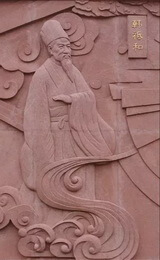 Han Zhihe: a famous physician of the Northern Song dynasty. He studied the Shang Han theory (the theory of exogenous febrile disease) in great depth and conducted meticulous research. His clinical applications were flexible, adaptive to changing conditions, and grounded in innovation—carrying forward Zhang Zhongjing’s theoretical framework while introducing his own original contributions. He is the author of Shang Han Wei Zhi Lun (the Subtle Treatises on Exogenous Febrile Disease).
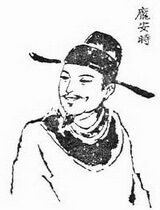 Pang Anshi: a physician renowned for several of his medical works. The most widely read of these was a detailed and comprehensive treatise on various kinds of febrile diseases, titled Shang Han Zong Bing Lun (The General Treatise on Cold-Induced Diseases).
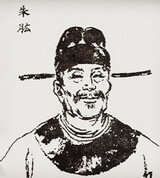 Zhu Gong: A famous physician who studied the Shang Han Lun (Treatise on Cold-Induced Diseases) for decades and was a leading expert in Shang Han studies during the Song Dynasty. He made substantial contributions to promoting the practical application of Zhang Zhongjing’s theories and authored the Nan Yang Huo Ren Shu (Nanyang Book for Life-Saving).
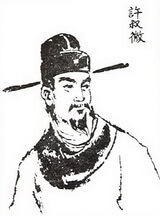 Xu Shuwei: A prominent physician of the Song Dynasty. Based on Zhang Zhongjing's work, he created graphic illustrations of 36 types of pulses and developed the theory of prescribing herbs according to the severity of the disease. He was the author of Shang Han Bai Zheng Ge, Shang Han Fa Wei Lun, and Shang Han Jiu Shi Lun.
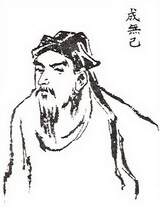 Cheng Wuji: a famous herbalist who lived during the late Northern Song Dynasty and early Jin Dynasty. He spent 40 years studying the Shang Han Lun (Treatise on Cold-Induced Diseases); he was the first herbalist to comprehensively annotate the Shang Han Lun and one of the main representatives of the Shang Han School—the school of theory on exogenous febrile disease.
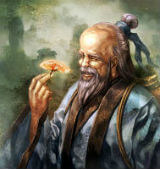 Guo Yong: a physician and scholar of the Yi Jing (I Ching). He held Zhang Zhongjing’s work in high esteem and studied it intensively. Drawing upon discussions from other classical medical texts and theories advanced by earlier physicians, he compiled and supplemented the Shang Han Lun, authoring the Shang Han Bu Wang Lun (The Recovery Supplement to the Treatise on Cold-Induced Diseases).
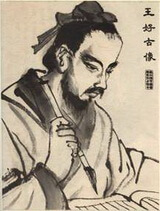 Wang Haogu: A distinguished, sagacious physician lived in the thirteenth and early fourteenth centuries. He was a prominent herbalist of the Yishui school during the Jin Yuan period, he mastered the ancient work Nei Jing (the Inner Canon) and had an in-depth study of Zhongjing's theory. He learned from the herbalists Zhang Yuansu and Li Dongyuan and developed their theory. His chief contribution was explaining yin syndromes and using warming tonics in the later stages of cold-induced diseases. He authored Yin Zheng Lue Li (Sketchy Cases of Yin Syndromes) and Yi Lei Yuan Rong (Fighting Diseases in the Medical Field).
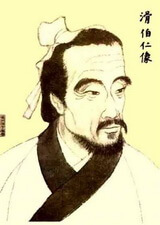 Hua Shou: a great physician of the Yuan Dynasty. His contributions mainly include interpretations of the Nei Jing (The Inner Canon) and the Nan Jing (The Difficult Classic), pulse manifestations, and annotations and supplements on acupuncture and meridian theory. He authored works on the study of the Shanghan, titled Shang Han Li Chao; however, this book has not survived to the present day.
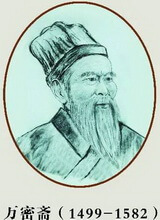 Wan Quan: A renowned physician of the Ming dynasty. He was born into a family of physicians, and both his grandfather and father specialized in pediatrics. He is especially celebrated for his contributions to pediatric medicine. He inherited his grandfather’s and father’s medical ethics and treated countless patients over his 50-year clinical career. He is also the author of Shang Han Zhai Jin (Excerpts from the Treatise on Cold-induced Diseases), a scholarly commentary on Zhang Zhongjing’s Shang Han Lun (Treatise on Cold-Induced Diseases).
 Fang Youzhi: A Shanghan scholar and renowned physician of the Ming Dynasty. He is best known for his meticulous study and reorganization of the Shang Han Lun (Treatise on Cold-induced Diseases), and he rearranged the entries in the book, and for founding the "missing-slip theory" (or "misplaced-slips theory") school of Shang Han Lun interpretation. His principal theoretical contributions include the "reconstruction of lost passages" and the "theory of wind and cold pathogens affecting Ying and Wei."
 Wang Kentang passed the imperial examination and attained the rank of Jinshi. He is the author of the book Shang Han Zhun Sheng (Standards of the Treatise on Cold-Induced Diseases) and compiled his studies on the Shang Han Lun (The Treatise on Cold-induced Diseases).
 Yu Chang was a renowned physician of the late Ming and early Qing dynasties and is regarded as one of the "Three Great Physicians" of the early Qing dynasty. He conducted in-depth studies of the Shang Han Lun (Treatise on Cold-Induced Diseases), and authored the influential commentary Shang Lun Pian (Critical Study).
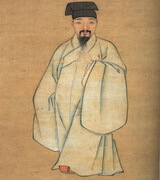 Zhang Suicheng: Born in the 17th year of the Wanli reign of the Ming dynasty (1589 CE) and died in the 7th year of the Kangxi reign of the Qing dynasty (1668 CE). He was skilled in composing classical poetry and authored the Zhang Qing Zi Shang Han Lun (Shang Han Lun by Zhang Qing Zi).
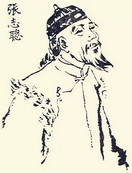 Zhang Zhicong: A renowned physician of the late Ming and early Qing dynasties, proficient in medicine, acupuncture, and moxibustion. He studied and conducted in-depth research on classical medical texts, including the Nei Jing (The Inner Canon) and the Shang Han Lun (Treatise on Cold-Induced Diseases), and made in-depth studies of them.
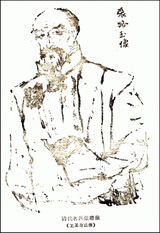 Zhang Lu: A renowned herbalist during the Ming and Qing dynasties, Zhang Lu dedicated his life to academia and medicine, particularly the study of the Shang Han Lun (The Treatise on Cold-Induced Diseases). Owing to his profound academic influence, he was later hailed as one of the three great physicians of the early Qing dynasty.
 Ke Qin: A Qing dynasty scholar of Shang Han Lun (The Treatise on Cold-Induced Diseases). His method of “naming syndromes after prescriptions and classifying syndromes according to prescriptions” is clinically pragmatic and has exerted considerable influence on subsequent scholarship. He is the author of Shang Han Lai Su Ji (The Renewal of the Treatise on Cold-Induced Diseases).
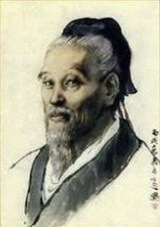 Wei Litong: A Qing dynasty physician and scholar. In his early years, he studied Confucianism and made significant progress; In middle age, he suffered from functional impairment and flaccid paralysis, prompting him to devote himself to the study of medicine and become a learned physician-scholar. He authored two major medical works: Shang Han Lun Ben Yi (Original Meanings of the Treatise on Cold-Induced Diseases) and Jin Kui Yao Lüe Ben Yi (Original Meanings of the Synopsis of the Golden Chamber).
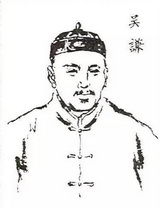 Wu Qian: A court physician who served as Yuan Pan (Director) of the Imperial Academy of Medicine during the Qianlong reign. He championed the theories of Zhang Zhongjing and authored Ding Zheng Shang Han Lun Zhu (Revised Annotations on the Treatise on Cold-Induced Diseases) and Ding Zheng Jin Kui Yao Lüe Zhu (Revised Annotations on the Synopsis of the Golden Chamber).
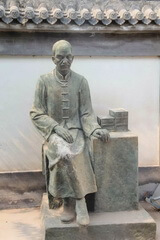 Huang Yulu: A renowned herbalist of the Qing Dynasty and a proponent of the Zunjing School, also known as the “loyal-to-classics” school. Fourteen of his works have survived to this day; eleven of them are medical texts. He held incisive views on the ancient texts Nei Jing (The Inner Canon), Nan Jing (The Difficult Classic), Shang Han Lun (Treatise on Cold-Induced Diseases), and Jin Kui Yao Lüe (Synopsis of the Golden Chamber).
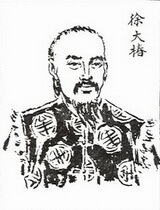 Xu Dachun studied Confucianism from childhood and read widely. Due to his family’s illnesses, he devoted himself to medicine, studying the works of renowned physicians of earlier dynasties. He quickly became an expert and frequently treated serious diseases with successful outcomes. He is the author of Shang Han Lei Fang (Classified Prescriptions for Cold-Induced Diseases).
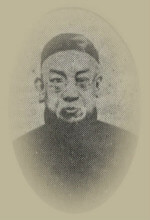 Yu Zhaoyuan: A Qing dynasty physician and a renowned specialist in the Shang Han Lun (Treatise on Cold-Induced Diseases). He inherited his family’s medical tradition from an early age and studied Zhang Zhongjing’s doctrine deeply and rigorously. He is the author of Tong Su Shang Han Lun (The Popular Treatise on Cold-Induced Diseases).
 You Yi: A Qing dynasty herbalist, who sold calligraphy in a temple for a living. He later became a favored disciple of Ma Chu. His academic attainments deepened in his later years. He studied Zhang Zhongjing’s works extensively, and authored Jin Kui Yao Lüe Xin Dian (Heart Code of the Synopsis of the Golden Chamber) and Shang Han Guan Zhu Ji (A String of Pearls from the Treatise on Cold-induced Diseases).
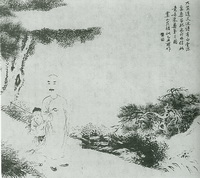 Lu Maoxiu: A renowned physician of the late Qing Dynasty, he was born in the Wuyin Year (1818) during the Jiaqing era and died in the Bingxu year (1886) during the Guangxu era. During the mid-Xianfeng era, he practiced medicine in Huating. His medical philosophy strictly adhered to the teachings of Zhang Zhongjing. He is the author of Shibuzhai Yi Shu (Medical Works of the Shibuzhai).