
Chen Yaodao: Biographical Introduction and Historical Accounts, Major Works and Academic Contributions
-
 ✵Chen Yaodao: a Qing dynasty herbalist who lived during the mid- to late 17th century. His prescriptions were highly effective, and people from far and near flocked to his residence for treatment; he administered medicines to help the poor. He authored the book Shang Han Bian Zheng (The Syndrome Differentiation of Cold-Induced Diseases).
- Chen Yaodao
-
Brief Introduction Chinese Name: 陳堯道 (Chén Yáodào) Alias: Unknown Style Name: 素中 (Sù Zhōng) English Name: Chen Yaodao (family name first) or Yaodao Chen (given name first) Hometown: Sanyuan, Yongqingli Dates: c. 1609–1683 CE Major Works: Shang Han Bian Zheng (The Syndrome Differentiation of Cold-Induced Diseases), Dou Zhen Bian Zheng (The Syndrome Differentiation of Variola and Exanthema), Yi Xue Xin De (Medical Reflections). Representative Work: Shang Han Bian Zheng. Biographical Introduction and Historical Accounts
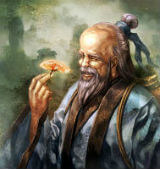 Chen Yaodao, whose alias was Su Zhong, was a Qing dynasty herbalist who lived during the mid- to late 17th century. Little is known about his life. Records of Chen Yaodao appear primarily in Chen Suzhong Xian Sheng Zhuan (Biography of Master Chen Suzhong) by Li Yindu, various local chronicles, and prefaces to his medical works. According to the Biography of Master Chen Suzhong: Chen Yaodao passed the imperial examination and attained the rank of Xiù Cai (a certified scholar). However, he later abandoned pursuit of higher degrees and official office, deeming it futile to attain the rank of Jǔ Rén (a provincial-level degree holder in the Ming and Qing imperial examinations). Instead, he devoted himself to extensive reading—especially medical texts. During the years Guǐ Wèi and Jiǎ Shēn (1643 and 1644 CE), at the turbulent transition between the late Ming and early Qing dynasties, he established a clinic named "Guangji" (meaning "Broad Relief") to practice medicine and save lives. "At the time of Guǐjiǎ (an abbreviation for Guǐ Wèi and Jiǎ Shēn), the Central Plains were in chaos; yet the Master resolved to save people and founded the Guangji Clinic within the city. He made no distinction between noble and commoner, nor did he refuse patients in winter or summer, rain or wind—and his practice bore the influence of Dongyuan (Liu Wansu) and Danxi (Zhu Zhenheng). Initially, he studied the three seminal works of the herbalist Li Shicai (Lǐ Shìcái) from Yunjian. His understanding evolved rapidly: he retained the valuable insights and discarded the flawed ones. His medical writings all ‘opened the key’ and ‘entered the hall’—that is, they provided clear entry points and profound mastery. Thus, he compiled Shang Han Bian Zheng and Dou Zhen Bian Zheng; both works survive." The Sanyuan County Chronicles, compiled in the 43rd year of the Kangxi reign (1704), also records: "Chen Yaodao, whose alias was Su Zhong, was the father of Yushi Jiaji, who had sat for the imperial examinations as a youth. Chen Yaodao devoted himself intensely to studying Qí Bó and Huangdi (i.e., foundational texts of Traditional Chinese Medicine), and his prescriptions were highly effective. People from far and near flocked to his residence; he administered medicines and aided the poor. He was upright, steadfast, pure, and meticulous. Many of the sufferings endured by local villagers were ultimately alleviated through his virtue. He authored Huo Ren Shu Bian Zheng (The Syndrome Differentiation of Life-Saving Texts), Dou Zhen Bian Zheng."
Major Works and Academic Contributions
In addition to Shang Han Bian Zheng and Dou Zhen Bian Zheng, Chen Yaodao's medical works include Yi Xue Xin De (Medical Reflections), according to the preface by Shi Lang (Shí Lǎng). Of these works, Yi Xue Xin De (Medical Reflections) may not have been published during his lifetime and has not survived to the present day.
Shang Han Bian Zheng (The Syndrome Differentiation of Cold-Induced Diseases) is a four-volume treatise on cold-induced diseases compiled by the herbalist Chen Yaodao and first published in 1678 CE. The author synthesized theories on the Shang Han Lun (The Treatise on Cold-Induced Diseases) from various schools dating back to the Song dynasty. He analyzed and expounded upon the diagnosis and treatment of cold-induced diseases and related miscellaneous disorders through the frameworks of yin and yang, exterior and interior, and deficiency and excess. Additionally, the work includes a dedicated section on prescriptions—integrating classical and contemporary formulas—and clarifies their principal indications, administration methods, and principles of modification (addition or subtraction of ingredients). The book serves as a supplementary guide for studying the Shang Han Lun. Numerous engraved and lithographic editions from the Qing dynasty survive to this day. In the preface, Chen Yaodao explains his motivations and methodology for writing the book. He stated: "Regarding the discipline of Shanghan (cold-induced diseases), in the early stage of my medical studies, I read the Nan Yang Huo Ren Shu; it was truly like seeking the essence in a vast sea—boundless and overwhelming. Later, with great enthusiasm, I intensively studied the Shang Han Lun (The Treatise on Cold-induced Diseases) and Ming Li Lun (Shang Han Ming Li Lun, or The Concise Exposition of Cold-Induced Diseases), which greatly deepened my theoretical understanding. Yet, when confronting actual cases, I ultimately encountered conflicting interpretations. Among the various commentaries on Shanghan, mastering one text too rigidly could hinder comprehension of others. Later, I obtained works by Wang’s Shuo Hui, Liu’s Zhi Ge, Tao’s Six Books, and Wu’s Yun Yao—texts that resonated deeply with me. After accumulating extensive clinical experience, I realized that though there are thousands of schools and approaches, their underlying principles remain consistent; yet each school’s therapeutic methods possess distinct merits. Thus, comprehending the treatment of cold-induced and warm diseases—as well as syndrome differentiation and therapy—becomes akin to understanding heaven and earth.” "Therefore, I systematically recorded, one by one, the differing treatments for cold-induced diseases and warm diseases; for febrile diseases and syndromes previously indistinguishable; and for syndromes the ancients had failed to differentiate. In this way, when encountering diseases in clinical practice, one can clearly discern distinctions among exterior and interior, deficiency and excess, yin and yang, and cold and heat."
Dou Ke Bian Zheng (The Syndrome Differentiation of Variola) was first compiled in the Shunzhi "Bingxu" year (1646 CE) and finalized in the Kangxi "Guihai" year (1683 CE). Zhen Ke Bian Zhen (The Syndrome Differentiation of Exanthema) was compiled in the Kangxi "Wuwu" year (1678 CE). These two works were later combined and collectively titled Dou Zhen Bian Zheng (The Syndrome Differentiation of Variola and Exanthema). His son, Chen Jiaji (Chén Jiājī), revised the combined text, which was published in 1683.
References:
-
- 1. Chen Yaodao: Biographical Introduction and Historical Accounts, Major Works and Academic Contributions
