
Fang Youzhi: Biographical Introduction and Historical Accounts, Major Works and Academic Contributions
-
 ✵Fang Youzhi: A Shanghan scholar and renowned physician of the Ming Dynasty. He is best known for his meticulous study and reorganization of the Shang Han Lun (Treatise on Cold-induced Diseases), and he rearranged the entries in the book, and for founding the "missing-slip theory" (or "misplaced-slips theory") school of Shang Han Lun interpretation. His principal theoretical contributions include the "reconstruction of lost passages" and the "theory of wind and cold pathogens affecting Ying and Wei."
- Fang Youzhi
-
Brief Introduction Chinese Name: 方有執 (Fāng Yǒuzhí) Aliases: 九龍山人 (Jiǔ Lóng Shān Rén), 九山山人 (Jiǔ Shān Shān Rén) Style Name: 方中行 (Fāng Zhōngxíng) English Name: Fang Youzhi (family name first) or Youzhi Fang (given name first) Hometown: She County, Anhui Province Dates: ca. 1523–1594 CE Major Work: Shanghan Lun Tiao Bian (Discriminations of the Entries in the Treatise on Cold-induced Diseases), 8 juan Representative Work: Shanghan Lun Tiao Bian (Discriminations of the Entries in the Treatise on Cold-induced Diseases), 8 juan Biographical Introduction and Historical Accounts
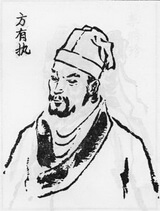 Fang Youzhi, a leading scholar of Shang Han (exogenous febrile diseases), lived during the Ming Dynasty. His courtesy names included Zhōng Xíng; he also styled himself Jiǔ Lóng Shān Rén and Jiǔ Shān Shān Rén. Born in 1523 and deceased in 1594, some sources note that his exact year of death remains uncertain. His given name, "Yǒuzhí", conveys meanings such as "steadfast adherence" or "resolute commitment." A native of She County, Anhui Province, Fang suffered profound personal tragedy: within a few years, two wives and five children died of illness. He himself survived a life-threatening episode of the same disorder. These losses spurred him to devote himself rigorously to medical study, particularly the Shang Han Lun (Treatise on Cold-induced Diseases), whose authority he deeply revered.
In the preface to his work, Fang Youzhi wrote that he did not pursue medicine in his youth, having "lost two wives" and "five children"—all afflicted by Shang Han originating from wind affection (Zhong Feng). Despite repeated consultations with local physicians, none could correctly diagnose or treat the underlying pathology. Fang himself fell gravely ill and nearly died. Amid "profound misery and sorrow, grief-stricken and desolate," he encountered Zhang Zhongjing’s two masterworks—the Shang Han Lun (Treatise on Cold-induced Diseases) and the Jin Kui Yao Lüe (The Synopsis of the Golden Chamber). He then "dedicated himself wholeheartedly to this study," diligently and energetically overcoming immense hardship over many years. It was only after decades of sustained effort—marked symbolically by his temples turning white—that he attained deep insight. His perseverance embodied the meaning of his given name: "steadfastness and unwavering commitment". He is well-known for his rigorous textual analysis of the Shang Han Lun, including its systematic reordering and reconstruction.Major Works and Academic Contributions
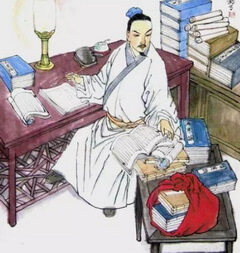 Through his intensive study of the Shang Han Lun, Fang Youzhi concluded that the original text—dating from the Eastern Han Dynasty—had suffered severe damage and disarray following the wars at the end of that era. For centuries, its authentic structure and sequence had been obscured. The versions edited by Wang Shuhe (3rd century) and Cheng Wuji (12th century) contained interpolations, omissions, and misplacements that misled subsequent generations of physicians. Fang was the first to systematically propose the "missing-slip theory" (misplaced-slips theory), arguing that key passages had been lost or displaced in transmission. Thereafter, he devoted himself to recovering Zhang Zhongjing’s original intent—carefully reexamining, reannotating, and reorganizing the text’s entries, classifying them thematically, and restoring logical sequence where possible. His aim was to reconstruct the earliest coherent version of the Shang Han Lun. This endeavor spanned over twenty years, culminating in the completion of Shang Han Lun Tiao Bian (Discriminations of the Entries in the Treatise on Cold-induced Diseases) in the 17th year of the Wanli reign (1589 CE); it was first printed in the 20th year (1592 CE). A surviving woodblock edition from the Wanli period remains extant today. Fang Youzhi insisted on fidelity to Zhang Zhongjing’s clinical logic and therapeutic principles. Courageous in questioning established interpretations, he boldly restructured the Shang Han Lun, thereby inaugurating the missing-slip theory school—a pivotal development that catalyzed diverse interpretive traditions in Shanghan studies. His scholarship significantly advanced the theoretical and practical understanding of exogenous febrile disorders. His core theories—namely, the “reconstruction of lost passages” and the "theory of wind and cold pathogens affecting Ying and Wei (nutritive and defensive qi)" —remain central to his legacy.
Fang Youzhi revised the Shang Han Lun (Treatise on Cold-induced Diseases) using a method of reordering and excision. He undertook a comprehensive textual revision and editorial reconstruction. He divided the entries on Taiyang disease across the first three juan. He grouped Yangming and Shaoyang disease entries into the fourth juan; Taiyin, Shaoyin, and Jueyin disease entries into the fifth juan; and entries on dampness, wind-dampness, miscellaneous diseases, Huo Luan (acute gastroenteritis), Yin Yang Yi (coital transmission of febrile disease), and recovery after overfatigue into the sixth juan.
He regarded the chapter "Bian Jing Shi Bing Zheng (Differentiation of convulsion and dampness syndrome)" as authentic and held that portions of the original text survive in the two chapters, "Bian Mai Fa (Methods of Pulse Differentiation)" and "Ping Mai Fa (Methods of Normal Pulse)". He consolidated these into the seventh juan, titled "Bian Mai Fa." He further argued that the section on "Han Tu Xia Ke Yu Bu Ke" (Sweating, Vomiting, Purgation, or None of These) was interpolated by Wang Shuhe and accordingly placed it in the eighth juan.
The revision of the Taiyang section is the most extensive in the work. His innovative reorganization and critical annotation of the Shang Han Lun significantly enhanced the text’s systematic coherence and logical structure, reflecting both his profound clinical experience and deep theoretical insight into exogenous febrile diseases.
 His book influenced many famous herbalists of later generations. For example, Yu Chang’s work Shang Lun Pian largely used Fang Youzhi’s book as its main source. After Yu Chang’s vigorous promotion, the theory was summarized as the "three outlines, tripartite confrontation" model, and its acceptance grew; later herbalists such as Yu Chang, Zhang Lu, Cheng Yingmao, Wu Yiluo, Zhou Yangjun, and Huang Yulu inherited this theory and formed the Missing Slip Theory School of the Shang Han Lun (Treatise on Cold-Induced Diseases). This school promoted and developed the theory of exogenous febrile diseases.
In the postscript of his book, Fang Youzhi states: "If there are thousands of words, move and edit a few entries, and examine and correct a few words. The reason for naming it Shang Han Lun is that it contains the remaining works of Zhang Zhongjing. The reason for naming it Tiao Bian is to correct the mistakes of Wang Shuhe and restore the original order." This is what he aimed to achieve through "revising the compilation."
Fang conducted an indepth study of the common pathological basis of all Taiyang diseases. Thus, he classifies Taiyang diseases into three types with detailed elaboration. This profoundly elucidates the onset, transmission, and consequences of Taiyang diseases—an elaboration of Zhang Zhongjing’s theory.

References:
-
- 1. Fang Youzhi: Biographical Introduction and Historical Accounts, Major Works and Academic Contributions
