
Ge Songping: Biographical Introduction and Historical Accounts, Major Works and Academic Contributions
-
 ✵Ge Songping: A physician of the late Qing dynasty. In his early years, he studied literature and Confucian theories; later, he turned to medicine after his relatives died of illness. He conducted particularly in-depth research on Zhang Zhongjing’s theory of cold-induced diseases. He is the author of Ge Shi Cong Shu Si Zhong (Four Works of the Ge Family Series).
- Ge Songping
-
Brief Introduction Chinese Name: 戈颂平 (Gē Sòngpíng) Alias: Unknown Style Name: Zhizai (直哉, Zhízāi) English Name: Ge Songping (family name first) or Songping Ge (given name first) Hometown: Hailing (present-day Taizhou, Jiangsu) Dates: Mid-to-late 19th century (late Qing dynasty) Major Works: Ge Shi Cong Shu Si Zhong (Four Works of the Ge Family Series) Representative Works: Ge Shi Cong Shu Si Zhong (Four Works of the Ge Family Series) Biographical Introduction and Historical Accounts
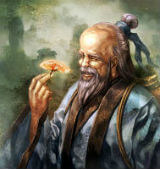 Ge Songping, courtesy name Zhizai, was a native of Hailing (present-day Taizhou, Jiangsu) and a physician of the late Qing dynasty, his exact dates of birth and death are unknown, but according to the textual research, he was born in the sixteen or eighteen year of the Daoguang era (1836 or 1838 CE), he died in the thirty-third or thirty-four year of the Guangxu era (1907 or 1908 CE) at the age over seventy. In his early years, he studied literature and delved into the Si Shu Wu Jing (Four Books and Five Classics), devoting himself to exploring the theory of Ge Wu Zhi Zhi (a Confucian theory meaning “investigating things to extend knowledge to the utmost”). Later, his children succumbed to convulsions and smallpox, and his older brother and mother also passed away from incurable illnesses. Consequently, Ge Songping devoted himself to the study of medicine, extensively reading medical texts from throughout history. Over the course of several years, he gradually gained insight, delving into the Nei Jing (The Inner Canon), Shang Han Lun (Treatise on Cold-Induced Diseases), Jin Kui Yao Lüe (Synopsis of the Golden Chamber), and Ben Cao Jing (Shennong’s Classic of Materia Medica). He conducted particularly in-depth research on Zhang Zhongjing’s theory of cold-induced diseases, advocating that to treat disease, one must first expel pathogenic factors using potent and aggressive formulas to prevent them from lingering in the body and damaging the vital energy.
Major Works and Academic Contributions
After more than twenty years of effort and thirteen revisions, Ge Songping compiled the Ge Shi Yi Xue Cong Shu (Ge Family Medical Series), also known as Ge Shi Cong Shu Si Zhong (Four Works of the Ge Family Series), comprising 30 volumes. It was completed around the 33rd year of the Guangxu reign (1907 CE). The series includes Huangdi Neijing Su Wen Zhi Gui (Commentary on the Suwen of the Yellow Emperor’s Inner Canon) (9 volumes), Shang Han Zhi Gui (Commentary on the Treatise on Cold-Induced Diseases) (10 volumes), Jin Kui Zhi Gui (Commentary on the Synopsis of the Golden Chamber) (10 volumes), and Shen Nong Ben Cao Jing Zhi Gui (Commentary on the Divine Farmer’s Classic of Materia Medica) (4 volumes, with 1 supplementary volume).
The preface states: "The original title was amended to include the words ‘Zhi Gui’ (Instruction and Return) so that disciples might have a guide to follow." The intent is to enable scholars to "correct their errors through this work, much like a weary traveler returning home or a wayward person returning to the right path. For those who have not yet studied it, their admiration will be like a traveler heading to the market, or like a hundred rivers flowing into the sea—so that all under heaven, though following different paths, may ultimately reach the same destination." Although these words carry a tone of praise, the content of the book does indeed hold significant reference value. The book employs a method of annotating and explaining each word and sentence, combining the original text with the author’s own insights and drawing on a wide range of sources for discussion. The arguments presented contain many unique and original perspectives, forming a distinct school of thought of its own.
The Shang Han Zhi Gui (Commentary on the Treatise on Cold-Induced Diseases) (ten volumes) is one of the four works comprising the Ge Shi Yi Xue Cong Shu (Ge Family Medical Series), compiled by Ge Songping in the late Qing dynasty and completed in the 11th year of the Guangxu reign (1885). As one of the works in the series, Shang Han Zhi Gui offers unique insights into the differentiation of cold and heat. At the beginning of the book, there is an illustration titled "Diagram of the Six Meridians of Yin and Yang in the Exterior and Interior," followed by an explanatory text that elaborates in detail on the laws of qi transformation within the Six Meridians of Yin and Yang. The text opposing the indiscriminate use of Yin-cold medications.
The Jin Kui Zhi Gui (Commentary on the Synopsis of the Golden Chamber) (ten volumes) was likely compiled in the 11th year of the Guangxu reign of the Qing dynasty (1885 CE). Its annotations draw heavily on theories of Yin-Yang and the Five Elements, the cycle of the Five Phases, the Eight Trigrams, and the interplay of Yin fluids and Yang qi. Additionally, the text frequently provides critical analysis and philological explanations for difficult terms found in the original Jin Kui Yao Lüe.
References:
-
- 1. Ge Songping: Biographical Introduction and Historical Accounts, Major Works and Academic Contributions
