
Guo Yong: Biographical introduction and historical accounts, major works and academic contributions
-
 ✵Guo Yong: a physician and scholar of the Yi Jing (I Ching). He held Zhang Zhongjing’s work in high esteem and studied it intensively. Drawing upon discussions from other classical medical texts and theories advanced by earlier physicians, he compiled and supplemented the Shang Han Lun, authoring the Shang Han Bu Wang Lun (The Recovery Supplement to the Treatise on Cold-Induced Diseases).
- Guo Yong
-
Brief Introduction Chinese Name: 郭雍 (Guō Yōng) Alias: 子和 (Zǐ Hé) Style Name: 白雲先生 (Bái Yún Xiān Sheng, or White Cloud Teacher.) English Name: Guo Yong (family name first) or Yong Guo (given name first) Hometown: Xiazhou Dates: c. 1106–1187 CE Major Works: Shang Han Bu Wang Lun (The Recovery Supplement to the Treatise on Cold-Induced Diseases) 20 volumes; co-author of Dai Yi Cui Yan (Essential Discussions of the I Ching) 10 volumes. Representative Work: Shang Han Bu Wang Lun (The Recovery Supplement to the Treatise on Cold-Induced Diseases). Biographical introduction and historical accounts
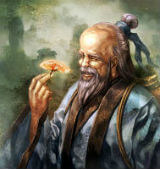 Guo Yong, also known by his courtesy name Zihe, was born into a Confucian scholarly family. His ancestors were originally from Luoyang. His father, a man of loyalty and filial piety, served as Taizhong Dafu and was a disciple of Cheng Yi. He conducted in-depth research on the Zhou Yi (the I Ching) and authored Yi Shuo (Discussions on the Yi Jing); he styled himself Jian Shan Xian Sheng (Master of Jian Mountain) and wrote a self-biography. Guo Yong inherited his father’s scholarly tradition and engaged with secular affairs. He resided in Xiàzhōu and lived as a recluse in mountain valleys, adopting the style name Bai Yun Xian Sheng (While Cloud Teacher).
During the Qiandao reign (1165–1173 CE), he was recommended to the imperial court but declined official appointment. Subsequently, he was granted the honorary title Chonghui Chushi (Retired Scholar of Esteemed Wisdom). Emperor Xiaozong, well acquainted with his virtuous conduct, commended him before his ministers. Local officials were instructed to present gifts and greetings during festivals. Later, the emperor conferred upon him the title Gu Zheng Xian Sheng (Ancient Upright Master)and dispatched envoys to inquire about his views—records of which were formally submitted. Guo Yong lived to the age of eighty-three.Major works and academic contributions
At the beginning of the Chunxi era (1174–1189 CE—the reign title of Emperor Xiaozong of the Southern Song Dynasty), scholars compiled Da Yi Cui Yan (Essential Discussions of the I Ching), collecting essays on the Yi Jing by Cheng Hao, Cheng Yi, Zhang Zai, You Zuo, Yang Shi, Guo Zhongxiao, and Guo Yong. The work was published in ten volumes.
Guo Yong held Zhang Zhongjing’s writings in profound esteem and studied them rigorously. Noting the incompleteness of the transmitted text of the Shang Han Lun (Treatise on Cold-Induced Diseases), he integrated discussions from the Su Wen (the Plain Questions of Huangdi's Internal Classic), Nan Jing (the Difficult Classic), Qian Jin Yao Fang (the Invaluable Prescriptions), Wai Tai Mi Yao (Medical Secrets of an Official), and other authoritative sources. He further supplemented these with theories proposed by physicians Zhu Gong, Pang Anshi, and Chang Qizhi. In 1181 CE, he completed the twenty-volume Shang Han Bu Wang Lun (The Recovery Supplement to the Treatise on Cold-Induced Diseases).
The Shang Han Bu Wang Lun (The Recovery Supplement to the Treatise on Cold-Induced Diseases) is a twenty-volume commentary on the Shang Han Lun. The sixteenth volume was lost during the Ming Dynasty; the remaining nineteen volumes survive to this day. Guo Yong, a Song-dynasty physician, completed the work in 1181 CE. Recognizing the Shang Han Lun was incomplete, he drew upon classical medical literature and the insights of earlier physicians to reconstruct and expand its theoretical framework—adding his own original interpretations, many of which surpass those of contemporary schools. Hence the title "Bu Wang Lun" (A Recovery Supplement). Its arrangement diverges from standard editions of the Shang Han Lun, and its content is significantly enriched—particularly through the recovery and compilation of lost passages. However, the work’s structure is eclectic: Zhang Zhongjing’s original text, later commentaries, and Guo Yong’s own remarks are intermingled without clear attribution, making source verification difficult—a notable limitation of the text.
References:
-
- 1. Guo Yong: Biographical introduction and historical accounts, major works and academic contributions
