
Huang Zhongli: Biographical Introduction and Historical Accounts, Major Works and Academic Contributions
-
 ✵Huang Zhongli: A herbalist of the Ming dynasty, he studied the Shang Han Lun (Treatise on Cold-Induced Diseases) from childhood. He lived from the late 14th to the early 15th century and is the author of the 10-volume book Shang Han Lei Zheng (Classified Syndromes of Shang Han), which compiles his studies on the Shang Han Lun.
- Huang Zhongli
-
Brief Introduction Chinese Name: 黃仲理 (Huáng Zhònglǐ) Alias: Unknown Style Name: English Name: Huang Zhongli (family name first) or Zhongli Huang (given name first) Hometown: Xiangxi Dates: Unknown; active approximately from the late 14th century to the early 15th century Major Works: Shang Han Lei Zheng (Classified Syndromes of Shang Han). Representative Works: Shang Han Lei Zheng (Classified Syndromes of Shang Han). Biographical Introduction and Historical Accounts
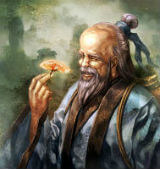 Huang Zhongli was a Ming dynasty herbalist from Ma’anshan in Xiangxi. Little is known about his life. He lived from the late 14th to the early 15th century and studied the Shang Han Lun (Treatise on Cold-Induced Diseases) from a young age.
Major Works and Academic Contributions
In the twenty-sixth year of the Hongwu era (1393 CE; Hongwu was the reign title of Emperor Zhu Yuanzhang of the Ming dynasty), Huang Zhongli used Cheng Wuji’s Zhu Jie Shang Han Lun (Treatise on Exogenous Febrile Diseases with Annotations) as a foundation. Drawing on his own studies and over twenty years of clinical experience, he compiled the ten-volume work Shang Han Lei Zheng (Classified Syndromes of Shanghan). The book is systematically organized by volume and category. Huang classified its contents as follows: passages featuring refined pulse diagnostics along with both theoretical discussion and prescriptions were placed in the "Inner Chapter"; those containing insightful discussions but lacking prescriptions or detailed syndrome descriptions were assigned to the "Outer Chapter"; and materials without syndromes, prescriptions, or substantial discussion were grouped into the "Miscellaneous Chapter." He also incorporated discussions he had heard from his teachers and colleagues. These were collected and appended to the relevant categorized syndromes. The text is arranged strictly by syndrome, with each entry including discussion and numbered sequentially; no content is repeated. This structure enables scholars to grasp the classification at a glance without laborious cross-referencing. Later, in the twelfth year of the Hongzhi era (1499 CE), Lu Yangong re-edited and expanded the work, producing a revised edition divided into twelve volumes.
References:
-
- 1. Huang Zhongli: Biographical Introduction and Historical Accounts, Major Works and Academic Contributions
