
Lu Maoxiu: Biographical Introduction and Historical Accounts, Major Works and Academic Contributions
-
 ✵Lu Maoxiu: A renowned physician of the late Qing Dynasty, he was born in the Wuyin Year (1818) during the Jiaqing era and died during the Guangxu era. During the mid-Xianfeng era, he practiced medicine in Huating (present-day Songjiang District, Shanghai). His medical philosophy strictly adhered to the teachings of Zhang Zhongjing. He is the author of Shibuzhai Yi Shu (Medical Works of the Shibuzhai).
- Lu Maoxiu
-
Brief Introduction Chinese Name: Lu Maoxiu (陆懋修, Lù Màoxiū) Alias: Jiangzuo Xiagong and Linwu Shanren Style Name: Jiuzhi (九芝, jiǔ zhī) English Name: Lu Maoxiu (family name first) or Maoxiu Lu (given name first) Hometown: Yuanhe, Jiangsu (present-day Wuxian District, Jiangsu) Dates: Late Qing Dynasty, 1818–c. 1886 Major Works: Shibuzhai Yi Shu (Medical Works of the Shibuzhai), Shibuzhai Yi Shu Xu Ji (Continuation of the Shibuzhai Medical Works) Representative Works: Shibuzhai Yi Shu (Medical Works of the Shibuzhai), Shibuzhai Yi Shu Xu Ji (Continuation of the Shibuzhai Medical Works) Biographical Introduction and Historical Accounts
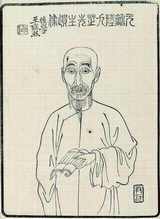 Lu Maoxiu, courtesy name Jiuzhi (jiǔ zhī), also known as Mianzhan (miǎn zhān), with the pseudonyms Jiangzuo Xiagong and Linwu Shanren, was a native of Yuanhe, Jiangsu (present-day Wuxian District, Jiangsu). A renowned physician of the late Qing Dynasty, he was born in the Wuyin Year (1818) during the Jiaqing era and died in the Bingxu year (the 12th year, 1886 CE) during the Guangxu era. His family had a long tradition of practicing medicine. He abandoned the imperial examinations and became renowned for his medical expertise. During the mid-Xianfeng era, he practiced medicine in Huating (present-day Songjiang District, Shanghai). His medical philosophy strictly adhered to the teachings of Zhang Zhongjing.
According to the Qing Shi Gao (Draft History of the Qing Dynasty), Lu Maoxiu, courtesy name Jiuzhi, was a native of Yuanhe, Jiangsu. His ancestors were distinguished Confucian scholars who were also well-versed in medicine. Maoxiu, as a student of the imperial academy, inherited this tradition. During the reign of Emperor Xianfeng, when the Taiping rebels disrupted the Jiangnan region, he relocated to Shanghai, where he gained renown as a physician. He devoted himself to the study of the Su Wen (The Plain Questions) and authored Nei Jing Yun Qi Bing Shi (An Explanation of the Inner Canon’s Chapters on the Five Phases, the Four Seasons, and Diseases). Later, he broadened his knowledge to encompass works from the Han dynasty onward, strictly adhering to Zhang Zhongjing’s medical principles, and critically evaluated the merits and shortcomings of all medical practitioners throughout the Qing dynasty. He drew his methods primarily from the schools of Ke Qin and You Yi, asserting that they more accurately captured Zhang Zhongjing’s intent. Having abandoned his pursuit of the imperial examinations and seeking no official career, Maoxiu retired to the capital to care for his son, Runxiang, after the latter passed the examinations. He continued to write tirelessly until his old age. He passed away during the Guangxu era. Runxiang was also well-versed in medicine and rose to the rank of Da Xueshi (Grand Secretary); he has his own biography.
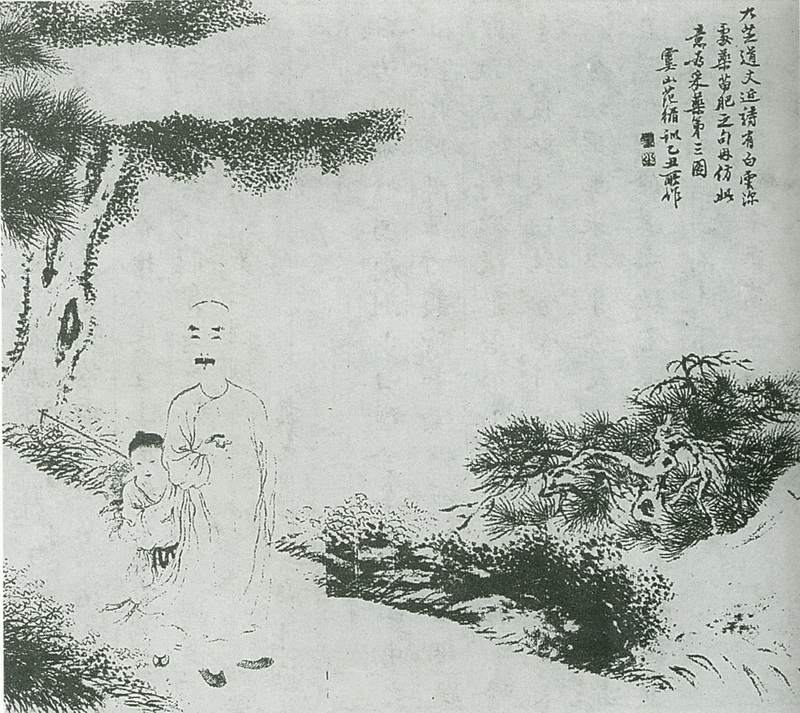
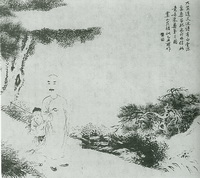 Lu Maoxiu was a medical scholar who excelled in both Confucian studies and medicine, possessing both literary and medical expertise, and demonstrating excellence in both academic scholarship and clinical practice. Throughout his life, he thoroughly studied the Su Wen (The Plain Questions), held Zhang Zhongjing in the highest regard, and had a deep and comprehensive understanding of the works of various scholars from the Han dynasty onward. He often remarked that Ke Qin and You Yi had captured the essence of Zhang Zhongjing’s teachings to a greater extent, and thus frequently used the theories of these two scholars to evaluate the merits and shortcomings of mediocre physicians during the Qing dynasty. He excelled in writing and remained tireless in his scholarly pursuits until old age. The Qing Shi Gao (Draft History of the Qing Dynasty) includes the “Biography of Lu Maoxiu,” which chronicles his life, and his medical work, Shibuzhai Yi Shu (Medical Works of the Shibuzhai), is also included in the Arts and Literature Section of the Qing Shi Gao.
Major Works and Academic Contributions
Lu Maoxiu authored Shibuzhai Yi Shu (Medical Works of the Shibuzhai), which includes Wen Ji (Collected Works), Bu Xie Fang (Formulas Without Thanks), Shang Han Lun Yang Ming Bing Shi (Commentary on Yangming Diseases in the Treatise on Cold-Induced Diseases), Nei Jing Yun Qi Bing Shi (Commentary on Diseases Related to the Yellow Emperor’s Classic of Internal Medicine), Nei Jing Yun Qi Biao (Tables of the Yellow Emperor’s Classic of Internal Medicine), and Nei Jing Nan Zi Yin Yi (Pronunciation and Meanings of Difficult Characters in the Yellow Emperor’s Classic of Internal Medicine). He also revised and corrected Fu Qingzhu Nǚkē (Fu Qingzhu’s Gynecology), Guang Wen Re Lun (Extended Treatise on Warm-Heat Diseases), Li Xu Yuan Jian (Mirror on the Principles of Deficiency), and Jiao Zheng Wang Puzhuang Shang Han Lun Zhu (Corrected Annotations on Wang Puzhuang’s Commentary on the Treatise on Cold-Induced Diseases), compiling them into Shibuzhai Yi Shu Xu Ji (Continuation of the Shibuzhai Medical Works).
The author held unique insights regarding the relationship between warm diseases and cold-induced diseases, stating: “Zhongjing based his work on the Nan Jing (The Difficult Classics); warm diseases are contained within cold-induced diseases, and the methods for treating warm diseases do not go beyond those for cold-induced diseases.” This implies that, in a broad sense, cold-induced diseases already encompass warm diseases, rendering it unnecessary to establish a separate school of thought for warm diseases. The author also distinguished between warm diseases and epidemics, correcting common misunderstandings among practitioners.
The Shibuzhai Yi Shu (Medical Works of the Shibuzhai) is a comprehensive text comprising six major sections:
Wen Ji (Collected Works) (16 volumes) contains Lu Maoxiu’s medical essays and treatises, synthesizing the author’s medical perspectives. Covering a wide range of topics, it primarily discusses the Theory of the Heavenly Stems and Earthly Branches, the Theory of Cold-Induced Diseases, the location of six-channel diseases, warm diseases, the Theory of Epidemics, diseases across various medical specialties, and Lu Maoxiu’s evaluations of the academic views of various schools.
Bu Xie Fang (Formulas Without Thanks) (1 volume) records 28 formulas created by Lu himself. Most are based on the principles of Shanghan, yet the herbal combinations are relatively mild. They primarily focus on expelling pathogenic factors, with very few tonifying agents. The author proposed that “a physician’s greatest virtue lies in his ability to treat severe illnesses, and a competent physician’s true skill lies in preventing illnesses from becoming severe,” and that “I only ask whether the illness is cured or not; why should I concern myself with whether others know or do not know?” Hence, the title Bu Xie Fang (Formulas Without Thanks).
Shang Han Lun Yang Ming Bing Shi (Commentary on Yangming Diseases in the Treatise on Cold-Induced Diseases) (4 volumes) records Lu Maoxiu’s insights on Yangming diseases. The first two volumes consist of Lu Maoxiu’s elaborations on Yangming meridian and Yangming Fu-viscera diseases based on the original text of the Shang Han Lun (Treatise on Cold-Induced Diseases). The latter two volumes are a compilation of Lu Maoxiu’s summaries of previous scholars’ discussions on Yangming diseases, divided into Collected Explanations on Yangming Meridian Diseases and Collected Explanations on Yangming Fu-Viscera Diseases.
Nei Jing Yun Qi Bing Shi (Commentary on Diseases Related to the Yellow Emperor’s Classic of Internal Medicine) (9 Volumes), which includes Nei Jing Yi Pian Bing Shi (Commentary on the Pathology of the Lost Chapters of the Inner Canon) (1 Volume), is a commentary and elaboration by Lu Maoxiu based on the Inner Canon’s discussions of the Five Phases and Six Qi. Building upon in-depth research into the theory of the Five Phases and Six Qi, he proposed the concept of “the Great Sovereign of the Qi every sixty years,” explaining that within a specific period, one can deduce the patterns of disease occurrence as well as principles for prevention and treatment.
Nei Jing Yun Qi Biao (Tables of the Yellow Emperor’s Classic of Internal Medicine) (1 volume), comprising 13 tables, presents the content of the theory of Five Phases and Six Qi and the Seasons in tabular form. The text is concise and to the point, with clear comparisons that facilitate memorization.
Nei Jing Nan Zi Yin Yi (Pronunciation and Meanings of Difficult Characters in the Yellow Emperor’s Classic of Internal Medicine) (1 volume): To prevent ancient medical texts from being "obscure and difficult to read, thus gathering dust on shelves unread," Lu Maoxiu selected 681 relatively obscure ancient Chinese characters and phrases from the various chapters of the Inner Canon to annotate, compiling them in the form of a dictionary. The sources consulted for these annotations are extensive, and the explanations are detailed and reliable. They correct some misunderstandings of earlier scholars, demonstrating Lu Maoxiu’s profound grounding in Confucian scholarship.
The collection comprises 33 volumes, totaling over 200,000 Chinese characters. These works were compiled and published under the title Shibuzhai Yi Shu (Medical Works of the Shibuzhai), with all medical theories presented therein grounded in classical texts. Building upon a meticulous study of the classics, the author presents his own insights to guide future scholars out of confusion. He critiques medical scholars and works of previous generations, covering topics ranging from academic perspectives and the diagnosis and treatment of diseases to the documentation of medical case histories and the authenticity of formulas and medications. His evaluations are both laudatory and critical, characterized by rigorous argumentation and an impartial stance. Several woodblock prints from the Guangxu era of the Qing Dynasty currently survive.
References:
-
- 1. Lu Maoxiu: Biographical Introduction and Historical Accounts, Major Works and Academic Contributions
- 2. Qing Shi Gao · Yi Wen Zhi (Draft History of the Qing Dynasty:the Arts and Literature Section)
