
Qian Huang: Biographical Introduction and Historical Accounts, Major Works and Academic Contributions
-
 ✵Qian Huang: A Qing dynasty herbalist who held that Zhang Zhongjing’s prescriptions were authoritative and unsurpassed. However, he contended that Wang Shuhe’s arrangement of the text and Cheng Wuji’s annotations reflected personal interpretations that obscured Zhang Zhongjing’s original intent. He is the author of Shang Han Su Yuan Ji (Origin Tracing of the Treatise on Cold-Induced Diseases).
- Qian Huang
-
Brief Introduction Chinese Name: 錢潢 (Qián Huáng) Alias: Unknown Style Name: 天來 (Tiān Lái) English Name: Qian Huang (family name first) or Huang Qian (given name first) Hometown: Yushan Dates: Unknown; active during the mid-to-late 17th century Major Work: Shang Han Su Yuan Ji (Origin Tracing of the Treatise on Cold-Induced Diseases). Representative Work: Shang Han Su Yuan Ji. Biographical Introduction and Historical Accounts
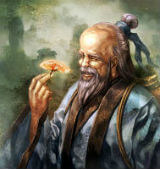 Qian Huang, a Qing dynasty herbalist, whose style name was Tiān Lái, was a native of Yushan. His birth and death dates are unknown; however, based on the publication date of his major work, he likely lived during the mid-to-late 17th century. In middle age, he contracted Shang Han (cold-induced disease) and suffered severe pain and numbness—so severely that he nearly died. This experience prompted him to devote himself to the study of medicine. After carefully studying the Nei Jing (The Inner Canon) and the Shang Han Lun (The Treatise on Cold-Induced Diseases), he concluded that Zhang Zhongjing’s prescriptions were clinically precise and that none of the later formulations surpassed them. Yet he maintained that Wang Shuhe’s editorial arrangement and Cheng Wuji’s annotations imposed subjective interpretations that distorted Zhang Zhongjing’s original meaning.
Major Works and Academic Contributions
Qian Huang advocated tracing Zhang Zhongjing’s medical theory back to its foundational sources—the Su Wen (The Plain Questions) and the Ling Shu (The Spiritual Pivot)—and thus compiled Shang Han Su Yuan Ji (Origin Tracing of the Treatise on Cold-Induced Diseases). This work offers thorough revision and detailed exposition of the articles and entries preserved in the Shang Han Lun. It presents original insights into textual interpretation, clinical exposition, error identification, and therapeutic indications—contributions that exerted a positive influence on subsequent generations of physicians.
Shang Han Su Yuan Ji (Origin Tracing of the Treatise on Cold-Induced Diseases) is an annotated commentary on the Shang Han Lun. Its original full title was Chongbian Zhang Zhongjing Shang Han Lun Zhengzhi Fa Ming Su Yuan Ji (Revised Collection of the Origin-Tracing Exposition of the Therapeutic Methods in Zhang Zhongjing’s Treatise on Cold-Induced Diseases). The book comprises ten volumes and twenty-two chapters. Qian Huang completed it in the 46th year of the Kangxi era (1707 CE). He believed that the extant editions of the Shang Han Lun contained textual corruptions and annotation errors, and that the Six Channels framework had become confused; accordingly, he undertook a comprehensive re-editing. His annotations draw upon interpretations from multiple schools across preceding generations.
This book reorganizes the original text of the Shang Han Lun into ten volumes and twenty-two chapters: Volumes I–IV cover the Six Channels’ Yin-Yang classification and Taiyang disease, discussing the Yin-Yang syndromes of the Six Channels as well as Taiyang syndromes of wind invasion, cold invasion, and combined wind-cold invasion. Volume V addresses syndrome differentiation and treatment of warm disease, wind-warm disease, convulsion, dampness disease, and Ye syndrome. Volume VI concerns Yangming disease, subdivided into Taiyang-Yangming, Zhengyang-Yangming, and Shaoyang-Yangming patterns. Volume VII covers Shaoyang disease, including combined diseases and overlapping syndromes. Volume VIII treats Taiyin disease, with an appended discussion of Huo Luan syndrome. Volume IX addresses Shaoyin disease, divided into two parts. Volume X discusses Jueyin disease and also examines various syndromes occurring during convalescence. An appendix containing six supplementary essays follows, including “Discussion on the Three Hundred and Ninety-Seven Methods and One Hundred and Thirteen Prescriptions.
Qian Huang believed that, after Wang Shuhe arranged the Shang Han Lun, the Six Channels framework became confused and textual errors appeared in its opening and concluding sections. He therefore undertook a comprehensive re-editing. Huang contended that Cheng Wuji’s annotations—and those of later scholars—distorted Zhang Zhongjing’s original meaning. Consequently, he advocated returning to the foundational classical texts: the Su Wen (The Plain Questions) and the Ling Shu (The Spiritual Pivot).
The book emphasizes Yin-Yang differentiation within the Six Channels syndromes and advances the view that "exogenous pathogens become identifiable upon entry into the body." It interprets the Shang Han Lun through a systematic classification of syndromes and symptoms. Qian Huang praised Yu Chang’s "Three Outlines Theory" for Taiyang disease, offering more detailed analysis. He also studied warm disease syndromes and treatment. He also interpreted the Shang Han Lun through the lens of Yun Qi theory (the Theory of Five Evolutive Phases and Six Climatic Factors) and advocated the doctrine of "self-suffering of the same channel." In examining prescriptions, he probed their underlying principles and analyzed the cold or heat properties of individual medicinal ingredients. Qian also authored an essay titled Bian Wu (Distinguishing Errors), in which he traced the origins of major scholarly controversies in the Shang Han Lun, substantiated his arguments with quotations from classical texts, expounded Zhang Zhongjing’s core ideas, and raised insightful critical questions.
References:
-
- 1. Qian Huang: Biographical Introduction and Historical Accounts, Major Works and Academic Contributions
