
Shen Jin' ao: Biographical Introduction and Historical Accounts, Major Works and Academic Contributions
-
 ✵Shen Jin' ao: a physician during the Qing dynasty. In his early years, he studied Confucianism, learned extensively, and had a good memory. He studied classics and literature, acquired medical skills, practiced divination, and performed astronomical calculations. He is the author of Shang Han Lun Gang Mu (The Outline of the Treatise on Cold-Induced Diseases).
- Shen Jin' ao
-
Brief Introduction Chinese Name: 沈金鰲 (Shěn Jīn' áo) Alias: 汲門 (Jí Mén) Style Name: 芊綠 (Qiān Lǜ) English Name: Shen Jin' ao (family name first) or Jin' ao Shen (given name first) Hometown: Wuxi, Jiangsu Province Dates: 1717–1776 CE Major Works: Mai Xiang Tong Lei (Classification of Pulse Manifestations), Zhu Mai Zhu Bing Shi (Poems on the Main Diseases Associated with Each Pulse), Za Bing Yuan Liu Xi Zhu (A Lantern Illuminating the Origins and Development of Miscellaneous Diseases), Shang Han Lun Gang Mu (Outline of the Treatise on Cold-Induced Diseases), Fu Ke Yu Chi (Jade Ruler of Gynecology), You Ke Shi Mi (Pediatrics Explained for Beginners), Yao Yao Fen Ji (Categorized Dosage of Medicinals). Representative Work: Shen Shi Zun Sheng Shu (Shen’s Book on Health Preservation) Biographical Introduction and Historical Accounts
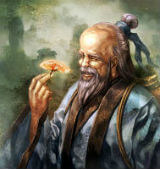 Shen Jin' ao, whose style name was Qiān Lǜ and whose alias was Jí Mén and honorary title Zūn Shēng Lǎo Rén, was a physician and pharmacologist during the Qing dynasty. Born around 1717 and deceased around 1776, he was a native of Wuxi, Jiangsu Province. In his early years, he studied Confucianism, learned extensively, and possessed an excellent memory. He studied classics and literature, acquired medical knowledge, practiced divination, and performed astronomical calculations.
Major Works and Academic Contributions
Shen Jin' ao authored the literary work Shang Shu Sui Bi (Essays on the Book of Documents). In his middle age, after repeatedly failing the imperial civil service examinations, he turned to medicine and gradually attained proficiency across multiple domains. He studied Su Wen (The Plain Questions) and Ling Shu (The Spiritual Pivot), as well as the theories of Zhang Zhongjing and eminent physicians of earlier dynasties, cross-referencing and synthesizing them. Later, he diligently compiled Mai Xiang Tong Lei, Zhu Mai Zhu Bing Shi, Za Bing Yuan Liu Xi Zhu, and Shang Han Lun Gang Mu. He also wrote Fu Ke Yu Chi, You Ke Shi Mi, and Yao Yao Fen Ji. These works were collected and edited into a comprehensive compendium titled Shen Shi Zun Sheng Shu (Shen’s Book on Health Preservation), whose content is extensive and exposition incisive—making it highly influential. Multiple editions have survived to this day.
Shang Han Lun Gang Mu (Outline of the Treatise on Cold-Induced Diseases) is a 16-volume commentary on Zhang Zhongjing’s Shang Han Lun (Treatise on Cold-Induced Diseases), compiled by Shen Jin' ao and completed in the thirty-ninth year of the Qianlong reign (1774 CE). Drawing upon Zhang Zhongjing’s original text, Shen collected and synthesized commentaries by Wang Shuhe and subsequent physicians—including Zhu Gong, Cheng Wuji, Xu Shuwei, Liu Wansu, Zhang Yuansu, Zhang Congzheng, Li Gao, Zhu Zhenheng, Zhang Jiebin, Yu Chang, and Ke Qin. He added original annotations and organized the material systematically. This work constitutes one of the constituent volumes of Shen Shi Zun Sheng Shu. The first volume opens with a general discussion, divided into chapters covering pulse diagnosis, principal symptoms of the six channels (liu jing, i.e., the six channels of Taiyang, Yangming, Shaoyang, Taiyin, Shaoyin, and Jueyin), interior and exterior differentiation, transmission patterns, and pathological transformations. Volumes 1–15 present the original text of the Shang Han Lunin outline form, supplemented by selected annotations from earlier commentators that clarify Zhang Zhongjing’s original intent. The content is categorized according to the sequence of the six channels and largely follows Ke Qin’s theoretical framework. Syndromes not attributable to the six channels—such as syndromes after cold-induced disease, pulse differentiation, and normal pulse manifestations—are grouped in Volume 16. Shen elaborates on the theories he compiled with emphasis on syndrome differentiation–based treatment. His annotations are meticulous and highly pertinent, filling gaps left by earlier physicians. The book begins with a general summary of the six-channel diseases; each channel chapter opens with a section on channels and collaterals, clarifying principal syndromes, main symptoms, accompanying symptoms, and deteriorated cases. Common diseases and syndromes are listed first, followed by relevant passages from the Shang Han Lun, enabling readers to grasp symptoms and treatments at a glance. Additionally, the discussion of warm diseases and febrile disease is especially detailed, highlighting distinctions between cold-induced disease and warm disease, warm diseases affecting the head, epidemic infectious diseases, and epidemic heat syndromes.
References:
-
- 1.Shen Jin' ao: Biographical Introduction and Historical Accounts, Major Works and Academic Contributions
