
Shen Mingzong: Biographical Introduction and Historical Accounts, Major Works and Academic Contributions
-
 ✵Shen Mingzong: a herbalist who lived during the Shunzhi and Kangxi periods (mid- to late 17th century). He studied Zhang Zhongjing’s theory in great detail and praised Fang Youzhi and Yu Jiayan in his commentary on the Shang Han Lun (The Treatise on Cold-Induced Diseases). He was the author of Shang Han Liu Jing Bian Zheng Zhi Fa (The Six Channels Syndrome Differentiation and Treatment of the Treatise on Cold-induced Diseases).
- Shen Mingzong
-
Brief Introduction Chinese Name: 沈明宗 (Shěn Míngzōng) Alias: 秋湄 (Qiū Méi) Style Name: 目南 (Mù Nán) English Name: Shen Mingzong (family name first) or Mingzong Shen (given name first) Hometown: Xie Li(Jiaxing) Dates: ca. 1643–1723 CE Major Works: Shang Han Liu Jing Bian Zheng Zhi Fa (The Six Channels Syndrome Differentiation and Treatment of the Treatise on Cold-Induced Diseases), Shang Han Liu Jing Cuan Zhu (Compilation Notes on the Six Channels of the Treatise on Cold-Induced Diseases), Jin Kui Yao Lue Bian Zhu (Annotated Synopsis of the Golden Chamber), Xu Lao Nei Shang (Consumptive Disease and Endogenous Injury), Wen Re Bing Lun (Discourse on Warm Diseases), Fu Ke Fu Yi (Supplementary Wings to Gynecology), Ke Chuang Ou Tan (Occasional Discourse at the Guest Window). Representative Work: Shang Han Liu Jing Bian Zheng Zhi Fa. Biographical Introduction and Historical Accounts
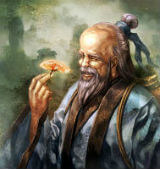 Shen Mingzong’s style name was Mù Nán; his self-designated style name was Qiū Méi. He was born in Xie Li of the Qing dynasty (present-day Jiaxing, Zhejiang Province). The exact years of his birth and death are unknown. He lived during the Shunzhi and Kangxi reigns (mid- to late 17th century). Initially, he studied for the imperial civil service examinations; later, he turned to Chan (Zen) Buddhism, then devoted himself to classical medical texts, becoming an outstanding disciple of the early Qing herbalist Shi Kai (Shí Kǎi). His first wife died when he was young, and he did not remarry. He traveled to Yandu, and later to Hanjiang (present-day Yangzhou, Jiangsu Province). There, he met his second wife and abandoned his Chan studies. He specialized in medicine, gaining wide renown; many patients sought his treatment. For over twenty years, he lectured on and discussed the medical classics with his disciples. He studied Zhang Zhongjing’s theories in depth and praised Fang Youzhi and Yu Jiayan in his annotations to the Shang Han Lun (The Treatise on Cold-induced Diseases). He practiced as a physician in Yangzhou for over two decades and was approximately fifty years old when his major work was completed in 1693 CE—suggesting his birth year was likely around 1643 CE.
Major Works and Academic Contributions
Shen Mingzong authored the eight-volume Shang Han Liu Jing Bian Zheng Zhi Fa (The Six Channels Syndrome Differentiation and Treatment of the Treatise on Cold-Induced Diseases). Following the scholarly style of Yu Chang, this edition emphasizes the principal syndromes of the six channels and presents numerous original and innovative insights. He also compiled the following works: Shang Han Liu Jing Cuan Zhu (Compilation Notes on the Six Channels of the Treatise on Cold-Induced Diseases), 24 volumes; Jin Kui Yao Lüe Bianzhu (Annotated Synopsis of the Golden Chamber), 24 volumes; Xu Lao Nei Shang (Consumptive Disease and Endogenous Injury), 2 volumes; Wen Re Bing Lun (Discourse on Warm Diseases), 2 volumes; Fu Ke Fu Yi (Supplementary Wings to Gynecology), 1 volume; and Ke Chuang Ou Tan (Occasional Discourse at the Guest Window), 1 volume. These works were published and achieved wide recognition.
Shen’s theory belongs to the “missing-slip theory school” of the Shang Han Lun (The Treatise on Cold-induced Diseases). Ancient physicians such as Wang Shuhe, Sun Simiao, Wang Tao, and Cheng Wuji had related discussions. Later physicians such as Fang Youzhi, Yu Chang, and Shen Mingzong also held this viewpoint; it was advocated and followed by subsequent herbalists Zhang Lu, Wu Yiluo, Cheng Yingmiao, Zhou Yangjun, and Huang Yulu.
Shanghan Liu Jing Bianzheng Zhi Fa (The Six Channels Syndrome Differentiation and Treatment of the Treatise on Cold-Induced Diseases) is a study of the Shang Han Lun (The Treatise on Cold-Induced Diseases). It comprises eight volumes. Compiled by Shen Mingzong of the Qing dynasty, it was completed in 1693 CE. Shen studied Zhang Zhongjing’s theory for over twenty years before compiling this work. Among the annotations on the Shang Han Lun by other scholars, the herbalists Fang Youzhi and Yu Chang are praised and recommended by Shen Mingzong. When editing his annotations, Shen highlighted the principal syndromes of the six channels—including combined syndromes, overlapping syndromes, failure to resolve after channel penetration, and recurrence due to overexertion post-recovery—and established new headings for these syndromes. The book's edition and arrangement imitate Yu Chang's Shang Lun Pian. Regarding his editorial rationale, he explained that the book "covers routine treatments—sweating, vomiting, and purgation—in the first section, and lists complications arising from improper treatment in the second section; cases of simultaneous wind-cold invasion and pathological changes from mistreatment are excerpted and analyzed paragraph by paragraph."
Jin Kui Yao Lüe Bianzhu (Annotated Synopsis of the Golden Chamber) is a twenty-four-volume commentary on the Jin Kui Yao Lüe (Synopsis of the Golden Chamber). Compiled by Shen Mingzong of the Qing dynasty, it was first published in 1692 CE. Its original title was Zhang Zhong Jing Jin Kui Yao Lüe (Zhang Zhongjing’s Synopsis of the Golden Chamber); the title was revised upon republication in 1693. Shen contended that the transmitted version of the Jin Kui Yao Lüe "had lost its original sequence" and no longer reflected its authentic structure. He asserted that "whenever one compiles a book, one must first establish an outline, then organize the chapters and entries accordingly." Thus, he reorganized the received text of the Jin Kui Yao Lüe. The preface and case studies appear at the beginning, followed by prescriptions and theoretical discussions arranged systematically. However, his supplementary interpretations contain relatively few novel annotations.
Xu Lao Nei Shang (Consumptive Disease and Endogenous Injury) is a two-volume internal medicine treatise by Shen Mingzong of the Qing dynasty, published in the thirty-second year of the Kangxi reign (1693 CE). It discusses thirty-four types of endogenous injuries and miscellaneous diseases, all drawn from classical medical texts. The author elucidates their etiology, pathogenesis, and treatment methods, and includes prescriptions and decoction instructions.
Wen Re Bing Lun (Discourse on Warms Diseases) is a two-volume TCM monograph on warm diseases by Shen Mingzong of the Qing dynasty, compiled and completed around the thirty-second year of the Kangxi reign (1693 CE). The book begins by defining the concepts of warm and febrile diseases, then describes various types. Concluding the work is a two-volume section titled Nei Shang Lun (Treatise on Endogenous Injury), which elaborates on the pathogenesis and treatment of endogenous injuries caused by overexertion or consumptive depletion.
References:
-
- 1. Shen Mingzong: Biographical Introduction and Historical Accounts, Major Works and Academic Contributions
