
Shi Yijia: Biographical Introduction and Historical Accounts, Major Works and Academic Contributions
-
 ✵Shi Yijia: A herbalist from the late Ming and early Qing dynasties who advocated Zhongjing’s studies. He devoted more than 30 years to studying Zhongjing’s Shang Han Lun (Treatise on Cold-Induced Diseases) and authored Shang Han Zheng Zong (The Authentic Theory of the the Treatise on Cold-Induced Diseases).
- Shi Yijia
-
Brief Introduction Chinese Name: 史以甲 (Shǐ Yǐjiǎ) Alias: 學圃老人 (Xue Pu Lao Ren) Style Name: 子仁 (Zǐ Rén) English Name: Shi Yijia (family name first) or Yijia Shi (given name first) Hometown: Shaobo Town, Jiangdu County, Jiangsu Province Dates: Unknown; active approximately from the Tianqi and Chongzhen reigns of the Ming dynasty through the early Kangxi reign of the Qing dynasty (early to mid-17th century). Major Work: Shang Han Zheng Zong (The Authentic Theory of the Treatise on Cold-Induced Diseases). Representative Work: Shang Han Zheng Zong (The Authentic Theory of the Treatise on Cold-Induced Diseases). Biographical Introduction and Historical Accounts
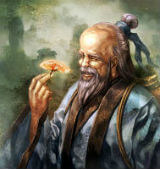 Shi Yijia (Shǐ Yǐjiǎ), styled Zǐ Rén and self-titled Xue Pu Lao Ren in his later years, was a native of Shaobo, Ganquan County, Jiangdu, Jiangsu Province. His birth and death dates remain unknown, but he was active during the Tianqi and Chongzhen reigns of the Ming dynasty and into the early Kangxi reign of the Qing dynasty. Later, he resided in Qiaoshu, east of Ailing Lake, where he farmed and studied. His father, Shi Qiyuan, served as deputy envoy of Huguang during the Ming dynasty and was a frontier minister who suppressed regional unrest. Shi Yijia began preparing for the imperial examinations at a young age. As a teenager, he studied medicine under the physician Yuan Qinyou, "acquiring pulse diagnosis skills with utmost concentration and penetrating the profound principles of the art. He could immediately determine the nature of an illness and the patient’s prognosis upon taking the pulse." After his father recovered from an illness, Shi Yijia assisted in his treatment. To care for his ailing parents, he abandoned the imperial examination path to pursue medicine. Following the establishment of the Qing dynasty, he declined official appointment to devote himself to scholarly cultivation and medical study, rarely entering urban centers throughout the year. He studied medicine under the renowned physician Yuan Qinyou and mastered pulse diagnosis. He is the author of Shanghan Zhengzong (The Authentic Theory of the Treatise on Cold-Induced Diseases), a commentary on Zhang Zhongjing’s writings incorporating interpretations by Xu Shuwei, Wang Haogu, and Pang Anshi. Shi Yijia championed the study of Zhang Zhongjing and dedicated himself to the theory of cold-induced diseases. He spent over thirty years studying Zhang Zhongjing’s Shang Han Lun (Treatise on Cold-Induced Diseases) and compiled this seminal work.
Major Works and Academic Contributions
In addition to medicine, Shi Yijia also studied astronomy, geography, and texts from various philosophical schools. Besides Shanghan Zhengzong, his other works include Wen Xian Tong Kao Chao (A Compendium of Institutional History: A Selection), Xuepu Suibi (Random Notes from the Scholar’s Garden), Gougu Chousuan Jiefa (A Concise Method for Gougu [Pythagorean] Computations), and Guang Wu Shu Shilei Fu (An Expanded Edition of Wu Shu’s “Rhapsody on Categorized Subjects”). However, none of these works have survived to the present day.
Shang Han Zheng Zong (The Authentic Theory of the Treatise on Cold-Induced Diseases) is Shi Yijia’s seminal commentary on cold-induced diseases, composed during the late Ming and early Qing dynasties. It was first printed in the 17th year of the Kangxi reign (1678 CE) and re-engraved for publication in the 24th year of Kangxi (1685 CE). The work did not circulate widely. Today, only one complete Kangxi-era edition is known to survive — housed in the Library of the Chinese Academy of Medical Sciences — making it the sole extant copy in China. The text inherits and refines two key interpretive frameworks: Fang Youzhi’s "re-edition and compilation" approach and Yu Chang’s "three outlines" theory. Shi Yijia advocates studying Zhang Zhongjing’s Shanghan Lun (Treatise on Cold-Induced Diseases) by organizing its content around syndromes as structural outlines and selecting or discarding historical commentaries based on clinical evidence. His annotations commend Cheng Wuji’s method of interpreting the Shanghan Lun through classical exegesis, and his prescription-related notes emphasize practical clinical applicability.
Shi Yijia’s commentary primarily employs classical texts to elucidate the Shanghan Lun. Striving for concision, this monograph both inherits and advances Zhang Zhongjing’s medical theory.
References:
-
- 1. Shi Yijia: Biographical Introduction and Historical Accounts, Major Works and Academic Contributions
