
Tao Hua: Biographical Introduction and Historical Accounts, Major Works and Academic Contributions
-
 ✵Tao Hua: A herbalist during the Ming Dynasty who specialized in the study of Shang Han Lun (The Treatise on Cold-induced Diseases). Patients usually recovered after taking only one dose of his prescription. He is the author of Shanghan Liu Shu (The Six Books of Shanghan), a book on the study of Shang Han Lun.
- Tao Hua
-
Brief Introduction Chinese Name: 陶華 (Táo Huá) Alias: 尚文 (Shàng Wén) Style Name: 節庵 (Jiē'ān) English Name: Tao Hua (family name first) or Hua Tao (given name first) Hometown: Yuhang Dates: c. 1369–1463 CE Major Works: Shang Han Liu Shu (The Six Books of Shang Han), Yong Ju Shen Mi Yan Fang (Secret Efficacious Prescriptions for Abscesses and Carbuncles), Shang Han Dian Dian Jin Shu (The Golden Dot Book on Cold-Induced Diseases), Shang Han Quan Sheng Ji (A Complete Collection for Preserving Life in Cold-Induced Diseases). Representative Work: Shang Han Liu Shu (The Six Books of Shang Han). Biographical Introduction and Historical Accounts
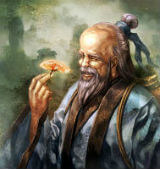 Tao Hua—whose alias was Shang Wen (尚文, Shàng Wén) and self-designated style name was 節庵 (Táo Jiē'ān)—was a Ming Dynasty herbalist. According to historical records, he was born around 1369 and died in 1463. He was a native of Yuhang during the Ming Dynasty. He specialized in the study of Shang Han Lun (The Treatise on Cold-Induced Diseases). Patients often recovered after taking only one dose of his prescription, earning him the epithet "Tao Yitie" (“Tao of the Single Dose”). He is the author of Shang Han Liu Shu (The Six Books of Shang Han).
Major Works and Academic Contributions
Shang Han Liu Shu (The Six Books of Shang Han) is a systematic commentary on Shang Han Lun. It is also known as Tao Shi Shang Han Quan Shu (Tao’s Complete Works on Cold-Induced Diseases). Compiled by Tao Hua in the tenth year of the Zhengtong reign period of the Ming Dynasty (1445 CE), it comprises six volumes. Each volume presents an independent monograph on Shang Han Lun from Tao Hua. collectively forming The Six Books of Shang Han. The six volumes are briefly introduced below:
(1) Shang Han Suo Yan (Trivial Remarks on the Treatise on Cold-Induced Diseases): A record of Tao Hua’s personal studies and reflections on Shang Han Lun. Though titled “Trivial Remarks,” it reflects structured scholarly engagement rather than being unsystematic.
(2) Shang Han Jia Mi Di Ben (Secret Family-Transmitted Edition of the Treatise on Cold-Induced Diseases): This text focuses on syndromes of cold-induced diseases, as well as the syndromes and treatments of wind-warm syndrome, damp-warm syndrome, wind-dampness syndrome. It also includes a general treatise on Shang Han Lun and discussions of pulse diagnosis methods.
(3) Shang Han Sha Che Chui Fa (Methods for Dispelling Pathogens and Restoring Balance): This volume emphasizes therapeutic strategies for expelling pathogens, herb preparation techniques, and antidotal methods. It records Tao Hua’s original academic insights and lists thirty-seven efficacious, empirically validated prescriptions.
(4) Shang Han Yi Ti Jin (One Handle of Gold from the Treatise on Cold-Induced Diseases): An introductory and pedagogical guide designed to clarify the core principles and structure of Shang Han Lun.
(5) Shang Han Jie Jiang Wang (The Netlike Exposition of the Treatise on Cold-Induced Diseases): It elaborates on syndrome differentiation and identification for exogenous febrile diseases, as well as their etiology and therapeutic principles. It also addresses gender-specific treatment considerations in managing such diseases. The text embodies classical TCM doctrines of adapting treatment to time, place, and individual constitution.
(6) Shang Han Ming Li Xu Lun (Continued Discourse on Clarifying Principles of Cold-Induced Diseases): Drawing on personal clinical experience and modeled after Cheng Wuji’s Shang Han Ming Li Lun (Concise Exposition of Cold-Induced Disease), Tao Hua supplemented and refined its content, completing this volume as a coherent extension.
Tao Hua’s works were significantly influenced by Zhu Gong’s Nan Yang Huo Ren Shu (Nanyang Book for Life-Saving). However, the content of his six books exhibits repetition; syndrome differentiation principles lack clarity; and the selection of prescriptions and medicinals appears inconsistent—prompting extensive critical commentary from later generations. Numerous Ming and Qing dynasty block-printed editions of Tao Hua’s works survive.
Shang Han Quan Sheng Ji (A Complete Collection for Preserving Life in Cold-Induced Diseases) was compiled by Tao Hua and comprises 169 chapters totaling over 100,000 Chinese characters. It discusses the pathogenesis of exogenous febrile diseases—including warm disease and febrile diseases—as well as syndrome differentiation and treatment strategies. Characterized by detailed analysis and clinical flexibility, the work not only interprets Zhang Zhongjing’s core teachings but also extends beyond the traditional Six Channels framework of Shang Han. Herbalist Ye Gui's ancestors regarded it as a foundational professional text for generations. Ye Tianshi studied it at age sixty-eight and added annotations. Consequently, the book exerted considerable influence on the academic lineage of the Ye family.
References:
-
- 1. Tao Hua: Biographical Introduction and Historical Accounts, Major Works and Academic Contributions
