
Wang Hu: Biographical Introduction and Historical Accounts, Major Works and Academic Contributions
-
 ✵Wang Hu: A physician of the Qing dynasty who lived primarily from the mid- to late 17th century. He thoroughly studied multiple commentaries on the Shang Han Lun (Treatise on Cold-induced Diseases) by earlier scholars. His deep engagement with the text yielded original insights, systematic elaborations, and innovative theoretical contributions. He is widely regarded as one of the most accomplished physicians of the Qing dynasty in interpreting the essence of the Shang Han Lun. He is the author of Shang Han Lun Bian Zheng Guang Zhu (Extensive Annotations on the Differentiation of Syndromes in the Treatise on Cold-Induced Diseases) and Zhong Han Lun Bian Zheng Guang Zhu (Extensive Annotations on the Differentiation of Syndromes in the Treatise on Cold Direct Attack).
- Wang Hu
-
Brief Introduction Chinese Name: 汪琥 (Wāng Hǔ) Alias: 青溪子 (Qīng Xīzǐ) Style Name: 苓友 (Língyǒu) English Name: Wang Hu (family name first) or Hu Wang (given name first) Hometown: Changzhou Dates: Lived approximately from the mid- to late 17th century Major Works: Shang Han Lun Bian Zheng Guang Zhu (Extensive Annotations on the Syndrome Differentiation of the Treatise on Cold-Induced Diseases), Zhong Han Lun Bian Zheng Guang Zhu (Extensive Annotations on the Syndrome Differentiation of Cold Direct Attack), Dou Zhen Guang Jin Jing Lu (Comprehensive Mirror of Smallpox and Measles), Yang Sheng Jun Zhu Bian (Compilation of Sovereign Principles for Nourishing Life). Representative Works: Shang Han Lun Bian Zheng Guang Zhu, Zhong Han Lun Bian Zheng Guang Zhu. Biographical Introduction and Historical Accounts
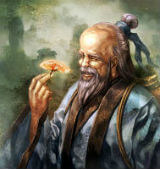 Wang Hu (Wāng Hǔ), a Qing dynasty physician whose style name was Língyǒu and alias was Qīng Xīzǐ, was a native of Changzhou, Jiangsu Province. His exact birth and death dates remain unknown, but historical evidence places his active period in the mid- to late 17th century. He initially pursued Confucian studies before turning to medicine. His rigorous study of the Shang Han Lun (Treatise on Cold-Induced Diseases) produced distinctive theoretical achievements, detailed exegesis, and methodologically innovative interpretations. He is recognized as a leading medical scholar of the Qing dynasty for his authoritative grasp of the Shang Han Lun.
Major Works and Academic Contributions
Wang Hu achieved accomplishments in his study of the Shang Han Lun (Treatise on Cold-Induced Diseases). He extensively read various commentaries on the Shang Han Lun by earlier physicians. His major works include Shang Han Lun Bian Zheng Guang Zhu, Zhong Han Lun Bian Zheng Guang Zhu, Dou Zhen Guang Jin Jing Lu, and Yang Sheng Jun Zhu Bian.
Shang Han Lun Bian Zheng Guang Zhu (Extensive Annotations on the Syndrome Differentiation of the Treatise on Cold-Induced Diseases) is a monograph on the Shang Han Lun. It is a fourteen-volume work compiled and completed by Wang Hu by the 19th year of the Kangxi era (1680 CE). The book was first engraved and published in the 19th year of the Kangxi era (1680 CE); the edition was a self-engraved copy produced by Wang Hu in Xiaojiaxiang, Wujun County. Based on the Su Wen (The Plain Questions) theory that "heat diseases are all included within cold-induced diseases," Wang Hu extracted from the Shang Han Lun those passages pertaining to heat diseases (i.e., pyrexia and febrile diseases) affecting the six channels, along with their corresponding treatments. He extensively referenced theories from various schools to identify and annotate these passages one by one. Wang Hu elaborated on the content concerning heat diseases (febrile diseases) in the Shang Han Lun. Wang Hu made differences between heat diseases (febrile diseases) and cold syndromes. Accordingly, he analyzed and reorganized the Shang Han Lun into two separate works. Four editions of this work have survived to this day.
In the preface and guide to the use of the book, Wang Hu states that Zhang Zhongjing’s theory ultimately stems from Huang Di and Qi Bo.
Zhong Han Lun Bian Zheng Guang Zhu (Extensive Annotations on the Syndrome Differentiation of Cold Direct Attack) is another monograph on the Shang Han Lun, compiled and completed by Wang Hu. According to the Fán Lì (the guide to using the book), the author began compiling this work in mid-autumn of the Jiǎ Zǐ year of the Kangxi reign (the 23rd year of Kangxi, 1684 CE) and completed it in mid-spring of the Bǐng Yín year (the 25th year of Kangxi, 1686 CE). As stated in the guide: “Since the day I began seeking medical texts from renowned schools in my daily studies, focusing on the diagnosis and treatment of difficult and complex syndromes, more than twenty years have passed. Drawing upon all my experience over these past two decades, I compiled this book.” Therefore, the work was completed in mid-spring (February in the lunar calendar) of 1686 CE. Wang Hu selected the original entries in the Shang Han Lun that pertain specifically to true cold diseases, providing annotations and syndrome differentiations for each. The editorial style follows that of his earlier work, Shang Han Lun Bian Zheng Guang Zhu. The contents cover pulse-syndrome differentiation and treatment methods for Taiyang, Yangming, Taiyin, Shaoyin, and Jueyin diseases, supplemented with "varied treatment methods for cold direct attack proposed by later scholars." The author emphasized the differences between heat diseases (febrile diseases) and cold syndromes. Hence, he analyzed and divided the Shang Han Lun into two distinct works. In his annotations, he collected numerous essential discussions from earlier scholars, editing them into cohesive passages introduced by the phrase "Wang Hu notes:" , thereby clearly articulating his own views. This work is often appended to the end of his Shang Han Lun Bian Zheng Guang Zhu. The original engraved edition, produced by Wang Hu himself, as well as various later copies, have survived to the present day.
Wang Hu believes that most of the original texts of the Shang Han Lun (Treatise on Cold-Induced Diseases)—the edition compiled by Wang Shuhe—are Zhang Zhongjing’s original works. However, he argues that several ariticles should be deleted. He maintains that the interpretation of medical classics should be grounded in clinical practice, with the aim of clarifying the intent of each entry to ensure accuracy in therapeutic application.
Regarding the editing order of the Shang Han Lun, Wang Hu made some adjustments to the chapter organization of the six channels from Wang Shuhe’s compilation. This organizational method differs from all prior schools of Shang Han scholarship, yet reflects the pragmatic and rigorous nature of Wang Hu’s study. In clinical practice, Wang Hu’s arrangement appears more reasonable.
Wang Hu follows the Nei Jing (the Inner Canon)’s view on heat disease (febrile diseases): "Heat diseases are all included within cold-induced diseases," and asserts that "those who fall ill from cold-induced diseases invariably present with febrile manifestations." He contends that Zhongjing’s work is fundamentally grounded in the febrile disease theory of the Nei Jing, and regards his work as the most authoritative among all works on cold-induced diseases. Using the presence or absence of cold and heat symptoms as the organizing principle, he restructured the entries and articles of the Shang Han Lun. He compiled all entries belonging to heat syndromes (febrile syndromes) into his work Shang Han Lun Bian Zheng Guang Zhu. Simultaneously, he appended a theoretical exposition distinguishing cold-induced diseases from non–cold-induced diseases at the beginning of the first volume. He accordingly compiled the entries belonging to cold syndromes into Zhong Han Lun Bian Zheng Guang Zhu. The cold-induced diseases he classified correspond to cold-induced disease in the broad sense (i.e., exogenous febrile diseases).
For the entries and articles he relocated and re-edited, Wang Hu annotated their sources, provided critical commentary, and preserved—whenever feasible—the original wording and structure of the entries from the Shang Han Lun (Treatise on Cold-induced Diseases).
Wang Hu elaborated on Zhongjing’s prescriptions in meticulous detail and also offered original insights regarding herbs whose identities were ambiguous in the original records of the Shang Han Lun. Recognizing the limitations of the Shang Han Lun prescriptions in clinical application, Wang Hu supplemented Zhang Zhongjing’s formulations with numerous efficacious prescriptions developed by later generations. He systematically compared these later prescriptions with Zhongjing’s originals, explicating the rationale behind each innovation and highlighting their refined and ingenious features. Wang Hu’s exposition and clinical application of prescriptions embody the principle of “emulating the ancient masters without rigidity—adapting flexibly to clinical reality.” He is indeed a preeminent medical scientist and herbalist who has fully grasped the essence and underlying principles of the Shang Han Lun, and his work remains profoundly instructive for posterity.
References:
-
- 1. Wang Hu: Biographical Introduction and Historical Accounts, Major Works and Academic Contributions
- 2. Author’s Preface to Shang Han Lun Bian Zheng Guang Zhu, by Wang Hu
- 3. Zhong Han Lun Bian Zheng Guang Zhu: Fán Lì (Extensive Annotations on the Syndrome Differentiation of Cold Direct Attack: Guide to the Use of the Book), by Wang Hu
