
Wan Quan: Biographical Introduction and Historical Accounts, Major Works and Academic Contributions
-
 ✵Wan Quan: A renowned physician of the Ming dynasty. He was born into a family of physicians, and both his grandfather and father specialized in pediatrics. He is especially celebrated for his contributions to pediatric medicine. He inherited his grandfather’s and father’s medical ethics and treated countless patients over his 50-year clinical career. He is also the author of Shang Han Zhai Jin (Excerpts from the Treatise on Cold-induced Diseases), a scholarly commentary on Zhang Zhongjing’s Shang Han Lun (Treatise on Cold-Induced Diseases).
- Wan Quan
-
Brief Introduction Chinese Name: 萬全 (Wàn Quán) Alias: 字事 (Zì Shì) Self-Title: 密齋 (Mìzhāi) English Name: Wan Quan (family name first) or Quan Wan (given name first) Hometown: Luotian County Dates: c. 1499–1582 CE Major Works: Wan Mi Zhai Yi Shu Shi Zhong (Ten Medical Texts of Wan Mizhai), 108 volumes Representative Works: Wan Mi Zhai Yi Shu Shi Zhong (Ten Medical Texts of Wan Mizhai). Biographical Introduction and Historical Accounts
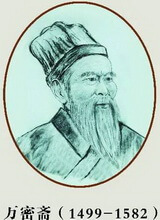 Wan Quan, his aliases are Mi Zhai (密齋, Mì Zhāi) or Zi Shi (字事, Zì Shì), was born in 1499 and died in 1582 CE. He was a distinguished physician of the Ming dynasty, born into a multi-generational lineage of physicians specializing in pediatrics. His grandfather, Wan Xingpo (萬杏坡, Wàn Xìngpō), a native of Yuzhang (present-day Nanchang, Jiangxi), was the first-generation pediatrician of the Wan family but died young. His father, Wan Kuang (萬筐, Wàn Kuāng), relocated to the banks of the Luotian River in the Gengzi year of the Chenghua reign (1480 CE) amid military conscription shortages. Within a few years, he gained renown as a physician, establishing “Wan’s Pediatrics” as the second generation. Wan Quan—third in this lineage—became even more prominent in pediatrics. He inherited his forebears’ medical ethics and treated countless patients during his 50-year clinical practice.
Wan Quan studied Confucian classics intensively from an early age. Under the tutelage of Confucian scholars Hu Liuxi (胡柳溪, Hú Liǔxī) and Zhang Yuquan (張玉泉, Zhāng Yùquán), he mastered the Confucian canon, history, and calendrical science. At age 19, he entered the prefectural school in Hu Yang as a Zhu Sheng (a government-supported student of the Ming civil examination system). At 28, he became a Shan Sheng (a higher-ranking scholar-student). He frequently visited local physicians on his father’s behalf and treated illnesses among teachers and fellow students, gradually earning recognition as a skilled physician. He sat for several triennial provincial examinations (ju ren exams) but did not succeed. At age 30, following his father’s death, he abandoned the examination path and devoted himself fully to medicine.
Although Wan Quan relinquished the imperial examinations early, his reverence for Confucian learning remained unwavering. He founded private schools multiple times, taught disciples throughout his life, and authored numerous Confucian works—claiming his writings spanned “the Classics, history, calendrical science, and the Hundred Schools.” Regrettably, none of these Confucian texts survive today.Major Works and Academic Contributions
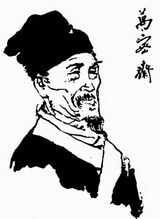 Wan Quan’s academic thought is rigorous, systematic, and deeply rooted in classical foundations—yielding rich, practical outcomes. His writings cover pediatrics, gynecology, internal medicine, eugenics, infant care, longevity cultivation, fertility, and preventive healthcare—demonstrating exceptional breadth and depth.
Drawing upon the extensive clinical experience of his predecessors and his family’s medical tradition, Wan Quan compiled numerous influential works, including: Bao Ming Ge Kuo (Songs for Preserving Life), 35 volumes; Shang Han Zhai Jin (Excerpts from the Treatise on Cold-induced Diseases), 2 volumes; Yang Sheng Si Yao (The Four Essentials of Health Preservation), 3 volumes; Nei Ke Yao Jue (Essentials of Internal Medicine), 3 volumes; You Ke Fa Hui (Elaboration of Pediatrics), 4 volumes, Yu Ying Mi Jue (Secrets of Infant Care), 4 volumes; and Dou Zhen Xin Fa (Essential Methods for Exanthema Variolosum), 23 volumes, Pian Yu Xin Shu (A New Book of Jade Fragments), 5 volumes; Pian Yu Ju Zhen (Jade Fragments on Ulcers and Rashes), 13 volumes; Guang Si Ji Yao (Compendium on Prolonging the Lineage), 16 volumes. These were later compiled and edited into the integrated series Wan Mi Zhai Yi Shu Shi Zhong (Ten Medical Texts of Wan Mizhai), totaling 108 volumes and over 700,000 Chinese characters. In addition, more than ten handwritten manuscripts survive, including Wan Shi Wai Ke Xin Fa (Essential Methods of Wan’s Surgery), Jiu Bing Dian Dian Jing (Concise Classics on Alcohol-Related Disorders), Wan Shi Mi Chuan Yan Ke (Secret Transmission of Ophthalmology by the Wan Family) and collected the works Dou Zhen Ge Kuo (Songs on Smallpox and Measles), 4 volumes, and You Ke Zhi Nan (Pediatric Guidelines).
Wan Quan is especially renowned for his contributions to pediatrics and gynecology. His pediatric approach is grounded in the theories of the Song-dynasty physician Qian Yi. It emphasizes infant care and disease prevention. Syndrome differentiation relies on the Four Diagnostic Methods (inspection, auscultation and olfaction, inquiry, and palpation), while treatment strategies and prescriptions prioritize regulation of the Spleen and Stomach. His family’s clinically validated prescriptions have been transmitted across generations—some remain in use today.
Shang Han Zhai Jin (Excerpts from the Treatise on Cold-induced Diseases) is a scholarly commentary on Zhang Zhongjing’s Shang Han Lun (Treatise on Cold-Induced Diseases). Its full title is Wan Shi Jia Chuan Shang Han Zhai Jin (Family-Transmitted Excerpts from the Treatise on Cold-induced Diseases), a two-volume work compiled by Wan Quan. Drawing upon his extensive clinical experience, the text focuses on syndromes of the Six Channels and selects and refines therapeutic methods from the Shang Han Lun. It also documents treatments for complex syndromes—including dual-affection patterns of Shang Han (simultaneous involvement of exterior and interior, or paired Yin and Yang channels), relapse triggered by overexertion after recovery, Yin-Yang reversal, Jing-Shi-Ye syndromes (spasms, dampness, and summer-heat disorders), Huo-Luan (acute gastroenteritis), warm diseases, and seasonal epidemic febrile diseases. Later, it was incorporated into the comprehensive collection Wan Mi Zhai Yi Xue Quan Shu (Complete Medical Works of Wan Mizhai). Ming- and Qing-dynasty woodblock-printed editions survive to this day. The book systematically elucidates the Six Channel syndromes, and Wan Quan offers original insights and interpretations regarding their transmission and transformation.
References:
-
- 1. Wan Quan: Biographical Introduction and Historical Accounts; Major Works and Academic Contributions
