
Wu Shou: Biographical Introduction and Historical Accounts, Major Works and Academic Contributions
-
 ✵Wu Shou: A herbalist who lived from the late Yuan dynasty to the early Ming dynasty. He was skilled in treating Shang Han (exogenous febrile diseases) and possessed proficient medical expertise. Recruited to the capital as a renowned herbalist, he was appointed Yuan Pan of the Imperial Academy of Medicine. He is also the author of the book Shang Han Yun Yao Quan Shu (Essential Collection of the Complete Book of Shang Han).
- Wu Shou
-
Brief Introduction Chinese Name: 吳綬 (Wú Shòu) Alias: Unknown Style Name: English Name: Wu Shou (family name first) or Shou Wu (given name first) Hometown: Qiantang County Dates: Lived during the late Yuan and early Ming dynasties (exact birth and death dates unknown) Major Work: Shang Han Yun Yao Quan Shu (Essential Collection of the Complete Book of Shang Han), 4 volumes Representative Work: Shang Han Yun Yao Quan Shu (Essential Collection of the Complete Book of Shang Han) Biographical Introduction and Historical Accounts
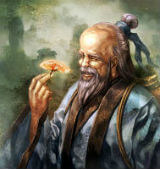 Wu Shou, an herbalist, lived from the late Yuan dynasty to the early Ming dynasty. He was from Qiantang (present-day Hangzhou). He excelled in treating Shang Han (exogenous febrile diseases) and was highly skilled in medicine. Recruited to the capital as a distinguished herbalist, he was appointed Yuan Pan of the Imperial Academy of Medicine.
When Wu Shou returned to the north, a man named Feng Ying (馮英, Féng Yīng) lived near a lake and suffered from Shang Han (cold-induced disease). Herbalists debated using Cheng Qi Decoction and invited Wu Shou to examine him. Wu Shou said, "The patient will sweat profusely; this is not a purgative syndrome—we should wait." After a while, the patient began to sweat and felt better. Wu Shou is the author of Shang Han Yun Yao Quan Shu (Essential Collection of the Complete Book of Shang Han).Major Works and Academic Contributions
Shang Han Yun Yao Quan Shu (Essential Collection of the Complete Book of Shang Han) is a classical Chinese medical text written by Wu Shou during the Ming dynasty. It was compiled and completed in the 18th year of the Hongzhi reign (1505 CE).
The first volume contains twenty-five chapters. It discusses Shang Han (exogenous febrile diseases) through a question-and-answer format, the Yun-Qi Theory (theory of the five elements' motion and six climatic factors), and methods for observing facial color, eyes, nose, lips, ears, tongue, and pulse. It also covers the transmission of the Six Channels and the the principal indications of medicinal properties. Illustrations are included for clarification. The second volume outlines exogenous febrile diseases, the theory of cold-induced diseases, warm diseases, and febrile diseases; the diagnosis of cold affection, wind affection, warm diseases, and febrile diseases; asthma; cough; palpitations; and abdominal pain. It comprises twelve articles discussing prescriptions for Shang Han. The third volume addresses fever differentiation between root causes and manifestations in the Three Yang Channels; diagnosis and syndrome differentiation of fever arising from cold-induced exterior syndromes; aversion to cold; hot flashes; thirst; blood stasis; epigastric oppression; and more. It contains thirty-eight articles discussing Shang Han prescriptions. The fourth volume covers differentiation of Yin and Yang syndromes; Chu Zhong (a sudden surge of appetite preceding collapse); Re Jue (pyretic syncope), Zang Jue (visceral cold extremities), Hui Jue (ascariasis-induced syncope, ascariasis syncope), Bu Mian (insomnia), pharyngalgia (sore throat), edema, Shang Han of women, and Shang Han in infants—totaling sixty-one articles that discuss Shang Han prescriptions. Following Zhang Zhongjing’s principles of syndrome differentiation and treatment, the text emphasizes accurate syndrome identification and compiles essential discussions by later physicians. It also includes clinically proven effective prescriptions and elaborates on the Yun-Qi Theory, presenting theoretical concepts with illustrative diagrams.
References:
-
- 1.Wu Shou: Biographical Introduction and Historical Accounts, Major Works and Academic Contributions
