
Wu Yiluo: Biographical Introduction and Historical Accounts, Major Works and Academic Contributions
-
 ✵Wu Yiluo was born into a family of renowned herbalists spanning multiple generations, and his ancestors had amassed extensive book collections. He practiced medicine for forty years and was renowned in his hometown. He is the author of Shanghan Fenjing (The Separate Channels of the Treatise on Cold-Induced Diseases).
- Wu Yiluo
-
Brief Introduction Chinese Name: 吳儀洛 (Wú Yíluò) Alias: Unknown Style Name: 遵程 (Zūn Chéng) English Name: Wu Yiluo (family name first) or Yiluo Wu (given name first) Hometown: Ganpu Dates: c. 1704–1766 CE Major Works: Shanghan Fenjing (The Separate Channels of the Treatise on Cold-Induced Diseases), Ben Cao Cong Xin (The New Compilation of Materia Medica), Cheng Fang Qie Yong (Prescriptions Apt for Application), Yi Yuan Bi Che (The One Source of All Things), Si Zhen Xu Xiang (The Details of the Four Diagnostic Methods), Za Zheng Tiao Lv (Principles and Categories of Miscellaneous Diseases), Nǚ Ke Yi Jin(Gynecology Adapted to Contemporary Conditions), Zhou Yi Zhu (Annotations on the I Ching), Chun Qiu Chuan Yi. Representative Works: Shanghan Fenjing, Ben Cao Cong Xin, Cheng Fang Qie Yong. Biographical introduction and historical accounts
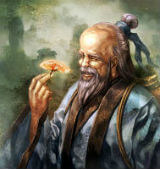 Wu Yiluo is a Qing dynasty physician, his style name was Zun Cheng, he is native to Shupu, he passed the imperial examination and attained the rank of Xiù Cai (a certified scholar, former scholar graduate of first degree). He was born into a family of renowned herbalists for generations, and his ancestors had an extensive collection of books. They collected works by famous masters, including poetry collections, classical texts, historical works, and rare medical treatises.They were well known for studying and practicing medicine. At a young age, he studied as a candidate for the imperial examinations and read medical texts in his spare time. Later, he switched to studying Qi Huang—the study of Qi Bo and Huang Di, i.e., traditional Chinese medicine.
He traveled to provinces in southern and northern China and other places, staying in Siming (present-day Ningbo) for five years and entering the Tian Yi Chamber, where he diligently studied medicine; his learning gradually became refined. In his spare time while practicing medicine, he collected books extensively, read widely, and deepened his understanding of syndromes. He practiced medicine for 40 years and was renowned in his hometown.Major Works and Academic Contributions
Wu Yiluo is the author of the following works: Ben Cao Cong Xin (The New Compilation of Materia Medica), Shang Han Fen Jing (The Separate Channels of the Treatise on Cold-Induced Diseases), and Cheng Fang Qie Yong (Prescriptions Apt for Application). He also wrote other works, including Yi Yuan Bi Che (The One Source of All Things), Si Zhen Xu Xiang (The Details of the Four Diagnostic Methods), Za Zheng Tiao Lv (Principles and Categories of Miscellaneous Diseases), Nǚ Ke Yi Jin (Gynecology Adapted to Contemporary Conditions), Zhou Yi Zhu (Annotations on the I Ching), and Chun Qiu Chuan Yi, among others. However, most of these books are scattered or lost.
The 18-volume Ben Cao Cong Xin (The New Compilation of Materia Medica) was compiled by Wu Yiluo and completed in the 22nd year of the Qianlong reign (1757 CE). It was published in the same year. The work records 721 kinds of herbs—240 more than those listed in Ben Cao Bei Yao (Essentials of Materia Medica). TThe book is organized into six main volumes, each subdivided into three parts, yielding a total of eighteen volumes. Over 210 additional herbs are included (including those not listed separately). This pharmacological work is a revised and expanded edition based on Wang Ang’s Ben Cao Bei Yao (The Essentials of Materia Medica), incorporating nearly 300 new medicinal substances. Cordyceps and Radix Pseudoginseng, among others, appear here for the first time in a Chinese materia medica. Moreover, the authenticity of each herb, as well as cases where the same name refers to different substances—with differences in nature, taste, function, etc.—are recorded individually. The text also presents numerous novel insights regarding herbal properties. Its classification system follows that of Ben Cao Gang Mu (Compendium of Materia Medica), but is more concise and practical.
In Cheng Fang Qie Yong (Prescriptions Apt for Application), the author extensively collected effective prescriptions from previous dynasties, compiling over 1,300 formulas from both ancient and contemporary sources. He explains their rationale, details modifications (additions and subtractions), outlines principles of treatment, discusses theories of prescription formulation, and illustrates practical applications. Nearly all aspects related to prescriptions are addressed.
Shang Han Fen Jing (Separate Channels of the Treatise on Cold-Induced Diseases) is a ten-volume work based on Shang Han Lun (Treatise on Cold-Induced Diseases), compiled by Wu Yiluo and completed in the 32nd year of the Qianlong reign (1766 CE). Wu Yiluo praised Yu Chang’s Shang Lun Pian, stating that Yu “subordinated the 397 methods under broad channel-based outlines, thereby capturing the subtlety of channel differentiation.” Accordingly, Wu re-edited the text under the title Fen Jing ( "channel differentiation"), supplementing and annotating it. The book also introduces Yu’s “autumn-dryness theory” and “theory of sudden death from direct cold invasion”—both originally presented in Yu Chang’s Yi Men Fa Lv (Principles and Prohibitions for the Medical Profession). However, in terms of academic innovation, the work offers few original additions or elaborations. The original woodblock-printed edition survives to this day.
References:
-
- 1. Wu Yiluo: Biographical Introduction and Historical Accounts, Major Works and Academic Contributions
