
You Yi: Biographical Introduction and Historical Accounts, Major Works and Academic Contributions
-
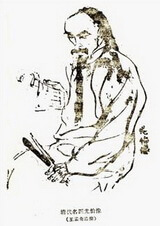
 ✵You Yi: A Qing dynasty herbalist, who sold calligraphy in a temple for a living. He later became a favored disciple of Ma Chu. His academic attainments deepened in his later years. He studied Zhang Zhongjing’s works extensively, and authored Jin Kui Yao Lüe Xin Dian (Heart Code of the Synopsis of the Golden Chamber) and Shang Han Guan Zhu Ji (A String of Pearls from the Treatise on Cold-induced Diseases).
- You Yi
-
Brief Introduction Chinese Name: 尤怡 (Yóu Yí) Alias: 拙吾 (Zhuō Wǔ) Style Name: 在涇 (Zài Jīng) English Name: You Yi (family name first) or Yi You (given name first) Hometown: Changzhou, Jiangsu Province Dates: c. 1650–1749 CE Major Works: Jin Kui Yao Lüe Xin Dian (Synopsis of the Golden Chamber: Heart Code), Shang Han Guan Zhu Ji (Treatise on Cold-induced Diseases: A String of Pearls) Representative Works: Shang Han Guan Zhu Ji, Jin Kui Yao Lüe Xin Dian, Jin Kui Yi Biographical introduction and historical accounts
 You Yi’s style names were Zai Jing or Yin He. His self-designations were Zhuo Wu or Si He Shan Ren. He was a native of Changzhou (present-day Wuxi District, Jiangsu Province). In his youth, his family was impoverished, and he was diligent in his studies. To support himself, he sold calligraphy in a temple.
Later, he studied under Ma Chu, a renowned Qing dynasty physician specializing in internal medicine. He became Ma Chu’s favored disciple and began applying his medical knowledge to help patients. You Yi achieved remarkable clinical outcomes, and his scholarly attainments deepened in his later years. Many patients experienced unexpected recoveries, and he gained widespread renown.
You Yi was a quiet and composed person, indifferent to fame and fortune. He had no interest in public acclaim and held little regard for wealth or status. He lived as a recluse in Huaxi and excelled in poetry and classical literature. In his leisure time, he read books, tended flowers, raised cranes and fish, and wrote treatises for personal cultivation. He styled himself Si He Shan Ren (“Hermit of the Crane-Feeding Mountain”) and found joy in scholarly writing. He studied diligently and read medical texts extensively. He conducted in-depth research on Zhang Zhongjing’s works.Major Works and Academic Contributions
 In his later years, You Yi refined his diagnostic and therapeutic methods through profound study of Zhang Zhongjing’s writings. His major works—Jin Kui Yao Lüe Xin Dian (Heart Code of the Synopsis of the Golden Chamber), Shang Han Guan Zhu Ji (Treatise on Cold-induced Diseases: A String of Pearls)—exerted significant influence on the interpretation and development of Zhang Zhongjing’s medical theory. Other works include the three-volume Yi Xue Du Shu Ji (Medical Reading Notes); and a continuation of Jin Kui Yao Lüe Xin Dian, the eight-volume Jin Kui Yi (Supplements to the Heart Code of the Synopsis of the Golden Chamber); ande Jing Xiang Lou Yi An (Medical Case Records from the Jing Xiang Lou Studio). His collected poems are titled Bei Tian Shi Gao (Poem Drafts from the Northern Fields).
The three-volume Jin Kui Yao Lüe Xin Dian (Heart Code of the Synopsis of the Golden Chamber) was compiled by You Yi and completed in 1729 CE. You Yi read annotation books on the Jin Kui Yao Lüe (Synopsis of the Golden Chamber) and stated: "A person of high moral character is farsighted; yet if his tone is swayed and his explanations lack precision, his interpretations will drift. One who adheres to principle seeks to read and write strictly according to the original texts, fearing that his discussions may stray from their intended meaning." Thus, he took the older version of the Jin Kui Yao Lüe and attempted a fresh reinterpretation. He reconstructed the missing passages where no annotations existed in the original texts and revised those sections whose meanings were obscure, striving to grasp the core intent—the “heart”—of the ancient sages. According to You Yi, the title "Heart Code" signifies "seeking the heart of the ancient sages with my own heart, thereby obtaining the essential code." This work represents the culmination of You Yi’s decade-long scholarly engagement. Drawing upon earlier commentaries, You Yi’s intensive study of the Jin Kui Yao Lüe integrated years of learning and clinical experience to elucidate Zhang Zhongjing’s teachings. The original text and its interpretation are concise, lucid, logically structured, and well-grounded; they faithfully convey the essence and meaning of Zhang Zhongjing’s original work. Regarding a few passages whose meaning remains obscure, You Yi preferred to omit annotation altogether rather than offer a forced or speculative interpretation. He also corrected errors introduced during the transmission of private manuscript copies. He reorganized the contents of the Jin Kui Yao Lüe into a coherent sequence: articles on zang-fu viscera, meridian channels, and pulse syndromes appear first; the pulse-syndrome of pulmonary dysfunction, lung carbuncle, cough, and abnormal rising of Qi the seventh chapter—forming the first volume; the treatment and pulse-syndrome of renal mass (‘Running Piglet’) through the eighth to the fourteenth section—treatment and pulse-syndrome of water-qi disease—comprise the second volume; the fifteenth section—treatment of jaundice syndrome—through the twenty-second section—combined treatment of women’s miscellaneous syndromes—constitute the third volume. The three original articles on miscellaneous therapies and prohibited foods were omitted, as were certain passages interpolated by later generations. This book offers profound insight and interprets Zhang Zhongjing’s meaning with better accuracy. It is among the most highly regarded annotated editions of the Jin Kui Yao Lüe and has exerted considerable influence on subsequent commentaries, serving as an invaluable reference for studying the Jin Kui Yao Lüe.
The eight-volume Shang Han Guan Zhu Ji (Treatise on Cold-induced Diseases: A String of Pearls) is a commentary on the Shang Han Lun (Treatise on Cold-induced Diseases). According to You Yi, the disordered sequence—or arrangement—established by Wang Shuhe and perpetuated in later compilations sparked debate, revision, and correction among subsequent scholars, each formulating their own doctrines. Yet the proliferation of doctrines only obscured the original truth further. Not only does the Shang Han Guan Zhu Ji annotate the original text of the Shang Han Lun passage by passage, but it also reorganizes the text’s sequence using the Six Channels as the structural framework and therapeutic methods as the organizing categories. Syndromes are classified according to corresponding prescriptions, and the original texts are reordered and grouped accordingly—thereby rendering the distinctive features of each therapeutic approach unmistakably clear. Each of the Six Channels has its own systematic outline. In addition to routine treatment methods, modified approaches are listed for each channel. You Yi’s Shang Han Guan Zhu Ji is well organized around its therapeutic principles, logically sequenced and clear in structure, and not confined to ancient conventions. It incorporates his detailed elaborations and remains a valuable reference for studying the Shang Han Lun and applying syndrome differentiation.
The eight-volume Jin Kui Yi (Supplements to the Commentaries on the Synopsis of the Golden Chamber) was compiled by You Yi. This work resulted from his effort to supplement his earlier book, Jin Kui Yao Lüe Xin Dian (Heart Code of the Synopsis of the Golden Chamber), hence its title Jin Kui Yi ("The Wings to the Golden Chamber"). The text systematically elaborates on internal medicine disorders, covering a total of forty-eight categories. Each category begins with a general theoretical exposition, followed by differentiation of syndromes, symptoms, and corresponding treatment methods; each concludes with explanatory notes. It clearly distinguishes between exterior and interior, deficiency and excess in each syndrome, and elucidates the functions of replenishing, warming, and cooling therapies—rendering the content lucid and accessible.
Yi Xue Du Shu Ji (Medical Reading Notes) is a three-volume set, supplemented by an additional volume of Continuation Notes. Compiled by You Yi and completed in 1729 CE, it comprises miscellaneous annotations derived from his study of syndromes and therapeutics. Each entry opens with a question-based title; relevant passages from classical medical texts are quoted and subjected to concise analysis, commentary, or textual criticism. Citations from historical medical records are appended as supplementary entries.
References:
-
- 1.You Yi: Biographical Introduction and Historical Accounts, Major Works and Academic Contributions
- 2.Dà Fù Zhuōwú Fǔjūn Jiā Chuán (Family Chronicle of My Father’s Elder Brother, Styled Fujun), by Sūn Shìnán
