Introduction of the Twenty-Four Solar Terms and the Seventy-Two Pentads: Summer
✵Four Seasons, Eight Solar Terms, Twenty-Four Solar Terms, and the Seventy-Two Pentads in Spring, Summer, Autumn, and Winter are introduced. The Four Seasons, Eight Solar Terms, Twenty-Four Solar Terms, and Seventy-Two Pentads system is a traditional Chinese calendar system established in ancient China.
This part introduces the climate characteristics of the summer and its corresponding solar terms, as well as the health risks associated with seasonal factors and preventive measures.
Characteristics of the Summer Climate and Health Risks
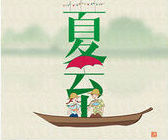
Summer is the second season of the year. According to climatology, summer begins when the average temperature exceeds 22 °C. Summer generally starts from May 5 to 7 and ends from August 7 to 9, and includes six solar terms: the Beginning of Summer, Grain Buds, Grain in Ear, the Summer Solstice, Lesser Heat, and Greater Heat.
Summer is the season with the longest daylight hours and the highest temperatures in the Northern Hemisphere. Sufficient sunshine and suitable temperatures provide favorable conditions for the life activities of most organisms; consequently, many species reproduce during this season, and most plants bloom and bear fruit in summer.
As summer begins, the human body’s metabolism becomes highly active. However, due to high environmental temperatures and the dilation of blood vessels on the skin surface, a large amount of blood concentrates near the skin, resulting in uneven internal blood distribution. This may cause symptoms such as generalized weakness, loss of appetite, dizziness, irritability, and drowsiness—and may even lead to heatstroke, vomiting, abdominal pain, and diarrhea.
The natural yin-yang dynamic in summer is characterized by the daily increase of yang energy, peaking in late summer when yin begins to emerge. Therefore, it is essential to understand the yin-yang fluctuations in summer and align health practices with the solar terms to maintain good health.
Solar terms in Summer:
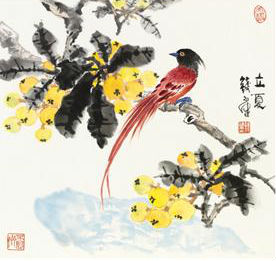
7. "Lixia" (the Beginning of Summer) is the seventh solar term among the twenty-four solar terms. It occurs annually around May 5th or 6th, when the Sun reaches a celestial longitude of 45°. At this time, the handle of the Big Dipper points southeast, signaling the arrival of summer and vigorous natural growth. With Lixia’s onset, temperatures rise markedly; hot weather approaches, rainfall and thunderstorms become frequent, and crops enter a period of rapid, lush growth. Lixia has been recognized since the late Warring States period (as recorded in 239 BCE), marking the astronomical beginning of summer. Frogs begin croaking, earthworms emerge from the soil, and all living things appear vibrant and energetic.
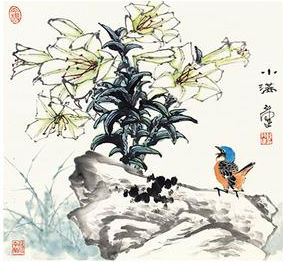
8. "Xiaoman" (Grain Buds) is the eighth solar term—and the second solar term of summer. Its name signifies that summer-harvested grains (e.g., wheat and barley) have begun to fill but are not yet fully mature: "xiao man" literally means "minor fullness," distinguishing it from "da man" ("major fullness") later in the season. Xiaoman falls around May 20th to 22nd, when the Sun reaches a celestial longitude of 60°. The ancient text Zhou Shu (Book of Zhou) records: "The sowthistle herb grows vigorously during Xiaoman."
The sowthistle herb (Ku Cai), scientifically known as Patrinia scabiosaefolia, is widely distributed across China. It is also called "Kuku Cai" (Bitter Bitter Vegetable). Its flavor is bitter, slightly astringent, and subtly sweet; it is fresh, palatable, cooling in nature, and nutritionally rich—containing vitamins, trace elements, choline, saccharides, riboflavin (not lactoflavin), mannitol, and other beneficial compounds. Traditionally, it is used to clear heat, cool the blood, and detoxify.
Grain Buds coincides with a peak incidence of seasonal skin disorders—particularly urticaria (nettle rash)—so preventive care is advised.
9. "Mangzhong" (Grain in Ear) is the ninth solar term—and the third of summer. It occurs around June 5th or 6th, when the Sun reaches a celestial longitude of 75°. During Mangzhong, awned cereal crops such as wheat and barley reach full maturity and should be harvested promptly—for example, wheat, soybeans, and green peas. It is also the optimal time to plant summer crops including late-maturing rice, peanuts, broomcorn millet, and foxtail millet. Delayed planting after Mangzhong reduces crop survival rates.
In this period, the butcherbird (shrike) begins calling—traditionally interpreted as sensing the rising Yin Qi—while the mockingbird falls silent for the same reason. Plums ripen, and in southern China, people customarily stew plums with wine. Rainfall increases significantly, and temperatures rise markedly.
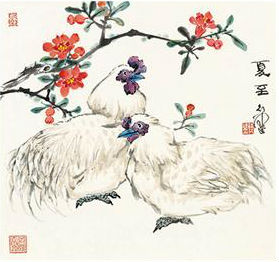
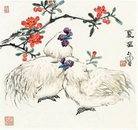
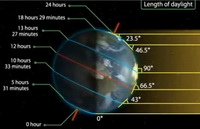
10. "Xiazhi" (the Summer Solstice) is the tenth solar term—and the fourth of summer. It occurs annually around June 21st or 22nd, when the Sun reaches a celestial longitude of 90°. On this day, the subsolar point reaches its northernmost latitude—the Tropic of Cancer—and the Sun shines almost directly overhead there. As a result, the Northern Hemisphere experiences its longest day of the year; solar radiation received there is nearly double that of the Southern Hemisphere.
Astronomers note that after the Summer Solstice, the subsolar point gradually shifts southward from the Tropic of Cancer. Consequently, daylight hours in the Northern Hemisphere shorten progressively, and the Sun’s noon altitude decreases at all locations north of the Tropic of Cancer. With the arrival of Xiazhi come thunderstorms, the plum rains (Meiyu), and high temperatures.
Xiazhi is one of the earliest solar terms identified and defined in China—as early as the 7th century B.C. Ancient Chinese astronomers used the tugui (a gnomon and earth-disk instrument) to measure solar shadow length and thereby determine the solstice.
In ancient China, the Summer Solstice was divided into three pentads: "(1) First pentad: Deer antlers begin to shed; (2) Second pentad: Cicadas begin to sing; (3) Third pentad: Pinellia ternata emerges."
Ancient scholars held that deer embody Yang energy; as Yin Qi begins to rise after the solstice—and Yang Qi recedes—deer naturally shed their antlers. Male cicadas begin singing in response to the increasing Yin Qi. Pinellia ternata, a shade- and moisture-loving herb associated with Yin energy, sprouts in wetlands during this period—hence its traditional name "Banxia" (Half-Summer).
In the Summer Solstice, some creatures that nature associates with Yin begin to appear, while some creatures that nature associates with Yang begin to recede. In the hot summer, the human digestive system becomes weak; it is advisable to follow a light diet, avoid overeating foods that are inherently heating, and avoid excessive consumption of raw melons and fruits that are inherently cooling—to prevent stomach and spleen disorders. Greasy, heating foods should also be avoided, as they may easily lead to furunculosis.
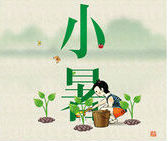
11. Xiao Shu (Lesser Heat) is the 11th solar term among the 24 solar terms and the 5th solar term of summer. It usually occurs around July 7th or 8th, when the Sun reaches celestial longitude 105°. "Shu" means sweltering heat; "Xiao Shu" signifies heat that is present but not yet extreme—the temperature continues to rise and the climate grows hot, yet it has not yet reached the peak of summer heat. In the Northern Hemisphere, crops typically enter an active growth stage during this period, requiring increased field management.
During Xiao Shu, average temperatures in most areas approach 30°C; heatwaves affect people, and thunderstorms become frequent—thus flood control and prevention measures become especially important on rainy days. A traditional farming proverb states: "During Da Shu and Xiao Shu, irrigate the mouse holes to drown field mice and house mice." During Xiao Shu, people are prone to anxiety, irritability, fatigue, and lethargy. In exercise and self-care, attention should be paid to protecting Heart Yang according to the Five Zang Organs’ Master Time theory—calming the heart and regulating Qi to ensure optimal cardiac function.
12. Da Shu (Greater Heat) is the 12th solar term among the 24 solar terms and the 6th—and final—solar term of summer. It usually occurs between July 22nd and 24th, when the Sun reaches celestial longitude 120°. During Da Shu, temperatures reach their annual peak; these are the hottest days of the year, accompanied by frequent thunderstorms. In most areas of the Northern Hemisphere, temperatures may exceed 40°C.
In ancient China, Da Shu was divided into three pentads: "(1) In the first pentad, decaying grass transforms into fireflies; (2) In the second pentad, the weather is hot and the soil rich in moisture; (3) In the third pentad, storms occur frequently."
Over 2,000 species of fireflies exist worldwide; terrestrial fireflies lay their eggs in withered grass, and when Da Shu arrives, the larvae hatch—leading ancient people to believe fireflies emerged from decaying grass. The second pentad indicates high humidity and warm, moist soil—not frost (a mistranslation); the third pentad features heavy storms, signaling the gradual transition toward autumn. During the hot summer, people are prone to depletion of body fluids and exhaustion of Qi; herbal congee is a suitable dietary tonic.
References:
1. Introduction of the Twenty-Four Solar Terms and the Seventy-Two Pentads: Summer
2. Yi Zhou Shu (The Lost Book of the Zhou Dynasty)

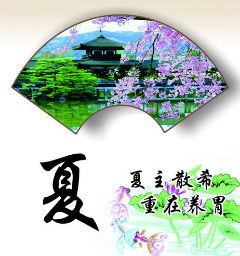
 Summer is the second season of the year. According to climatology, summer begins when the average temperature exceeds 22 °C. Summer generally starts from May 5 to 7 and ends from August 7 to 9, and includes six solar terms: the Beginning of Summer, Grain Buds, Grain in Ear, the Summer Solstice, Lesser Heat, and Greater Heat.

 7. "Lixia" (the Beginning of Summer) is the seventh solar term among the twenty-four solar terms. It occurs annually around May 5th or 6th, when the Sun reaches a celestial longitude of 45°. At this time, the handle of the Big Dipper points southeast, signaling the arrival of summer and vigorous natural growth. With Lixia’s onset, temperatures rise markedly; hot weather approaches, rainfall and thunderstorms become frequent, and crops enter a period of rapid, lush growth. Lixia has been recognized since the late Warring States period (as recorded in 239 BCE), marking the astronomical beginning of summer. Frogs begin croaking, earthworms emerge from the soil, and all living things appear vibrant and energetic.
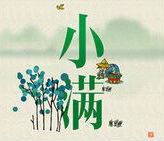
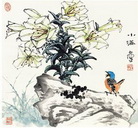 8. "Xiaoman" (Grain Buds) is the eighth solar term—and the second solar term of summer. Its name signifies that summer-harvested grains (e.g., wheat and barley) have begun to fill but are not yet fully mature: "xiao man" literally means "minor fullness," distinguishing it from "da man" ("major fullness") later in the season. Xiaoman falls around May 20th to 22nd, when the Sun reaches a celestial longitude of 60°. The ancient text Zhou Shu (Book of Zhou) records: "The sowthistle herb grows vigorously during Xiaoman."
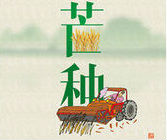
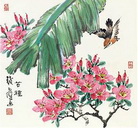 9. "Mangzhong" (Grain in Ear) is the ninth solar term—and the third of summer. It occurs around June 5th or 6th, when the Sun reaches a celestial longitude of 75°. During Mangzhong, awned cereal crops such as wheat and barley reach full maturity and should be harvested promptly—for example, wheat, soybeans, and green peas. It is also the optimal time to plant summer crops including late-maturing rice, peanuts, broomcorn millet, and foxtail millet. Delayed planting after Mangzhong reduces crop survival rates.
 10. "Xiazhi" (the Summer Solstice) is the tenth solar term—and the fourth of summer. It occurs annually around June 21st or 22nd, when the Sun reaches a celestial longitude of 90°. On this day, the subsolar point reaches its northernmost latitude—the Tropic of Cancer—and the Sun shines almost directly overhead there. As a result, the Northern Hemisphere experiences its longest day of the year; solar radiation received there is nearly double that of the Southern Hemisphere.
 Astronomers note that after the Summer Solstice, the subsolar point gradually shifts southward from the Tropic of Cancer. Consequently, daylight hours in the Northern Hemisphere shorten progressively, and the Sun’s noon altitude decreases at all locations north of the Tropic of Cancer. With the arrival of Xiazhi come thunderstorms, the plum rains (Meiyu), and high temperatures.
 In ancient China, the Summer Solstice was divided into three pentads: "(1) First pentad: Deer antlers begin to shed; (2) Second pentad: Cicadas begin to sing; (3) Third pentad: Pinellia ternata emerges."
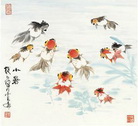 11. Xiao Shu (Lesser Heat) is the 11th solar term among the 24 solar terms and the 5th solar term of summer. It usually occurs around July 7th or 8th, when the Sun reaches celestial longitude 105°. "Shu" means sweltering heat; "Xiao Shu" signifies heat that is present but not yet extreme—the temperature continues to rise and the climate grows hot, yet it has not yet reached the peak of summer heat. In the Northern Hemisphere, crops typically enter an active growth stage during this period, requiring increased field management.
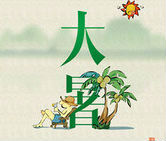
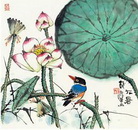 12. Da Shu (Greater Heat) is the 12th solar term among the 24 solar terms and the 6th—and final—solar term of summer. It usually occurs between July 22nd and 24th, when the Sun reaches celestial longitude 120°. During Da Shu, temperatures reach their annual peak; these are the hottest days of the year, accompanied by frequent thunderstorms. In most areas of the Northern Hemisphere, temperatures may exceed 40°C.