Introduction of the Twenty-Four Solar Terms and the Seventy-Two Pentads: Winter
✵Four Seasons, Eight Solar Terms, Twenty-Four Solar Terms, and the Seventy-Two Pentads in Spring, Summer, Autumn, and Winter are introduced. The Four Seasons, Eight Solar Terms, Twenty-Four Solar Terms, and Seventy-Two Pentads system is a traditional Chinese calendar system established in ancient China.
This part introduces the climate characteristics of the winter and its corresponding solar terms, as well as the health risks associated with seasonal factors and preventive measures.
Characteristics of the Winter Climate and Health Risks
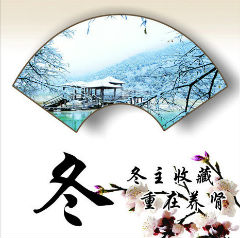
Winter is the final season of the year. From a climatological perspective, winter is defined as the period when the average temperature falls below 10 °C. Winter generally begins from November 23 to 24 and ends from February 2 to 5, encompassing six solar terms: the Beginning of Winter, Light Snow, Great Snow, the Winter Solstice, Lesser Cold, and Greater Cold.
Winter is the season with the lowest temperatures of the year. When cold weather sets in, biological activities gradually slow down. With the arrival of severe winter, the skin contracts in response to cold, reducing blood flow to the body’s surface and impairing microcirculation. Consequently, the body’s resistance to cold decreases, metabolism slows, and susceptibility to colds increases. At the same time, ciliary activity in the respiratory mucosal epithelium is reduced, plasma bactericidal capacity weakens, and the trachea’s ability to clear respiratory tract pathogens diminishes—making individuals prone to respiratory diseases such as bronchitis, sore throat, cough, and emphysema. In winter, people’s moods are also easily affected by climatic changes, leading to low spirits, reticence, and reduced physical activity.
The cold winter climate increases the body’s demand for energy and nutrients. Moreover, since digestive and absorptive functions are relatively robust during this season, appropriate tonic supplementation can not only enhance resistance to cold and disease but also enable the body to store beneficial nutrients from these tonics—laying a foundation for health in the coming year.
Solar terms in Winter:
19. Li Dong (Beginning of Winter) is the 19th solar term among the 24 solar terms and the first solar term of winter. It usually occurs between November 7th and 8th, when the Sun reaches celestial longitude 225°. After Li Dong, daylight duration shortens and the Sun’s midday altitude continues to decrease.
In ancient China, Li Dong was divided into three pentads: "(1) In the first pentad, water begins to freeze and form ice; (2) In the second pentad, the ground freezes solid; (3) In the third pentad, pheasants transform into large clams along the seashore."
Ancient observers rarely saw pheasants during this season but frequently found large clams on coastal shores—whose shell markings resembled pheasant feathers—leading them to mistakenly believe the birds had metamorphosed into clams.
The Beginning of Winter is one of the four important solar terms—the Beginning of Spring, the Beginning of Summer, the Beginning of Autumn, and the Beginning of Winter—in ancient Chinese society. After the Beginning of Winter, grass and trees wither and fall; small creatures and animals hide in tunnels to hibernate. Although human beings do not hibernate, they traditionally consume tonics during this period to replenish energy and prepare for the cold winter.
Dietary tonics in winter should follow these principles: "Nourish Yin in autumn and winter; do not disturb Yang," and "Tonify deficiencies and warm cold conditions." A balanced principal diet should be supplemented with appropriate amounts of protein-, fat-, and carbohydrate-rich foods—such as mutton, quail, and sea cucumber—which are known as heat-producing nutrients.
Foods rich in iodine—such as kelp, nori (laver), jellyfish, spinach, celery cabbage (Chinese cabbage), corn kernels, etc.—should also be consumed. Iodine promotes thyroxine (tetraiodothyronine) secretion; thyroxine accelerates tissue cell oxidation, enhances the body’s caloric production capacity, increases basal metabolic rate (BMR), improves cutaneous blood circulation, and strengthens cold resistance.
Consuming foods rich in vitamin A (e.g., animal liver, carrots, dark-green leafy vegetables) and vitamin C (e.g., fresh fruits and vegetables) helps improve cold tolerance and adaptation, and protects blood vessels.
Foods rich in methionine—such as sesame seeds, sunflower seeds, dairy products, yeast, and leafy vegetables—should also be included. Methionine requirements increase in winter, as it supplies essential methyl groups to cells via transmethylation; these methyl groups support physiological adaptation to cold.
20. Xiao Xue (Light Snow) is the 20th of the 24 solar terms and the second solar term of winter. It usually falls around November 22nd or 23rd, when the Sun reaches celestial longitude 240°. During Xiao Xue, the Big Dipper points northwest (corresponding to the 10 o’clock direction), and Cassiopeia rises at night, replacing the Big Dipper as a nocturnal directional marker.
In ancient China, Xiao Xue was divided into three pentads: "(1) In the first pentad, rainbows disappear; (2) In the second pentad, Qi of the sky rises upward while Qi of the earth sinks downward; (3) In the third pentad, interaction between heaven and earth ceases—winter arrives."
As Yang Qi rises and Yin Qi retreats deeply into the earth, their dynamic interaction halts; thus, natural vitality wanes, creatures become dormant, and cold winter sets in.
During Xiao Xue, cold waves and severe cold air masses occur more frequently; the first snow may appear in the Northern Hemisphere, and farmers begin pruning fruit trees. Locally, people traditionally enjoy instant-boiled mutton.
Weather during Xiao Xue often turns overcast and gloomy, with reduced sunshine—potentially exacerbating depression and melancholy. It is advisable to consume warming, kidney-tonifying foods such as mutton, beef, chicken, wild yam, and walnuts.
People with Qi deficiency commonly exhibit symptoms including shortness of breath, fatigue, weak voice, spontaneous sweating, pallor, pale tongue, and weak pulse. They benefit from tonics such as Panax ginseng root. Ginseng is warm in nature and sweet with a slight bitterness; it strongly replenishes Primordial Qi and is a key herb for Qi tonification. Modern research shows that ginseng preparations can regulate reticuloendothelial system function, and its active constituents—ginsenosides—exhibit anti-aging effects. Ginseng decoction helps replenish Qi and prevent exhaustion (nourishing Qi to prevent collapse), enhances disease resistance, and is especially beneficial for the elderly.
People with Blood deficiency commonly experience intolerance to exertion, pallor, sallow complexion, poor memory (including forgetfulness and amnesia), insomnia, pale tongue, and fine pulse. They benefit from blood-enriching herbal formulas such as longan aril decoction.
21. Da Xue (Great Snow) is the 21st of the 24 solar terms and the third solar term of winter. It usually falls around December 7th or 8th, when the Sun reaches celestial longitude 255°. During Da Xue, snowfall typically becomes heavier and more widespread across the Northern Hemisphere; temperatures commonly drop below 0 °C, and heavy snow or snowstorms may occur.
In ancient China, Da Xue was divided into three pentads: "(1) In the first pentad, the magpie ceases chirping; (2) In the second pentad, tigers begin courtship behavior; (3) In the third pentad, Lithospermum erythrorhizon (a traditional Chinese medicinal herb, sometimes called 'Li Ting grass') sprouts from the ground."
The magpie—also known as the Hanhao bird—is a species that chirps frequently in cold weather; it falls silent during the coldest period. During Da Xue, Yin Qi reaches its peak while Yang Qi begins to rise subtly; this subtle Yang resurgence stimulates tigers’ courtship behavior. Lithospermum erythrorhizon, a yin-nourishing herb associated with early Yang emergence, sends forth new sprouts at this time.
In cold winter days, people should consume easily digestible, protein- and vitamin-rich foods. Citrus fruits such as oranges and grapefruits may help prevent rhinitis, resolve phlegm, and relieve pain. Regular consumption of jujube and ginger soup can enhance cold resistance.
22. Dong Zhi (Winter Solstice) is the 22nd of the 24 solar terms and the fourth solar term of winter. It usually occurs between December 21st and 23rd, when the Sun reaches celestial longitude 270°.
On the Winter Solstice, the Sun shines directly over the Tropic of Capricorn. In the Northern Hemisphere, this day has the shortest daylight duration of the year—and the farther north one goes, the lower the Sun’s altitude at solar noon. Consequently, solar radiation received in the Northern Hemisphere reaches its annual minimum, while the Southern Hemisphere experiences summer.
In ancient China, Dong Zhi was divided into three pentads: "(1) In the first pentad, earthworms curl their bodies; (2) In the second pentad, the antlers of elk (or red deer) begin to shed; (3) In the third pentad, spring water begins to flow."
According to traditional lore, earthworms coil when Yin Qi dominates and uncoil when Yang Qi rises. At Dong Zhi, although Yang Qi begins to rise, it remains extremely weak, while Yin Qi is still at its peak—hence earthworms remain curled underground. Elk—animals traditionally associated with Yin—are sensitive to the subtle increase in Yang Qi; as Yin Qi recedes, their antlers begin to shed. With Yang Qi rising from the earth, groundwater in mountain valleys warms and begins to flow.
From Dong Zhi to Da Han (Greater Cold), the coldest period of the year occurs. Individuals with cardiovascular disease or hypertension may experience symptom exacerbation; stroke incidence increases, and frostbite (cold injury) becomes more common.
During these coldest days, people should take measures to prevent cold exposure and maintain warmth; regulate diet; avoid alcohol and tobacco; refrain from overexertion; cultivate a calm, stable, and cheerful mood; and avoid anger, anxiety, and depression.
23. Xiao Han (Lesser Cold) is the 23rd of the 24 solar terms and the fifth solar term of winter. It usually falls around January 6th, when the Sun reaches celestial longitude 285°. This marks the coldest period across much of the Northern Hemisphere.
In ancient China, Xiao Han was divided into three pentads: "(1) In the first pentad, wild geese begin flying northward; (2) In the second pentad, magpies start building nests; (3) In the third pentad, pheasants begin calling."
Wild geese are migratory birds. As Yang Qi begins to rise during Xiao Han, they sense the subtle warming trend and depart from southern wintering grounds. Magpies respond to increasing Yang Qi by initiating nest-building. Pheasants begin calling as they detect the rising Yang energy.
In Traditional Chinese Medicine (TCM) theory, Cold is the dominant climatic Qi of winter, and Xiao Han represents the coldest period of the year. Excessive Cold can impair the body’s Yang Qi. Thus, health preservation during this time follows the principles of “conserving and storing energy, nourishing the kidneys, and preventing Cold damage.” It is advisable to consume foods with warm or hot thermal natures to tonify the body and protect against Cold.
Common foods with a hot nature include: dried chili pepper, cinnamon, and prickly ash (Sichuan pepper).
Common foods with a warm nature include: fennel seed, pumpkin, ginger, scallion, garlic, almond, peach, jujube, longan aril, cherry, pomegranate, smoked plum, walnut kernel, mutton, chicken liver, ham, chicken, goose egg, shrimp, sea cucumber, and moderate amounts of wine.
People in China traditionally enjoy spicy hot pot and braised lamb in brown sauce.
24. Da Han (Greater Cold) is the 24th and final solar term of the 24 solar terms and the sixth solar term of winter. It usually falls around January 20th, when the Sun reaches celestial longitude 300°. This marks the coldest period across much of the Northern Hemisphere. During Da Han, temperatures reach their annual lowest point, and Cold Qi peaks—hence the name “Greater Cold.”
During Da Han, health preservation emphasizes the principle of “conserving and storing”—that is, regulating mental activity, maintaining calmness and quietude, conserving vital energy (Qi) and spirit (shen) within the body, and preventing dispersion of mental and physiological energy. This supports safe passage through the harshest cold.
Special attention should be paid to preventing cardiovascular diseases, emphysema, and chronic bronchitis. It is advisable to avoid outdoor activities during early morning or late evening hours; wear adequate clothing for warmth when outdoors; ventilate indoor spaces briefly in the morning and evening; and maintain sufficient hydration.
References:
1. Introduction of the Twenty-Four Solar Terms and the Seventy-Two Pentads: Winter
2. Yi Zhou Shu (The Lost Book of the Zhou Dynasty)

 Winter is the final season of the year. From a climatological perspective, winter is defined as the period when the average temperature falls below 10 °C. Winter generally begins from November 23 to 24 and ends from February 2 to 5, encompassing six solar terms: the Beginning of Winter, Light Snow, Great Snow, the Winter Solstice, Lesser Cold, and Greater Cold.

 19. Li Dong (Beginning of Winter) is the 19th solar term among the 24 solar terms and the first solar term of winter. It usually occurs between November 7th and 8th, when the Sun reaches celestial longitude 225°. After Li Dong, daylight duration shortens and the Sun’s midday altitude continues to decrease.

 20. Xiao Xue (Light Snow) is the 20th of the 24 solar terms and the second solar term of winter. It usually falls around November 22nd or 23rd, when the Sun reaches celestial longitude 240°. During Xiao Xue, the Big Dipper points northwest (corresponding to the 10 o’clock direction), and Cassiopeia rises at night, replacing the Big Dipper as a nocturnal directional marker.

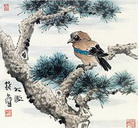 21. Da Xue (Great Snow) is the 21st of the 24 solar terms and the third solar term of winter. It usually falls around December 7th or 8th, when the Sun reaches celestial longitude 255°. During Da Xue, snowfall typically becomes heavier and more widespread across the Northern Hemisphere; temperatures commonly drop below 0 °C, and heavy snow or snowstorms may occur.

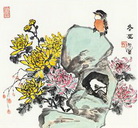 22. Dong Zhi (Winter Solstice) is the 22nd of the 24 solar terms and the fourth solar term of winter. It usually occurs between December 21st and 23rd, when the Sun reaches celestial longitude 270°.
 On the Winter Solstice, the Sun shines directly over the Tropic of Capricorn. In the Northern Hemisphere, this day has the shortest daylight duration of the year—and the farther north one goes, the lower the Sun’s altitude at solar noon. Consequently, solar radiation received in the Northern Hemisphere reaches its annual minimum, while the Southern Hemisphere experiences summer.
 In ancient China, Dong Zhi was divided into three pentads: "(1) In the first pentad, earthworms curl their bodies; (2) In the second pentad, the antlers of elk (or red deer) begin to shed; (3) In the third pentad, spring water begins to flow."

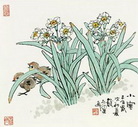 23. Xiao Han (Lesser Cold) is the 23rd of the 24 solar terms and the fifth solar term of winter. It usually falls around January 6th, when the Sun reaches celestial longitude 285°. This marks the coldest period across much of the Northern Hemisphere.

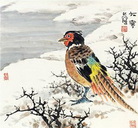 24. Da Han (Greater Cold) is the 24th and final solar term of the 24 solar terms and the sixth solar term of winter. It usually falls around January 20th, when the Sun reaches celestial longitude 300°. This marks the coldest period across much of the Northern Hemisphere. During Da Han, temperatures reach their annual lowest point, and Cold Qi peaks—hence the name “Greater Cold.”