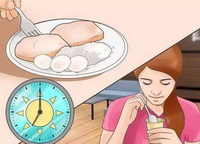
Introduction: We should eat dinner a bit earlier, ideally 4 to 5 hours before sleeping, and keep the portion small. This avoids overburdening the gastrointestinal tract and supports healthy weight management.
Ancient and modern insights: Sun Simiao, a renowned herbalist of the Tang Dynasty, advised in his medical compendium Beiji Qianjin Yaofang (The Invaluable Prescriptions for Emergencies) that one "should not eat to fullness at dusk, nor become overly intoxicated at night." Chen Zhi, a Song Dynasty physician specializing in geriatrics, authored Yanglao Funqin Shu (Book on Caring for the Elderly), in which he particularly emphasized: "One must not eat excessively at night."
Eat less for dinner—and eat it earlier.
Expert guidance:
With the rise of urban nightlife, "night-meal syndrome" is quietly affecting more people. As nocturnal food intake steadily increases in both quantity and duration, many urban dwellers frequently experience insomnia, forgetfulness, loss of appetite for breakfast, and gradual weight gain. Over time, this pattern can lead to numerous digestive and cardiovascular health problems. A random survey found that 40% of white-collar workers consume excessive dinners and eat too late. Expert investigations into dietary habits revealed that among gastric cancer patients aged 30–40, irregular dinner timing accounted for 38.4%.
✵The optimal time for dinner:
Ideally, have dinner around 6 p.m. However, due to delayed work hours in cities, most people now eat later. If you go to bed around 11 p.m., aim to finish dinner by 7 p.m. Prioritize foods rich in vitamin C and dietary fiber—such foods aid digestion, prevent constipation, supply essential cellulose and micronutrients, help prevent atherosclerosis, improve circulation, and benefit overall health. Night-shift workers may eat a slightly larger dinner—but must still include ample fruits and vegetables to prevent nocturnal hunger and hypoglycemia. If you eat dinner at 6:00 p.m., a light second meal at 8:00 p.m. is acceptable: e.g., a cup of yogurt or a small fruit salad. Avoid barbecued or smoked foods in the evening, as they increase cancer risk; alcohol consumption is also inadvisable—it disrupts sleep and impairs metabolism.
Health benefits of eating less for dinner:
✵1. Improved mental calmness and sleep quality: As the saying goes, "Eat lightly at night—a comfortable stomach ensures restful sleep." Traditional Chinese Medicine (TCM) holds that "a disturbed stomach leads to restless sleep." Overeating at dinner inevitably increases gastrointestinal workload; continuous neural signaling from the gut to the brain can cause insomnia, vivid dreams, and—over time—neurasthenia.
✵2. Weight control: Excessive dinner intake raises blood glucose, amino acid, and free fatty acid levels, triggering substantial insulin secretion. Yet nighttime physical activity is minimal, and energy expenditure remains low. Chronic overstimulation of insulin production burdens the pancreas, potentially leading to reduced function and, eventually, type 2 diabetes.
✵3. Disease prevention: Undigested food lingers in the intestines overnight, promoting greater cholesterol absorption. Low-density lipoprotein (LDL)—commonly termed “bad cholesterol”—deposits cholesterol in arterial walls, contributing to atherosclerosis, hypertension, and coronary heart disease. Elevated blood viscosity heightens the risk of vascular embolism, stroke, and even sudden cardiac death. Moreover, incompletely digested food fermented by anaerobic bacteria in the colon produces harmful substances—including amines, ammonia, and indoles—which burden the liver and kidneys and exert neurotoxic effects on the brain; long-term exposure may elevate colorectal cancer risk. Eating too late also disrupts nocturnal urinary rhythms: peak urine production occurs during deep sleep (Morpheus stage), and prolonged bladder retention may predispose individuals to urinary calculi.
Tip: A bowl of porridge is a convenient option. Cook single servings and refrigerate them. Reheat gently—or blend briefly before warming—to enhance digestibility and nutrient absorption.

 Introduction: We should eat dinner a bit earlier, ideally 4 to 5 hours before sleeping, and keep the portion small. This avoids overburdening the gastrointestinal tract and supports healthy weight management.
 Ancient and modern insights: Sun Simiao, a renowned herbalist of the Tang Dynasty, advised in his medical compendium Beiji Qianjin Yaofang (The Invaluable Prescriptions for Emergencies) that one "should not eat to fullness at dusk, nor become overly intoxicated at night." Chen Zhi, a Song Dynasty physician specializing in geriatrics, authored Yanglao Funqin Shu (Book on Caring for the Elderly), in which he particularly emphasized: "One must not eat excessively at night."
 Expert guidance:
 ✵The optimal time for dinner:
 ✵1. Improved mental calmness and sleep quality: As the saying goes, "Eat lightly at night—a comfortable stomach ensures restful sleep." Traditional Chinese Medicine (TCM) holds that "a disturbed stomach leads to restless sleep." Overeating at dinner inevitably increases gastrointestinal workload; continuous neural signaling from the gut to the brain can cause insomnia, vivid dreams, and—over time—neurasthenia.
 ✵2. Weight control: Excessive dinner intake raises blood glucose, amino acid, and free fatty acid levels, triggering substantial insulin secretion. Yet nighttime physical activity is minimal, and energy expenditure remains low. Chronic overstimulation of insulin production burdens the pancreas, potentially leading to reduced function and, eventually, type 2 diabetes.
