
Fu Shan: Biographical Introduction and Historical Accounts, Major Works and Academic Contributions
-
 ✵Fu Shan: renowned Taoist scholar, calligrapher, and physician of the late Ming and early Qing dynasties, especially distinguished in gynecology and internal medicine. He emphasized empirical prescriptions—both folk remedies and clinically validated formulas—and is best known as the author of Fu Qingzhu Nüke (Essential Gynecology by Fu Qingzhu).
- Fu Shan
-
Brief Introduction Chinese Name: 傅山 (Fù Shān) Aliases: Zhuówēng (浊翁, Old Man Zhuo) and Guānhuà (观化, Observing Transformation) Style Name: 青主 (Qīngzhǔ) English Name: Fu Shan (family name first) or Shan Fu (given name first) Hometown: Yangqu (modern-day Taiyuan, Shanxi Province) Dates: 1607–1684 CE Major Works: Shuanghong Kan Ji (Collected Writings from the Frost-Red Studio), Fu Qingzhu Nüke (Fu Qingzhu’s Gynecology), Bian Zheng Lu (Treatise on Pattern Differentiation), Da Xiao Zhu Zheng Fang Lun (Discourse on Prescriptions for Major and Minor Disorders), Shi Shi Mi Lu (Secret Records from the Stone Chamber), and commentaries on classical Chinese philosophical texts. Representative Works: Shuanghong Kan Ji, Fu Qingzhu Nüke, Bian Zheng Lu, Da Xiao Zhu Zheng Fang Lun, Shi Shi Mi Lu, and commentaries on classical Chinese philosophical texts. Biographical Introduction and Historical Accounts
 Fu Shan, originally named Ding Chen (Dǐng Chén), initially used the style name Qīngzhú before adopting Qīngzhǔ; he also adopted other aliases including Zhuówēng (Old Man Zhuo) and Guānhuà (Observing Transformation), and studio names such as Sèlú (Frugal Hut) and Shídào Shānrén (Hermit of the Stone Path). A native of Yangqu (present-day Taiyuan, Shanxi), he lived from 11 August 1607 to 2 August 1684. As a polymath of the transitional Ming–Qing period, Fu Shan was a Taoist-influenced thinker, calligrapher, epigrapher, poet, and physician. He mastered classical historiography and Daoist philosophy, excelled in poetry and calligraphy, and was deeply knowledgeable in bronze and stone inscription studies. In medicine, he emphasized the interrelationship of qi and blood, advocated balanced application of tonifying and purging therapies, and interpreted medical theory through Confucian ethical and cosmological frameworks. Clinically, he specialized in gynecological and internal disorders, prioritizing pragmatic efficacy over doctrinal orthodoxy. He actively collected and validated folk remedies and time-tested prescriptions, rarely adhering rigidly to canonical formulae. His reputation as a highly skilled and compassionate physician was widely acknowledged during his lifetime.
Major Works and Academic Contributions
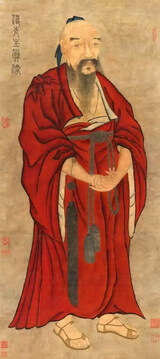 Fu Shan’s academic study focuses on the philosophers of ancient China or their works. His major works include Lao Zi Zhu (Commentary on the Laozi), Zhuang Zi Zhu (Commentary on the Zhuangzi), Guan Zi Zhu (Commentary on the Guanzi), Xun Zi Zhu ( Commentary on the Xunzi), Lie Zi Zhu (Commentary on the Liezi), Mozi Zhu (Commentary on the Mozi), Gui Gu Zi Zhu (Commentary on the Guiguzi), Gong Sun Long Zi Zhu (Commentary on the Gongsun Longzi), Huai Nan Zi Zhu (Commentary on the Huainanzi); many other related notes and texts are scattered throughout the collected volume Shuang Hong Kan Ji (Collected Writings from the Frost-Red Studio). The transmitted medical texts include Fu Qingzhu Nüke (Fu Qingzhu’s Gynecology), Fu Qing Zhu Nan Ke (Fu Qingzhu’s Andrology), Fu Shi You Ke (Fu’s Pediatrics), among others—these exerted notable influence on later generations, especially Fu Qingzhu Nüke(Fu Qingzhu’s Gynecology), which served as the principal obstetrics and gynecology monograph handed down during the Qing dynasty. He is also the author of Da Xiao Zhu Zheng Fang Lun (Treatise on Prescriptions for Major and Minor Disorders), completed in 1673.
Fu Qingzhu Nüke (Fu Qingzhu’s Gynecology) is a two-volume gynecological treatise compiled by Fu Shan and first published in the seventh year of the Daoguang reign (1827 CE). Volume I is organized into five sections: leukorrhea, metrorrhagia, menstrual regulation, infertility, and fertility. Each section comprises several syndromes; collectively, this volume contains 38 entries, 39 syndromes, and 41 prescriptions. Volume II is likewise divided into five sections: pregnancy, miscarriage, dystocia (difficult labor), normal delivery, and the postpartum period. It contains 39 entries, 41 syndromes, and 42 prescriptions. The text applies Traditional Chinese Medicine’s Zang-Fu viscera theory to elucidate the physiological and pathological characteristics specific to women, as well as the clinical manifestations of various gynecological disorders. Diagnosis and pattern differentiation emphasize the lung, spleen, and kidney; treatment prioritizes nourishing Qi and blood and regulating the spleen and stomach. The language is concise, the discussions are incisive, the theoretical framework and therapeutic methodology are rigorous, and most prescriptions are both succinct and clinically effective.
References:
-
- 1.Fu Shan: Biographical Introduction and Historical Accounts, Major Works and Academic Contributions
