
Ye Gui: Biographical Introduction and Historical Accounts, Major Works and Academic Contributions
-
 ✵Ye Gui: A famous herbalist of the Qing Dynasty and one of the four major authorities in the study of epidemic febrile diseases in traditional Chinese medicine; author of the gynecological treatise Ye Shi Nü Ke Zheng Zhi (Syndromes and Therapeutics of Ye’s Gynecology), which is primarily based on obstetric and gynecological treatment prescriptions.
- Ye Gui
-
Brief Introduction Chinese Name: 葉桂 (Yè Guì) Alias: 天士 (Tiān Shì) Style Name: 香巖 (Xiāng Yán) English Name: Ye Gui (family name first) or Gui Ye (given name first) Hometown: Wuxian County, Jiangsu (modern-day Suzhou, Jiangsu) Dates: c. 1667–1746 CE Major Works: Wen Re Lun (Treatise on Warm Diseases), Lin Zheng Zhi Nan Yi An (Medical Case Studies with Guiding Principles) Representative Works: Wen Re Lun, Lin Zheng Zhi Nan Yi An Biographical Introduction and Historical Accounts
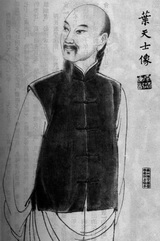 Ye Gui (c. 1667–1746 CE), whose given name was Guì and courtesy name Tiān Shì, styled himself Xiāng Yán. A native of Wuxian County, Jiangsu (present-day Suzhou, Jiangsu), his ancestral home was She County, Anhui Province. His great-great-grandfather, Ye Fengshan (Yè Fēngshān), migrated from Lantian Village in She County, Anhui Province, to Suzhou and settled near Shangjin Bridge; thus, Ye Gui was also known in his later years as the "Shangjin Elder." He was a renowned physician of the Qing Dynasty and one of the four major authorities in the study of epidemic febrile diseases in traditional Chinese medicine.
Ye Gui was born into a family that had practiced medicine for generations. His grandfather, Ye Shi (Yè Shí), had a thorough understanding of medical theory, and his father, Ye Chaocai (Yè Cháocài), possessed refined medical skills. Fascinated by what he saw and heard since childhood, Ye Gui aspired to follow this path and began learning from his family’s teachings at an early age. Ye Gui was skilled at treating syndromes associated with seasonal epidemics and acute diseases—such as cholera, sunstroke, and smallpox—and he was the first person in China to identify scarlatina (scarlet fever). His achievements in the study of epidemic febrile diseases were particularly outstanding; he is regarded as one of the founders of the theory of epidemic febrile diseases in traditional Chinese medicine. He was the first to establish the syndrome differentiation framework for epidemic febrile diseases—the "Wei, Qi, Ying, Xue" (Defensive Qi, Qi, Nutritive Qi, Blood) system—which opened a new approach to diagnosis and treatment and earned him recognition as a representative figure of the Epidemic Febrile Diseases School.Major Works and Academic Contributions
During his lifetime, Ye Gui was so busy diagnosing and treating patients day by day that he had little time to write books. The precious medical works he left to later generations are all the result of collection and collation by his disciples and descendants. His major works include Wen Re Lun (Treatise on Epidemic Febrile Disease), Lin Zheng Zhi Nan Yi An (Medical Case Studies with Guiding Principles), Wei Ke Ben Ye Shi Yi An (The Unprinted Edition of Ye’s Medical Records), and others.
Ye Shi Nǚ Ke Zhèng Zhì (Syndromes and Therapeutics of Ye’s Gynecology), also known as Ye Tianshi Nü Ke Zheng Zhi Mi Fang (Ye Tianshi’s Secret Formulas for Gynecological Syndromes and Treatment), is a gynecological work. The book was originally titled "Written by Qing-dynasty Ye Gui." It comprises four volumes, covering topics such as menstrual regulation, miscarriage prevention, childbirth care, conception facilitation, and infant care. Its content addresses menstruation, pathological leukorrhea, infant care, and male infertility. However, the original authorship and title of this book remain uncertain. It was first published in 1817 under the title Zhu Lin Nü Ke (The Bamboo Forest Gynecology), and numerous reprints followed. In 1913, the Hongwen Publishing House republished it under Ye’s name using lithographic printing; many copies were produced. The content focuses primarily on obstetric and gynecological treatment prescriptions, with relatively little discussion of gynecological physiology and pathology.
References:
-
- 1.Ye Gui: Biographical Introduction and Historical Accounts, Major Works and Academic Contributions
