
He Mengyao: Biographical Introduction and Historical Accounts, Major Works and Academic Contributions
-
 ✵He Mengyao was born in Nanhai, Guangdong, and was a renowned herbalist of the Qing Dynasty. He made major contributions to medical research and scholarly debate on the treatment of warm diseases and febrile diseases in the Lingnan region. He is the author of the gynecological treatise Fu Ke Liang Fang (Effective Prescription for Gynecology).
- He Mengyao
-
Brief Introduction Chinese Name: 何夢瑤 (Hé Mèngyáo) Alias: 西池 (Xī Chí) Style Name: 报之 (Bào Zhī) English Name: He Mengyao (family name first) or Menyao He (given name first) Hometown: Nanhai, Guangdong Dates: c. 1693–1764 CE Major Works: Yi Bian (Medical Compendium), Ben Cao Yun Yu (Rhymed Compendium of Materia Medica), Fu Ke Liang Fang (Effective Prescriptions for Gynecology), You Ke Liang Fang (Effective Prescriptions for Pediatrics). Representative Works: Yi Bian, Ben Cao Yun Yu, Fu Ke Liang Fang, You Ke Liang Fang. Biographical Introduction and Historical Accounts
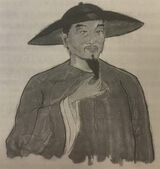 He Mengyao (style name Bào Zhī; alias Xī Chí) was born in Nanhai, Guangdong, around 1693 and died in 1764. A distinguished herbalist and scholar-official of the Qing Dynasty, he initially studied Confucian classics and passed the imperial civil service examination, attaining the jinshi degree in the eighth year of the Yongzheng reign (1730 CE). He subsequently served as magistrate of several counties—including Renhua, Yining, Yangshuo, Cenxi, and Si’en. Due to childhood illness, he developed a deep interest in medicine and became highly proficient in it. While serving in Si’en, he confronted a severe local plague and treated numerous patients with effective prescriptions, saving many lives. In his later years, he resigned from office and returned to Nanhai, devoting himself to medical writing. His seminal work, Yi Bian (Medical Compendium), addresses miscellaneous internal disorders and cautions against the indiscriminate use of warming tonics, which he argued often led to clinical errors. The text thoroughly discusses and critically synthesizes the medical theories of Zhang Zhongjing, Liu Hejian, Li Dongyuan, and Zhu Danxi, interwoven with his personal opinions to inspire others. Other major works include Ben Cao Yun Yu (Rhymed Compendium of Materia Medica), Fu Ke Liang Fang (Effective Prescriptions for Gynecology), You Ke Liang Fang (Effective Prescriptions for Pediatrics).
He turned seriously to medicine after returning to his hometown, using his spare time to deepen his study of traditional medical theory. He He offered ingenious interpretations of foundational concepts, including the generation and restriction theory of the five Zang-viscera, other basic theories of Yin and Yang, water and fire, deficiency and excess, and Qi-blood relationships.He made pioneering contributions to the understanding and treatment of warm diseases and febrile diseases in Lingnan. Notably, he argued that, owing to Lingnan’s subtropical climate and geographical characteristics, diagnosis and therapeutics for various types of warm diseases and febrile diseases must differ from conventional northern approaches. He emphasized adapting clearing warm heat therapies to local climatic conditions and individual constitutional profiles—and strictly avoiding warming tonics in most cases.Major Works and Academic Contributions
He Mengyao’s writings are grounded in the distinctive pathological patterns observed in Lingnan’s unique geographical and climatic environment. Drawing upon meridian theory, he formulated precise, clinically grounded medical theories and elucidated principles underlying effective clinical practice.
Fu Ke Liang Fang (Effective Prescriptions for Gynecology) was originally titled Fu Ke Ji Yao (Compendium of Gynecology), or Shen Xiao Fu Ke Liang Fang (Miraculously Effective Prescriptions for Gynecology). No separate edition survives; instead, it was included in two major medical compendia: San Ke Ji Yao (Compendium of the Three Departments) and Yi Fang Quan Shu (Complete Book of Medical Prescriptions). Completed in 1751 CE, the text comprises two main sections: theoretical discussions and prescriptions. The discussion section covers menstrual disorders (including amenorrhea, metrorrhagia, dysmenorrhea), abnormal leukorrhea, hernia and abdominal masses, blood stasis, prenatal care, labor, dystocia, postpartum syndromes, lactation disorders, external genital conditions, and fertility theory—each introduced with concise theoretical exposition followed by detailed syndrome-based analysis. The prescription section systematically lists formulas corresponding to the syndromes discussed earlier; its clear organization and practical orientation make it readily accessible and clinically useful.
References:
-
- 1.He Mengyao: Biographical Introduction and Historical Accounts, Major Works and Academic Contributions
