
Xue Ji: Biographical Introduction and Historical Accounts, Major Works and Academic Contributions
-
 ✵Xue Ji: A preeminent physician of the Ming Dynasty, originally renowned for his expertise in surgery—particularly ulcer treatment—later achieving distinction in internal medicine and mastering multiple specialties, including surgery, gynecology, pediatrics, and dentistry. He is the author of the influential gynecological treatise Nǚ Ke Cuo Yao (Synopsis of Gynaecology).
- Xue Ji
-
Brief Introduction Chinese Name: 薛己 (Xuē Jǐ) Alias: Lì Zhāi (立斋) Style Name: 新甫 (Xīn Fǔ) English Name: Xue Ji (family name first) or Ji Xue (given name first) Hometown: Wu Commandery (modern-day Suzhou City, Jiangsu Province) Dates: c. 1487–1559 CE Major Works: Wai Ke Shu Yao (Essential Principles of Surgery), Nǚ Ke Cuo Yao (Synopsis of Gynecology), Li Yang Ji Yao (Essential Principles of Leprosy and Ulcerative Disorders), Zheng Ti Lei Yao (Categorized Essentials of Orthopedics), Kou Chi Lei Yao (Categorized Essentials of Stomatology and Dentistry), Nei Ke Zhai Yao (Essentials of Internal Medicine) Representative Works: Wai Ke Shu Yao, Nǚ Ke Cuo Yao Biographical Introduction and Historical Accounts
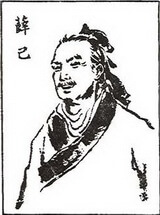 Xue Ji, styled Xīn Fǔ and self-titled Lì Zhāi, was a native of Wu Commandery (Wujun, present-day Suzhou City, Jiangsu Province). His family had long been distinguished in medicine across generations: his father, Xue Kai (Xuē Kǎi), styled Liáng Wǔ, was also a celebrated physician of the time. Xue Kai excelled in pediatrics and surgery, achieving remarkable clinical efficacy in treating diverse conditions. From childhood, Xue Ji inherited the family’s medical ethos and rigorously studied classical and contemporary medical texts. Initially specializing in surgical ulcer management, he later rose to prominence in internal medicine and attained mastery across multiple domains—including surgery, gynecology, pediatrics, and stomatology—earning widespread acclaim.
In the first year of the Zhengde reign (1506 CE), he was appointed Academician of the Imperial Academy of Medicine; in the ninth year of Zhengde (1515 CE), he was promoted to Imperial Physician; and in the fourteenth year of the Jiajing reign (1536 CE), he was granted honorable retirement to his hometown.Major Works and Academic Contributions
Xue Ji was exceptionally industrious and prolific. In addition to his original works—Wai Ke Shu Yao (Essential Principles of Surgery), Nǚ Ke Cuo Yao (Synopsis of Gynaecology), Li Yang Ji Yao (Essential Principles of Leprosy and Ulcerative Disorders), Zheng Ti Lei Yao (Categorized Essentials of Orthopedics), Kou Chi Lei Yao (Categorized Essentials of Stomatology and Dentistry), Nei Ke Zhai Yao (Essentials of Internal Medicine)—he also edited and annotated numerous classical texts, appending insightful commentary grounded in clinical experience. Notable among these are his revised editions of Fu Ren Liang Fang Da Quan (Comprehensive Collection of Excellent Prescriptions for Women), Xiao Er Yao Zheng Zhi Jue (Essential Decisions on Pediatric Medicinal Treatment), and Ming Yi Za Zhu (Miscellaneous Writings of Eminent Physicians), totaling over a dozen titles. Many of these revisions incorporate verifiable case records, with prescriptions and therapeutic methods thoroughly explained and validated through practice.
Intellectually, Xue Ji was deeply influenced by earlier masters—including Zhang Yuansu, Li Gao (Li Dongyuan), and Qian Yi. At a time when Zhu Danxi’s theory of "excess fire" dominated medical thought—leading many physicians to overuse cold-cooling therapies that damaged vital Qi—Xue Ji formulated a corrective synthesis. Drawing upon Li Dongyuan’s spleen-stomach theory and integrating the "life-gate" (mingmen), water-fire theories of Wang Bing and Qian Yi, he emphasized syndrome differentiation of congenital and postnatal factors, and advocated warm-tonifying therapy based on precise syndrome differentiation. His integrative approach profoundly inspired the emergence of the Warm-Recuperation School (Wen Bu Pai) in later Chinese medical history.
Nǚ Ke Cuo Yao (Synopsis of Gynaecology), composed in five volumes by Xue Ji during the Ming Dynasty, was first published in the twenty-seventh year of the Jiajing reign (1548 CE). Volume I systematically addresses fifteen gynecological disorders—including irregular menstruation and menorrhagia (unstoppable menstrual bleeding)—with corresponding syndromes, treatments, and prescriptions. Volume II covers fifteen obstetric conditions—such as miscarriage prevention and management of spontaneous abortion—drawing extensively from authoritative pre-Ming gynecological and obstetrical texts while incorporating Xuē Jǐ’s own elaborations, insightful views, and clinical refinements.
References:
-
- 1.Xue Ji: Biographical Introduction and Historical Accounts, Major Works and Academic Contributions
