
Yuan Huang: Biographical Introduction and Historical Accounts, Major Works and Academic Contributions
-
 ✵Yuan Huang: herbalist and thinker of the late Ming Dynasty, accomplished in calendar science, law, water conservancy, military affairs, and other fields. He authored numerous works during his lifetime and is best known as the author of the gynecological treatise Qi Si Zhen Quan (The True Interpretation on Praying for Offspring).
- Yuan Huang
-
Brief Introduction Chinese Name: 袁黃 (Yuán Huáng) Aliases: 学海(Xuéhǎi), 了凡 (Liǎofán) Style Name: 慶遠 (Qìng Yuǎn) English Name: Yuan Huang (family name first) or Huang Yuan (given name first) Hometown: Weitang Town, Jiashan County, Jiaxing Prefecture Dates: c. 1533–1606 CE Major Works: Qi Si Zhen Quan (The True Interpretation on Praying for Offspring), She Sheng San Yao (Three Essentials for Preserving Health) Representative Works: Qi Si Zhen Quan, She Sheng San Yao Biographical Introduction and Historical Accounts
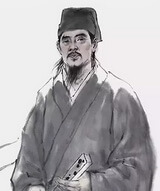 Yuan Huang, herbalist and thinker of the late Ming Dynasty, lived from approximately 1533 to 1606 CE. Born with the given name Biǎo, he later adopted the name Huáng); his style name was Qìng Yuǎn, his other style names included Kūn Yí, and Yí Fǔ. His early self-designated studio name was Xué Hǎi; he later changed it to Liǎofán, after which he became widely known as “Liao Fan.” He was born into a medical family in Weitang Town, Jiashan County, Jiaxing Prefecture. In the fourth year of the Longqing reign (1570 CE), he passed the provincial-level juren examination in the gengwu cycle; in the fourteenth year of the Wanli reign (1586 CE), he passed the metropolitan jinshi examination—also in a gengwu year. After retiring from official service in his later years, he resided in Zhaotian Village, Luxu, Wujiang County, leading some sources to list Wujiang as his native place.
Major Works and Academic Contributions
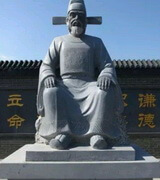 Yuan Huang was a polymath thinker of the Ming Dynasty, erudite and versatile. His expertise spanned calendar science, water conservancy, jurisprudence, military strategy, historiography, medicine, and geography. According to extant records, he authored at least 22 titles comprising 198 volumes. Key works include: Qi Si Zhen Quan (The True Interpretation on Praying for Offspring), Chun Qiu Yi Li (Principles of Interpretation for the Spring and Autumn Annals), Lun Yu Jian Shu (Annotated Commentary on the Analects of Confucius), Yuan Shi Yi Zhuan (Yuan’s Commentary on the I Ching), Liang Hang Zhai Ji (Collected Writings of Liang Hang Studio), Bao Chi Quan Nong Shu (Persuasive Treatise on Agriculture for Baochi County), Qun Shu Bei Kao (Compendium of Reference Works), Li Fa Xin Shu (New Treatise on Calendrical Science), Zhong Yong Shu Yi (Commentary on the Doctrine of the Mean), She Sheng San Yao (Three Essentials for Preserving Health), Shang Shu Cuan Zhu (Compilation and Commentary on the Book of Documents).
The book Qi Si Zhen Quan (The True Interpretation on Praying for Offspring)is an unbound, single-volume Ming-dynasty treatise compiled by Yuan Huang between the ninth and eighteenth years of the Wanli reign (1581–1590 CE). It is a specialized work addressing conception, fertility, and childbearing. Organized into ten thematic sections—"Rectifying Misconceptions," "Accumulating Virtue," "Conserving Essence," "Nourishing Qi," "Sustaining Vitality," "Harmony Between Spouses," "Understanding Timely Conditions," "Pregnancy," "Healing," and "Prayer"—the text draws eclectically on folk sayings, colloquial expressions, and empirical medical prescriptions. It synthesizes Yuan Huang’s personal experience in seeking progeny—finally having a baby—and stands out for its foundational emphasis on ethical cultivation (doing good deeds and accumulating virtue) rather than pharmacological intervention. It further underscores the critical importance of timing in conception and marital harmony as physiological and cosmological prerequisites.
References:
-
- 1.Yuan Huang: Biographical Introduction and Historical Accounts, Major Works and Academic Contributions
