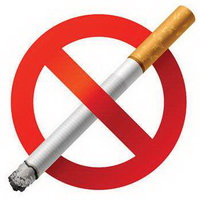
Introduction: Smoking is a harmful habit with limited social function. It not only causes addiction and dependence but also severely damages health—contributing to various diseases, including cancer. Most alarmingly, secondhand smoke endangers the health of non-smokers.
Ancient and Modern Insights: The ancient text Dan Mo Lu (Light Ink Record) records that an emperor strongly disapproved of smoking, considering tobacco smoke depleting Qi. Chen Cong, in his Yan Cao Pu (Tobacco Spectrum), wrote: "Wang Youtang never smoked throughout his life. When asked why, he replied, ‘If smoke is present, even orchids lose their fragrance—smoke steals it away. Urine and feces are notoriously foul, yet when one smokes, urine and feces become less odorous; thus, smoke is fouler than both. How could I harbor such a stinking weed within my clean intestines?’ Those who smoke, those who dine with friends while puffing clouds of smoke—not only sneeze but also behave improperly; cigarette ash, before fully extinguished, frequently ignites objects." This passage clearly reflects the ancients’ recognition of smoking as a deleterious habit.
Why You Should Quit Smoking Now
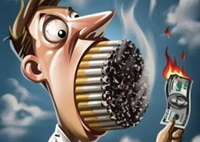
Globally, smoking causes approximately 3 million deaths annually—a figure projected to rise to 10 million by 2025. Nearly 90% of lung cancer cases and one-third of all cancers are attributable to smoking. Smoking is responsible for 60% of male bladder cancers, 75% of chronic bronchitis cases, and 25% of heart disease cases. Moreover, non-smokers suffer collateral damage: in China alone, 540 million people—including 180 million children under age 15—are exposed to secondhand smoke. Over 100,000 people die from its effects each year, yet public awareness of its dangers remains low, at only 35%. In fact, spending just one hour in a smoke-filled room is physiologically equivalent to smoking one cigarette.
If you do not smoke but live with smokers, kindly encourage them to reduce or quit smoking. If they must smoke, ask them to do so outdoors, on balconies, or in well-ventilated areas—not indoors. Remind them to avoid smoking immediately upon waking, after dinner, during coffee breaks, or while drinking alcohol, as these situations heighten the body’s absorption of toxic substances in smoke, amplifying harm. For those ready to quit:
• Remove cigarette lighters and avoid places associated with smoking.
• Drink 6–8 glasses of water between meals to help flush excess nicotine.
• When cravings arise, take a warm bath or chew sugar-free mint gum.
• Avoid spicy or stimulating foods; instead, consume ample fresh fruit and vegetable juices, whole grains, and walk for 30 minutes daily using diaphragmatic (belly) breathing.
• Consider B-complex vitamin supplementation to support nervous system calmness and nicotine metabolism.
• When dining out, choose designated non-smoking areas. Smokers should voluntarily use exclusive smoking rooms or outdoor smoking zones.
• Never smoke damp, moldy, or deteriorated tobacco—doing so doubles the risk of cancer.
What are the advantages of not smoking?
✵1. Protecting the intestines and stomach: The saying "a cigar after the meal, happy be like immortal" should be changed to "a cigar after the meal means dying years earlier." Smoking after meals is more toxic than smoking eight cigarettes at other times; it also causes bile to reflux into the stomach, leading to bile reflux gastritis, abdominal pain, and other symptoms—and may even complicate with duodenitis.
✵2. Reduced medicinal efficacy: Smoking enhances the activity of liver enzymes, thereby accelerating medicine metabolism and impairing medicine absorption into the bloodstream. For individuals who smoke within half an hour of taking medication, the blood concentration of the medicine’s active ingredient drops to only 1.2%–1.8%, compared with 21%–24% in non-smokers.
✵3. Lowered risk of coronary heart disease: Ammonia concentration in toilets is very high, and oxygen levels are severely low. Because tobacco burns incompletely under low-oxygen conditions, it produces sulfur dioxide and carbon monoxide—increasing inhalation of harmful substances, severely damaging the cardiovascular system, triggering acute bronchitis episodes, and provoking angina in patients with coronary heart disease.
✵4. Cancer prevention: Under normal health conditions, most toxic substances in the body can be eliminated. However, tobacco contains numerous carcinogens as well as fibrotoxic substances that impair the body’s ability to clear foreign particles. These toxins adhere to fine cigarette smoke particles, deposit in the alveoli, and act synergistically—greatly enhancing carcinogenic effects. Moreover, the combined use of alcohol and tobacco inflicts far greater harm than either alone, significantly increasing the risk of esophageal, oral, nasopharyngeal, and laryngeal cancers.
✵5. Reduced risk of nicotine-induced shock: Many people smoke in confined spaces, causing tar and other toxins to accumulate rapidly in the air. This may lead to episodes of dizziness, nausea, or even nicotine-induced shock.
✵6. Preserved immune function: Radioactive elements in cigarette smoke weaken the body’s immunity. Carbon monoxide from smoking, when combined with asbestos exposure, dramatically increases both the incidence and mortality of lung cancer. Furthermore, smokers exposed to occupational dust exhibit significantly higher rates of silicosis and respiratory diseases than non-smokers.
✵Tips: Gargling with mint-flavored mouthwash after meals and wearing clean, fresh, smoke-free clothing can help sustain the benefits of quitting smoking.

 Introduction: Smoking is a harmful habit with limited social function. It not only causes addiction and dependence but also severely damages health—contributing to various diseases, including cancer. Most alarmingly, secondhand smoke endangers the health of non-smokers.
 Globally, smoking causes approximately 3 million deaths annually—a figure projected to rise to 10 million by 2025. Nearly 90% of lung cancer cases and one-third of all cancers are attributable to smoking. Smoking is responsible for 60% of male bladder cancers, 75% of chronic bronchitis cases, and 25% of heart disease cases. Moreover, non-smokers suffer collateral damage: in China alone, 540 million people—including 180 million children under age 15—are exposed to secondhand smoke. Over 100,000 people die from its effects each year, yet public awareness of its dangers remains low, at only 35%. In fact, spending just one hour in a smoke-filled room is physiologically equivalent to smoking one cigarette.
 If you do not smoke but live with smokers, kindly encourage them to reduce or quit smoking. If they must smoke, ask them to do so outdoors, on balconies, or in well-ventilated areas—not indoors. Remind them to avoid smoking immediately upon waking, after dinner, during coffee breaks, or while drinking alcohol, as these situations heighten the body’s absorption of toxic substances in smoke, amplifying harm. For those ready to quit:
 ✵1. Protecting the intestines and stomach: The saying "a cigar after the meal, happy be like immortal" should be changed to "a cigar after the meal means dying years earlier." Smoking after meals is more toxic than smoking eight cigarettes at other times; it also causes bile to reflux into the stomach, leading to bile reflux gastritis, abdominal pain, and other symptoms—and may even complicate with duodenitis.
 ✵3. Lowered risk of coronary heart disease: Ammonia concentration in toilets is very high, and oxygen levels are severely low. Because tobacco burns incompletely under low-oxygen conditions, it produces sulfur dioxide and carbon monoxide—increasing inhalation of harmful substances, severely damaging the cardiovascular system, triggering acute bronchitis episodes, and provoking angina in patients with coronary heart disease.
 ✵5. Reduced risk of nicotine-induced shock: Many people smoke in confined spaces, causing tar and other toxins to accumulate rapidly in the air. This may lead to episodes of dizziness, nausea, or even nicotine-induced shock.
