Introduction: Using the refrigerator correctly—cleaning it regularly and storing food in a classified, organized manner—not only helps preserve food effectively and maintain its freshness and flavor, but also prevents "refrigerator disease," making refrigerator use safer, healthier, and more scientific.
The Correct Way to Use the Refrigerator
In the ancient works Wuyue Chunqiu (Annals of Wu and Yue), it is recorded that "King Gou Jian went on a journey and rested and slept in an ice chamber." This ice chamber was regarded as the refrigerator of ancient China. Civilians, by contrast, placed fruits and vegetables in baskets beside wells, tied the baskets to pulleys, and lowered them into the wells. Since ancient times, people have understood that low temperatures help preserve food; however, with the widespread adoption of modern refrigerators, "refrigerator disease" has also emerged alongside them.
Early autumn is the peak season for "refrigerator disease." Because temperatures remain high during the transition from summer to autumn, people often consume beverages and food straight from the refrigerator to cool down. Yet in autumn, human digestive function gradually declines, and intestinal resistance to disease weakens; frequent intake of cold food and drinks can easily trigger acute gastroenteritis and other illnesses.
Although refrigerator temperatures inhibit the activity of most bacteria, some bacteria thrive even under low-temperature conditions and contaminate various foods. Bacteriologists conducted an experiment: they placed 50 million typhoid bacteria per milliliter into a cup of ice cream and stored it in a refrigerator. After five days, 10 million bacteria remained alive; after 20 days, more than 2 million survived; after 60 days, 600,000 remained; and after two years and four months, over 6,000 were still viable. Thus, even in low-temperature refrigerators, invading bacteria can survive by feeding on food residues. Once food is removed from the refrigerator and exposed to suitable temperatures, these bacteria "re-emerge" and proliferate rapidly on nutrient-rich substrates. Consuming such food without proper heat treatment may easily cause bacterial food poisoning—endangering health and even life.
The Correct Way to Use the Refrigerator:
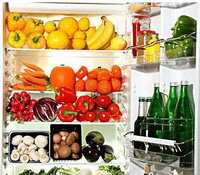
Food must be placed and stored properly in the refrigerator. Items stored inside should be strictly separated into raw and cooked categories to prevent cross-contamination. Always inspect food quality before removal. Some foods require preliminary processing before refrigeration—for example, remove wilted or decayed leaves from vegetables; clean fish thoroughly by removing guts and scales; allow hot food to cool sufficiently before placing it in the refrigerator. Raw and cooked foods must never be mixed. Food taken out of the refrigerator should not be reheated immediately; instead, allow it to sit at room temperature for a short period before consumption. Cold drinks and foods should not be consumed immediately upon removal from the refrigerator, nor should they be overconsumed—especially when sweating profusely or experiencing extreme thirst—as this may impair digestive function. Clean the refrigerator regularly.
Generally, the freezer compartment should be maintained at approximately −18 °C. If freezing is required, the temperature should not be set excessively low, as this may freeze vegetables and jelly-like foods, reduce the freshness of fish and meat, and even lead to food poisoning. Raw meat should not be refrigerated for more than two days; fruits and vegetables should not exceed five days in the refrigerator—but freezing can extend storage time appropriately. However, any food past its expiration date must be discarded, as it poses a high risk of food poisoning.
Health Benefits
✵1. Disease Prevention: As noted above, proper refrigerator use effectively prevents "refrigerator disease" and significantly reduces illnesses caused by improper food storage.
✵2. Food Preservation: Refrigerators enhance food safety by lowering temperatures to inhibit bacterial growth. Proper usage extends food shelf life and reduces unnecessary waste.
✵3. Freshness Retention: A high-quality refrigerator precisely controls temperature. Constant low temperatures greatly minimize nutrient loss in food. Moreover, rapid freezing to below −18 °C preserves cellular structure without damage, thereby retaining freshness and nutritional value.
✵4. Practical Hygiene Tips: Simple refrigerator practices can make a meaningful difference in daily life. For instance, chilling onions in the refrigerator briefly before cutting helps prevent eye irritation and tearing. Similarly, freezing birthday candles for a short time before lighting them prevents dripping ("tears"), resulting in both aesthetically pleasing and hygienic cake decorations.
✵Put an activated carbon packet in the refrigerator for deodorization! The activated carbon packet can be reused after being exposed to sunlight for a while. Fluffy toys that are difficult for children to wash can also be placed in the refrigerator for a short time to kill dust mites.

 Introduction: Using the refrigerator correctly—cleaning it regularly and storing food in a classified, organized manner—not only helps preserve food effectively and maintain its freshness and flavor, but also prevents "refrigerator disease," making refrigerator use safer, healthier, and more scientific.
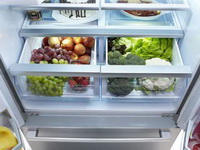 In the ancient works Wuyue Chunqiu (Annals of Wu and Yue), it is recorded that "King Gou Jian went on a journey and rested and slept in an ice chamber." This ice chamber was regarded as the refrigerator of ancient China. Civilians, by contrast, placed fruits and vegetables in baskets beside wells, tied the baskets to pulleys, and lowered them into the wells. Since ancient times, people have understood that low temperatures help preserve food; however, with the widespread adoption of modern refrigerators, "refrigerator disease" has also emerged alongside them.
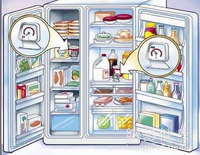 Although refrigerator temperatures inhibit the activity of most bacteria, some bacteria thrive even under low-temperature conditions and contaminate various foods. Bacteriologists conducted an experiment: they placed 50 million typhoid bacteria per milliliter into a cup of ice cream and stored it in a refrigerator. After five days, 10 million bacteria remained alive; after 20 days, more than 2 million survived; after 60 days, 600,000 remained; and after two years and four months, over 6,000 were still viable. Thus, even in low-temperature refrigerators, invading bacteria can survive by feeding on food residues. Once food is removed from the refrigerator and exposed to suitable temperatures, these bacteria "re-emerge" and proliferate rapidly on nutrient-rich substrates. Consuming such food without proper heat treatment may easily cause bacterial food poisoning—endangering health and even life.
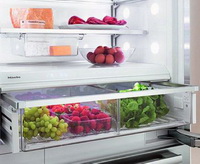 The Correct Way to Use the Refrigerator:
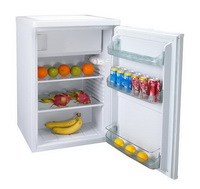 ✵1. Disease Prevention: As noted above, proper refrigerator use effectively prevents "refrigerator disease" and significantly reduces illnesses caused by improper food storage.
 ✵4. Practical Hygiene Tips: Simple refrigerator practices can make a meaningful difference in daily life. For instance, chilling onions in the refrigerator briefly before cutting helps prevent eye irritation and tearing. Similarly, freezing birthday candles for a short time before lighting them prevents dripping ("tears"), resulting in both aesthetically pleasing and hygienic cake decorations.
