Introduction: According to Traditional Chinese Medicine, winter is a season when Yin Qi flourishes: grass and trees wither, insects retreat into the soil, and all things enter a state of hibernation and recuperation. During this time, the body’s Yang Qi also withdraws inward in harmony with natural rhythms, and metabolism slows accordingly. Therefore, winter health preservation should align with the laws of nature.
Preserve Health in Winter by Conserving Yang
In winter, avoid disturbing the body’s Yang Qi or disrupting the physiological balance of Yin-Yang transformation. Going to bed early supports the conservation and nourishment of Yang Qi, helping maintain body warmth. It is advisable to rise after sunrise—when Yang Qi naturally rises rapidly in the body and blood levels of adrenal cortical hormones gradually increase—so that the mind remains clear, alert, and responsive.
Go outside and enjoy sunlight. Shorter daylight hours and reduced light exposure in winter are contributing factors to seasonal affective disorder (SAD). As darkness falls, the pineal gland increases melatonin production—a hormone that influences mood—while light exposure suppresses its secretion.
Prevent Cold and Protect Seven Key Areas
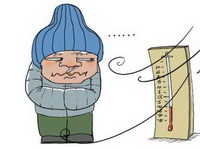
With seasonal changes and falling temperatures, certain parts of the body are especially vulnerable to cold; extra attention to cold prevention and care is essential.
✵Head: The head is a region of abundant Qi flow and vigorous blood circulation—the primary site of Yang Qi concentration—and yet it is highly susceptible to cold. Low temperatures cause peripheral vasoconstriction; exposure of the head to cold may trigger headaches, common colds, rhinitis, and other conditions. In the elderly, it may even increase the risk of cerebral apoplexy (stroke). Frail older adults should therefore wear hats when outdoors and take care to keep the head warm.
✵Shoulders: During cold seasons, insufficient Yang Qi and poor shoulder circulation—especially when shoulders are exposed to cold during sleep—can easily lead to shoulder joint pain and periarthritis, significantly impairing daily function.
✵Stomach: Cold invasion of the stomach may trigger relapse or worsening of gastric disorders. Individuals with thin abdominal walls are particularly vulnerable: cold exposure can provoke gastric spasms—mildly causing stomachache and indigestion, or severely resulting in vomiting and diarrhea.
✵Umbilicus (Navel): The umbilicus is a vital acupoint and focal point of health preservation. Its skin is thin and lacks subcutaneous fat, making it highly susceptible to cold pathogens. Cold invasion here may cause abdominal pain and diarrhea. Notably, individuals with larger waist circumferences—especially those who overlook navel coverage—must consciously protect this area from wind and cold; failure to do so may allow cold-damp pathogens to invade and induce illness.
✵Waist: The waist bears substantial mechanical load and undergoes frequent movement. For those suffering from lumbar muscle strain or lumbar intervertebral disc protrusion, cold exposure may exacerbate symptoms. Therefore, protecting the waist from wind-cold and dampness is crucial. With cooling temperatures and large day-night temperature fluctuations, timely layering of clothing is advised. Pay special attention to waist warmth while sleeping, and avoid drafts—especially when sweating—to safeguard lumbar health.
✵Legs: The knees are relatively “exposed”—lacking thick muscle or fat coverage—and receive inadequate heat supply. Their surface temperature is typically lower than that of other body regions. Joints are especially sensitive to wind and cold; cold exposure may lead to leg pain, numbness, and arthritis.
✵Feet: Located far from the heart, the feet have minimal subcutaneous fat, poor thermoregulation, and reduced blood perfusion. Cold feet may precipitate recurrence of chronic conditions such as colds, asthma, and bronchitis. When ambient temperatures drop, keeping the feet warm is essential.

 Introduction: According to Traditional Chinese Medicine, winter is a season when Yin Qi flourishes: grass and trees wither, insects retreat into the soil, and all things enter a state of hibernation and recuperation. During this time, the body’s Yang Qi also withdraws inward in harmony with natural rhythms, and metabolism slows accordingly. Therefore, winter health preservation should align with the laws of nature.
 In winter, avoid disturbing the body’s Yang Qi or disrupting the physiological balance of Yin-Yang transformation. Going to bed early supports the conservation and nourishment of Yang Qi, helping maintain body warmth. It is advisable to rise after sunrise—when Yang Qi naturally rises rapidly in the body and blood levels of adrenal cortical hormones gradually increase—so that the mind remains clear, alert, and responsive.
 With seasonal changes and falling temperatures, certain parts of the body are especially vulnerable to cold; extra attention to cold prevention and care is essential.
 ✵Shoulders: During cold seasons, insufficient Yang Qi and poor shoulder circulation—especially when shoulders are exposed to cold during sleep—can easily lead to shoulder joint pain and periarthritis, significantly impairing daily function.
 ✵Waist: The waist bears substantial mechanical load and undergoes frequent movement. For those suffering from lumbar muscle strain or lumbar intervertebral disc protrusion, cold exposure may exacerbate symptoms. Therefore, protecting the waist from wind-cold and dampness is crucial. With cooling temperatures and large day-night temperature fluctuations, timely layering of clothing is advised. Pay special attention to waist warmth while sleeping, and avoid drafts—especially when sweating—to safeguard lumbar health.
