✵This article documents the herb Lemongrass, including its English name, Latin name, Pinyin name, properties and flavor, botanical source—specifically Cymbopogon citratus (DC.) Stapf.—and provides a detailed overview of its botanical features, growth characteristics, ecological environment, macroscopic characteristics, pharmacological actions, medicinal efficacy, and administration guidelines.
Herba Cymbopogonis (Lemongrass)
Pinyin Name: Yún Xiāng Cǎo
English Name: Lemongrass, Remote Lemongrass Herb, Herb of Remote Lemongrass.
Latin Name:Herba Cymbopogonis Properties and Flavor: Warm; pungent, slightly bitter.
Brief Introduction:Herba Cymbopogonis is the dried aerial part of Cymbopogon citratus (DC.) Stapf., used in traditional practice to relieve cough and dyspnea. It is commonly known as Yún Xiāng Cǎo.
Botanical Source:Herba Cymbopogonis (Lemongrass) is the dried aerial part of Cymbopogon citratus (DC.) Stapf., a perennial herb belonging to the genus Cymbopogon, family Poaceae (Gramineae), order Poales. The primary botanical source is:
(1) Cymbopogon citratus (DC.) Stapf.
Botanical Description:Cymbopogon citratus (DC.) Stapf., commonly known as lemongrass, West Indian lemongrass, or citronella grass, is a perennial herb with a thick, erect culm reaching up to 2 meters in height and emitting a distinct lemon fragrance. Leaves are linear, up to 1 meter long and 15 mm wide; both surfaces are grayish-white and rough. Ligules are lanceolate, narrow, 1.5–2 cm long, reddish or fawn-colored, and 3–5 times longer than the peduncle. Pseudopanicles are linear to oblong, loosely branched, with tertiary branching; the base is discontinuous, and branches are slender, declinate or slightly curved. Primary branches bear 5–7 nodes; secondary and tertiary branches have 2–3 simple nodes.
Ecological Environment: This species grows naturally on sunny hillside meadows.
Growth Characteristics:Cymbopogon citratus prefers warm, sunny climates and is drought-tolerant but shade-intolerant. It thrives in well-drained, fertile, loose sandy loam soil but is adaptable to various soil types.
Characteristics of the Herb: The herb—also referred to as Herba Cymbopogonis Citrati—is approximately 2 meters long. The culm is stout, with waxy powder often present at the nodes. Leaves are linear, up to 1 meter long and ~15 mm wide; the leaf base is amplexicaul (stem-clasping). Both leaf surfaces are rough and grayish-white; leaf sheaths are smooth and glabrous; the ligule is thick and scarious. The whole herb possesses a strong lemon aroma and tastes pungent and slightly bitter, producing a cooling, tingling sensation upon chewing. High-quality herb material is sage-green or grayish-green, thick, leafy, and highly aromatic.
Medicinal efficacy: Releases the exterior, resolves dampness via diuresis, relieves cough, and calms wheezing. Indicated for wind-cold exterior syndrome, summer-heat stroke, vomiting and diarrhea with abdominal pain, painful or difficult urination (damp-heat dysuria), rheumatic bi syndrome with pain or numbness, and cough with wheezing.
Administration of Herba Cymbopogonis (Yún Xiāng Cǎo):
Reference:
Administration Guide for Herba Cymbopogonis (Yún Xiāng Cǎo)
TCM Books:
(1) Internally:water decoction, 3–5 qian (about 9–15 grams), higher doses up to 1–2 liang (about 30–60 grams) may be used; or infused in wine. Externally: Appropriate amount for fumigation-wash. (2) Internally:water decoction, 9–15 grams, higher doses up to 30–60 grams, or infusing in wine. Externally: Appropriate amount for fumigation-wash; or mashed fresh herb applied topically.

 ✵This article documents the herb Lemongrass, including its English name, Latin name, Pinyin name, properties and flavor, botanical source—specifically Cymbopogon citratus (DC.) Stapf.—and provides a detailed overview of its botanical features, growth characteristics, ecological environment, macroscopic characteristics, pharmacological actions, medicinal efficacy, and administration guidelines.
 Pinyin Name: Yún Xiāng Cǎo
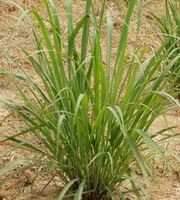 Botanical Description: Cymbopogon citratus (DC.) Stapf., commonly known as lemongrass, West Indian lemongrass, or citronella grass, is a perennial herb with a thick, erect culm reaching up to 2 meters in height and emitting a distinct lemon fragrance. Leaves are linear, up to 1 meter long and 15 mm wide; both surfaces are grayish-white and rough. Ligules are lanceolate, narrow, 1.5–2 cm long, reddish or fawn-colored, and 3–5 times longer than the peduncle. Pseudopanicles are linear to oblong, loosely branched, with tertiary branching; the base is discontinuous, and branches are slender, declinate or slightly curved. Primary branches bear 5–7 nodes; secondary and tertiary branches have 2–3 simple nodes.
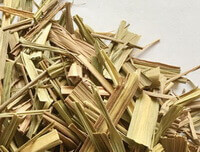 Characteristics of the Herb: The herb—also referred to as Herba Cymbopogonis Citrati—is approximately 2 meters long. The culm is stout, with waxy powder often present at the nodes. Leaves are linear, up to 1 meter long and ~15 mm wide; the leaf base is amplexicaul (stem-clasping). Both leaf surfaces are rough and grayish-white; leaf sheaths are smooth and glabrous; the ligule is thick and scarious. The whole herb possesses a strong lemon aroma and tastes pungent and slightly bitter, producing a cooling, tingling sensation upon chewing. High-quality herb material is sage-green or grayish-green, thick, leafy, and highly aromatic.
 URL QR code: