✵TCM herbalism is also known as the pharmaceutics of Traditional Chinese Medicine or Chinese pharmaceutics. It is the branch of health science dealing with the preparation, dispensing, and proper utilization of Chinese herbs. It is primarily composed of Introduction to Chinese Medicinals, Classification of Chinese Herbs, Formulas, and Patent Medicines.
Antiasthmatic Herbs
Introduction: Antiasthmatics are agents or herbal substances that relieve cough and asthma (or dyspnea), usually by ventilating, clearing, or moistening the lungs, directing Lung Qi downward, strengthening Lung Qi, or resolving phlegm. These herbs function to relieve cough and wheezing.
✵As of January 1, 2024, a total of [11] commonly used TCM herbs and [18] related plant species have been recorded in this category. Each antiasthmatic herb is briefly introduced separately below.
Semen Armeniacae Amarum (Bitter Apricot Seed)
Brief Introduction:Semen Armeniacae Amarum is the dried, ripe seed or kernel of Prunus armeniaca L. var. ansu Maxim., Prunus sibirica L., Prunus mandshurica (Maxim.) Koehne, or Prunus armeniaca L. It is used to relieve cough and dyspnea with profuse expectoration and to alleviate constipation. The herb is commonly known as Semen Armeniacae Amarum, Bitter Apricot Seed, or Kǔ Xìng Rén.
Folium Eriobotryae (Loquat Leaf)
Brief Introduction:Folium Eriobotryae is the dried leaf of Eriobotrya japonica (Thunb.) Lindl., used (1) to clear lung heat and resolve phlegm to stop coughing in cases of lung heat, and (2) to stop vomiting due to stomach heat. It is commonly known as Loquat Leaf or Pí Pá Yè.
Cortex Mori (White Mulberry Root-bark)
Brief Introduction:Cortex Mori is the dried root-bark of Morus alba L., with the outer brown corky layer removed. It is used (1) to clear lung heat and relieve dyspnea in cases of lung-heat cough with wheezing, and (2) to promote diuresis in edema. It is commonly known as Cortex Mori, White Mulberry Root-Bark, or Sāng Bái Pí.
Semen Lepidii seu Descurainiae (Pepperweed Seed or Tansy Mustard Seed)
Brief Introduction:Semen Lepidii seu Descurainiae is the dried, ripe seed of Lepidium apetalum Willd. or Descurainia sophia (L.) Webb ex Prantl. It is used (1) to clear lung heat, relieve cough and dyspnea with excessive phlegm, and (2) to promote diuresis for edema. It is commonly known as Semen Lepidii seu Descurainiae, Pepperweed Seed, Tansy Mustard Seed, or Tíng Lì Zǐ.
Fructus Perillae (Perilla Fruit)
Brief Introduction:Fructus Perillae is the dried mature fruit of Perilla frutescens (L.) Britt., used as an antitussive, antiasthmatic, and expectorant for treating chronic bronchitis accompanied by thin, white phlegm and chest oppression; it is also used as a mild laxative to relieve constipation. It is commonly abbreviated as "Su Zi."
Radix Asteris (Tartarian Aster Root)
Brief Introduction:Radix Asteris is the dried root and rhizome of Aster tataricus L.f., used as an expectorant and antitussive for coughs with profuse phlegm and for consumptive (phthisical) cough. It is commonly known as Radix Asteris, Tartarian Aster Root, or Zǐ Wǎn.
Semen Ginkgo (Ginkgo Seed)
Brief Introduction:Semen Ginkgo is the dried ripe seed of the maidenhair tree, Ginkgo biloba L. It is used (1) as an antitussive and anti-asthmatic for prolonged cough or asthma with profuse expectoration, (2) to arrest leukorrhea, and (3) to reduce urinary frequency in cases of enuresis and frequent micturition. The herb is commonly known as Semen Ginkgo, Ginkgo Seed, or Bái Guǒ.
Fructus Hippophae (Seabuckthorn Fruit)
Brief Introduction:Fructus Hippophae is the dried ripe fruit of Hippophae rhamnoides L. (family Elaeagnaceae). It is used (1) as an antitussive and expectorant for cough with profuse phlegm; (2) as a stomachic for dyspepsia and abdominal pain due to food retention; and (3) to promote blood circulation and resolve blood stasis in traumatic wounds and amenorrhea. The herb is commonly known as Fructus Hippophae, Seabuckthorn Fruit, or Shā Jí.
Cortex Syringae
Brief Introduction:Cortex Syringae is the dried stem-bark of Syringa reticulata (Bl.) Hara var. mandshurica (Maxim.) Hara. It is used as an antipyretic, antitussive, and diuretic for treating acute or chronic bronchitis, asthma, and cardiac edema. It is commonly known as Cortex Syringae or Bào Mǎ Zǐ Pí.
Radix Physochlainae (Funneled Physochlaina Root)
Brief Introduction:Radix Physochlainae is the dried root of Physochlaina infundibularis Kuang, a funnel-shaped perennial herb. It is used to relieve cough and dyspnea and to induce sedation. It is commonly known as Radix Physochlainae, Funneled Physochlaina Root, or Huá Shān Shēn.
Herba Cymbopogonis (Lemongrass)
Brief Introduction:Herba Cymbopogonis is the dried aerial part of Cymbopogon citratus (DC.) Stapf., used in traditional practice to relieve cough and dyspnea. It is commonly known as Yún Xiāng Cǎo.

 ✵TCM herbalism is also known as the pharmaceutics of Traditional Chinese Medicine or Chinese pharmaceutics. It is the branch of health science dealing with the preparation, dispensing, and proper utilization of Chinese herbs. It is primarily composed of Introduction to Chinese Medicinals, Classification of Chinese Herbs, Formulas, and Patent Medicines.
 Introduction: Antiasthmatics are agents or herbal substances that relieve cough and asthma (or dyspnea), usually by ventilating, clearing, or moistening the lungs, directing Lung Qi downward, strengthening Lung Qi, or resolving phlegm. These herbs function to relieve cough and wheezing.
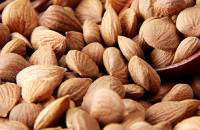 Brief Introduction: Semen Armeniacae Amarum is the dried, ripe seed or kernel of Prunus armeniaca L. var. ansu Maxim., Prunus sibirica L., Prunus mandshurica (Maxim.) Koehne, or Prunus armeniaca L. It is used to relieve cough and dyspnea with profuse expectoration and to alleviate constipation. The herb is commonly known as Semen Armeniacae Amarum, Bitter Apricot Seed, or Kǔ Xìng Rén.
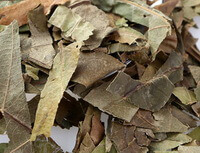 Brief Introduction: Folium Eriobotryae is the dried leaf of Eriobotrya japonica (Thunb.) Lindl., used (1) to clear lung heat and resolve phlegm to stop coughing in cases of lung heat, and (2) to stop vomiting due to stomach heat. It is commonly known as Loquat Leaf or Pí Pá Yè.
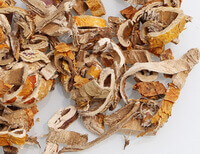 Brief Introduction: Cortex Mori is the dried root-bark of Morus alba L., with the outer brown corky layer removed. It is used (1) to clear lung heat and relieve dyspnea in cases of lung-heat cough with wheezing, and (2) to promote diuresis in edema. It is commonly known as Cortex Mori, White Mulberry Root-Bark, or Sāng Bái Pí.
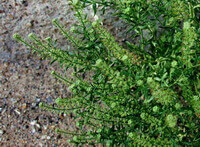 Brief Introduction: Semen Lepidii seu Descurainiae is the dried, ripe seed of Lepidium apetalum Willd. or Descurainia sophia (L.) Webb ex Prantl. It is used (1) to clear lung heat, relieve cough and dyspnea with excessive phlegm, and (2) to promote diuresis for edema. It is commonly known as Semen Lepidii seu Descurainiae, Pepperweed Seed, Tansy Mustard Seed, or Tíng Lì Zǐ.
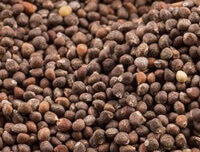 Brief Introduction: Fructus Perillae is the dried mature fruit of Perilla frutescens (L.) Britt., used as an antitussive, antiasthmatic, and expectorant for treating chronic bronchitis accompanied by thin, white phlegm and chest oppression; it is also used as a mild laxative to relieve constipation. It is commonly abbreviated as "Su Zi."
 Brief Introduction: Radix Asteris is the dried root and rhizome of Aster tataricus L.f., used as an expectorant and antitussive for coughs with profuse phlegm and for consumptive (phthisical) cough. It is commonly known as Radix Asteris, Tartarian Aster Root, or Zǐ Wǎn.
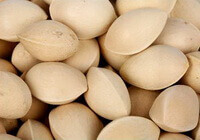 Brief Introduction: Semen Ginkgo is the dried ripe seed of the maidenhair tree, Ginkgo biloba L. It is used (1) as an antitussive and anti-asthmatic for prolonged cough or asthma with profuse expectoration, (2) to arrest leukorrhea, and (3) to reduce urinary frequency in cases of enuresis and frequent micturition. The herb is commonly known as Semen Ginkgo, Ginkgo Seed, or Bái Guǒ.
 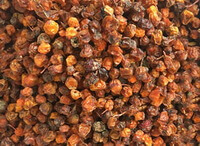 Brief Introduction: Fructus Hippophae is the dried ripe fruit of Hippophae rhamnoides L. (family Elaeagnaceae). It is used (1) as an antitussive and expectorant for cough with profuse phlegm; (2) as a stomachic for dyspepsia and abdominal pain due to food retention; and (3) to promote blood circulation and resolve blood stasis in traumatic wounds and amenorrhea. The herb is commonly known as Fructus Hippophae, Seabuckthorn Fruit, or Shā Jí.
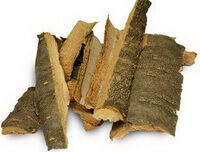 Brief Introduction: Cortex Syringae is the dried stem-bark of Syringa reticulata (Bl.) Hara var. mandshurica (Maxim.) Hara. It is used as an antipyretic, antitussive, and diuretic for treating acute or chronic bronchitis, asthma, and cardiac edema. It is commonly known as Cortex Syringae or Bào Mǎ Zǐ Pí.
 Brief Introduction: Radix Physochlainae is the dried root of Physochlaina infundibularis Kuang, a funnel-shaped perennial herb. It is used to relieve cough and dyspnea and to induce sedation. It is commonly known as Radix Physochlainae, Funneled Physochlaina Root, or Huá Shān Shēn.
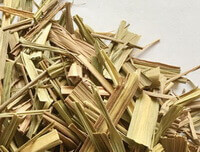 Brief Introduction: Herba Cymbopogonis is the dried aerial part of Cymbopogon citratus (DC.) Stapf., used in traditional practice to relieve cough and dyspnea. It is commonly known as Yún Xiāng Cǎo.