✵The article records the herb Calcined Oyster Shell—its English name, Latin name, Pinyin name, property and flavor, and its source from four oyster species: (1) Ostrea gigas Thunberg, (2) Ostrea talienwhanensis Crosse, (3) Ostrea rivularis Gould, and (4) Ostrea denselamellosa Lischke—along with a brief introduction to these shellfish sources, the characteristics of Calcined Oyster Shell, its pharmacological actions, medicinal efficacy, and administration guidelines.
Concha Ostreae Usta (Calcined Oyster Shell)
Pinyin Name: Duàn Mǔ Lì
English Name: Calcined Oyster Shell
Latin Name:Concha Ostreae Usta Property and Flavor: Slightly cold; salty
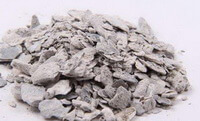
Brief Introduction:Concha Ostreae Usta is the calcined shell of oysters—Ostrea gigas Thunberg, Ostrea talienwhanensis Crosse, or Ostrea rivularis Gould (family Ostreidae)—used as an astringent and antacid for treating excessive sweating, seminal emission, leukorrhea, and acid regurgitation. It is commonly known as Concha Ostreae Usta, Calcined Oyster Shell, or Duàn Mǔ Lì.
Animal Source: Classical herbal works define Concha Arcae Usta (Calcined Arc Shell) as the calcined shell of (1) Ostrea gigas Thunberg, (2) Ostrea talienwhanensis Crosse, (3) Ostrea rivularis Gould, or (4) Ostrea denselamellosa Lischke. These species are described in the entry "Concha Ostreae (Oyster Shell)."
Medicinal Efficacy: Astringency; alleviation of gastric hyperacidity to relieve epigastric pain; sedation via heavy substances; softening and dispersing hard masses. It is indicated for deficiency-related syndromes—including spontaneous sweating, night sweats, frequent urination, metrorrhagia, metrostaxis, pathological leukorrhea, and spermatorrhea—as well as epigastric pain, acid regurgitation, restlessness, insomnia, hyperactivity of Liver-Yang (excessive rising of Liver-Yang), dizziness, and blurred vision.
Administration of Concha Ostreae Usta (Duàn Mǔ Lì):
Reference:
Administration Guide for Concha Ostreae Usta (Duàn Mǔ Lì)
TCM Books:
(1) Internally: 9–30 grams per dose, decocted first in water decoctions; (2) Internally: water decoction, 0.3–1 liang (≈9–30 grams); or prepared as pills or powder. External use: finely ground into powder, mixed with appropriate medium for topical application (e.g., paste or dusting); (3) Internally: water decoction, 15–30 grams, decocted first in water decoctions; or prepared as pills or powder. External use: finely ground into powder, mixed with appropriate medium for topical application (e.g., paste or dusting);
Contraindications, Precautions, and Adverse Reactions: Concha Ostreae Usta should not be combined with Fructus Corni or Flos Magnoliae.
Article Link:
URL QR code:
References:
1.Introduction of Duan Mu Li: Calcined Oyster Shell

 ✵The article records the herb Calcined Oyster Shell—its English name, Latin name, Pinyin name, property and flavor, and its source from four oyster species: (1) Ostrea gigas Thunberg, (2) Ostrea talienwhanensis Crosse, (3) Ostrea rivularis Gould, and (4) Ostrea denselamellosa Lischke—along with a brief introduction to these shellfish sources, the characteristics of Calcined Oyster Shell, its pharmacological actions, medicinal efficacy, and administration guidelines.
 Pinyin Name: Duàn Mǔ Lì
 URL QR code: