✵This article documents the herb Oyster Shell—including its English name, Latin name, Pinyin name, properties and flavor—as well as its source: three shellfish species—(1) Ostrea gigas Thunberg, (2) Ostrea talienwhanensis Crosse, and (3) Ostrea rivularis Gould—and a fourth usable species—(4) Ostrea denselamellosa Lischke. It provides a detailed description of the morphological features, life habits, and ecological environments of these four shellfish species; the characteristics of the herb Oyster Shell; its pharmacological actions; medicinal efficacy; and administration guidelines.
Concha Ostreae (Oyster Shell)
Pinyin Name: Mǔ Lì
English Name: Oyster Shell
Latin Name:Concha Ostreae Property and Flavor: Slightly cold; salty.
Brief Introduction:Concha Ostreae is the shell of Ostrea gigas Thunberg, Ostrea talienwhanensis Crosse, or Ostrea rivularis Gould, used (1) as a sedative and calming agent for headache, dizziness, palpitations, and insomnia, and (2) to soften and dissipate hard masses, such as in scrofula. It is commonly known as Concha Ostreae, Oyster Shell, or Mǔ Lì.
Source: Classical herbal works define Concha Ostreae (Mǔ Lì) as the shell of oysters belonging to the family Ostreidae (mollusk family), specifically from species (1) Ostrea gigas Thunberg, (2) Ostrea talienwhanensis Crosse, or (3) Ostrea rivularis Gould. Other authoritative classical works cite a fourth source: (4) Ostrea denselamellosa Lischke. There are many types of oysters. According to statistics, more than 100 oyster species have been identified worldwide, distributed across tropical and temperate regions. Along the coast of China, oysters are widely distributed. In recent years, oyster cultivation has developed rapidly. The four commonly used species are introduced below:
(1) Ostrea gigas Thunberg
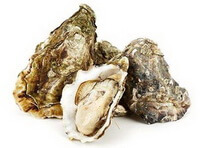
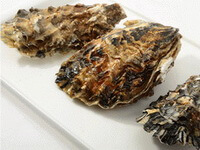
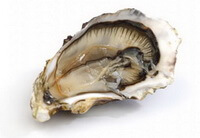
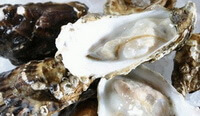
Shellfish Description:Ostrea gigas Thunberg is a bivalve mollusk belonging to the family Ostreidae and genus Crassostrea. It is commonly known as Ostrea gigas, Long Oyster, or Chang Mǔ Lì (meaning “long oyster”); local names include Háo, Bái Háo, and Hǎi Lí Zǐ, among others. The shells are elongated and relatively thin yet firm and thick. Shell length is approximately three times the shell height; typical dimensions range from 140–330 mm in length and 57–115 mm in height, with the largest recorded specimen measuring 722 mm in length. The left valve is slightly concave; the attachment surface at the apex is small. The right valve is flat and functions as a cover; the dorsal margin and ventrolateral edge are nearly parallel. The shell surface color varies—mauve (lilac), ash gray (grayish-white), or tawny (yellowish brown). Fine concentric scales grow circularly from the apex to the posterior margin, forming gently undulating layers; radial ribs are absent. The inner surface of the shell is porcelain-white; the ligament fossa is long, wide, and deep; and the adductor muscle scar is large, located dorsally and shaped like a brown horseshoe (U-shaped).
Ecological Environment:Ostrea gigas Thunberg inhabits muddy or sandy-muddy substrates in subtidal zones at depths greater than 10 meters—between the intertidal zone and the subtidal line—and attaches permanently to rocks via its left valve. Individuals in normal-salinity seawater tend to be smaller, whereas those in low-salinity environments grow larger.
Characteristics of the Herb: Shell of Ostrea gigas: The shell is flake-like and elongated, with the dorsal margin and ventrolateral edge nearly parallel; it measures 10–50 cm in length and 4–15 cm in height. The right valve is smaller, with firm, thick, laminar or mellar scales. The outer surface is flat or bears several shallow indentations and displays colors ranging from mauve (lilac), ash gray (grayish-white), to tawny (yellowish brown). The inner surface is porcelain-white, and no small teeth occur on either side of the apex. The left valve is deeply concave; its scales (squamae) are thicker and larger than those of the right valve, and the attachment surface at the apex is reduced in size. The shell texture is hard, with a layered, pure-white fracture surface. The herb exhibits a faint odor and a slightly salty taste.
(2) Ostrea talienwhanensis Crosse
Shellfish Description:Ostrea talienwhanensis Crosse is a bivalve mollusk of the family Ostreidae and genus Crassostrea. It is commonly known as Ostrea talienwhanensis or Dàliánwān Mǔ Lì (“Oyster of Dalian Bay”). Shells are slightly triangular, medium to large in size, firm and thick, typically measuring 55–63 mm in length and 95–130 mm in height. The apex is pointed and gradually widens posteriorly. The right valve is flat and cover-like; scales near the apex are tightly packed and thickened, while those toward the ventrolateral edge become looser, undulating, and wavy—with no prominent radial ribs. The shell surface is pale yellow, often marked with purplish-brown (puce) blotches. The left valve is protuberant and bears several stout radial ribs extending from the apex; marginal rib scales are firm, thick, and inclined. The inner surface is sunken and box-like, white; the hinge area is small; and the ligament fossa is long, deep, and triangular. The adductor muscle scar is white or purplish and located in the posterior-dorsal region.
Ecological Environment:Ostrea talienwhanensis Crosse inhabits subtidal bottoms down to approximately 20 meters depth, as well as tidal pools and rocky reefs within the intertidal zone. It exhibits high salinity tolerance. Its byssus is rudimentary, and it lives permanently affixed to rocks and other hard substrata. The left valve remains fixed, while the right valve opens and closes. Individuals commonly aggregate in clusters. The spawning season occurs from June to August.
Characteristics of the Herb: Shell of Ostrea talienwhanensis: The shell is nearly triangular, with the dorsal margin and ventrolateral edge diverging (splayed). The outer surface of the right valve is pale yellow, bearing loose concentric scales that are undulating and wavy; the inner surface is white. The left valve displays firm, thick concentric scales and distinct radial ribs radiating from the apex. Its inner surface is concave and box-like, and the hinge area is small. The fracture thickness ranges from 0.3–13 mm; layering is inconspicuous, and the periostracum overlaps.
(3) Ostrea rivularis Gould.
Shellfish Description:Ostrea rivularis Gould is a bivalve mollusk belonging to the family Ostreidae and genus Crassostrea. It is commonly known as Ostrea rivularis or Jīn Jiāng Mǔ Lì; local names include Dà Háo, among others. Shell shape varies—circular, oval (egg-shaped), triangular, or slightly elongated—with firm, thick valves. Larger specimens measure 100–242 mm in length and 70–150 mm in height. The left valve is larger and thicker, with an irregularly shaped attachment surface on its dorsal region. The right valve is slightly flattened and smaller than the left; its surface bears thin, straight, concentric scales colored tawny (yellowish brown) or dull purple (dark violet). In 1–2-year-old individuals, scales are flat, thin, and crisp—sometimes with free (detached) margins; in 2-year-old to multi-year individuals, scales remain flat but the posterior margin may be undulating; in older individuals, scales overlap in dense, layered formations, becoming extremely firm and thick. The inner surface of the shell is white or ash-gray, with grayish-purple margins often exhibiting undulations (sags and crests). The hinge area lacks teeth; the ligament fossa is long and wide, horn-shaped; and the ligament is atropurpureus (purplish black). The adductor muscle scar is exceptionally large, located dorsally in the mid-region, pale yellow (faint yellow) in color, irregular in shape—and highly variable, commonly oval (egg-shaped) or reniform.
Ecological Environment:Ostrea rivularis Gould inhabits estuarine subtidal zones extending offshore to depths of up to 7 meters, where salinity ranges from 10‰ to 25‰. It is eurythermal, with an optimal temperature range of 10–33 °C (50–91.4 °F). It is a filter-feeding omnivore, consuming microscopic plankton. Its spawning season extends from May to September.
Characteristics of the Herb: Shell of Ostrea rivularis: The shell is circular, oval (egg-shaped), triangular, or slightly elongated. The left valve is deeply concave, large, and thick; the right valve is flatter and slightly smaller. The outer surface of the right valve is mildly uneven, displaying variable colors—including gray, purple, brown, and yellow—with concentric scales arranged in circular patterns. Scales of juvenile oysters are thin and crisp; with age, they become progressively thicker and firmer. The inner surface is white, with margins occasionally exhibiting mauve (lilac) pigmentation. The shell texture is hard, with clearly defined laminar layers in the fracture surface, 2–10 mm thick. The herb is odorless and has a slightly salty taste.
(4) Ostrea denselamellosa Lischke
Shellfish Description:Ostrea denselamellosa Lischke is a bivalve mollusk of the family Ostreidae and genus Crassostrea. It is commonly known as Ostrea denselamellosa, Dense-lamellose Oyster, Slipper Oyster, or Mǐ Líng Mǔ Lì (“Oyster of dense scales”). Shells are large and thick—circular (rounded) or oval (egg-shaped)—with typical dimensions of 46–122 mm in length and 58–138 mm in height. Both valves are nearly equal in size. The left valve is larger and deeply concave, with an irregularly shaped attachment surface at the apex. On the right valve, scales near the apex are tightly packed and smooth; those toward the ventrolateral edge form dense, concentric circles—becoming progressively thinner, crisper, flakier, and closely imbricated, with numerous prominent radial ribs that render the ventrolateral margin distinctly undulating (wavy). The shell surface is grayish-blue, often marked with purplish-brown (puce) blotches. The inner surface is white, exhibiting a faint nacreous (pearly) luster. A single row of small cardinal teeth (5–8 in number) is typically present on each side of the hinge. The ligament fossa is short and triangular. The adductor muscle scar is large and well-defined.
Ecological Environment:Ostrea denselamellosa Lischke inhabits offshore rocky reefs and hard substrata.
Life habit: This species dwells on rocky reefs at depths of 15–30 meters below the subtidal zone—or on muddy-sandy (gillo-arenaceous) sea floors. It may also occur several meters below the subtidal line. Its salinity tolerance ranges from 27‰ to 34‰. Spawning occurs from May to September, initiated when water temperature reaches 17–19 °C (62.6–66.2 °F).
Characteristics of the Herb: The shell is circular or oval (egg-shaped), relatively large. The right valve is flat, with a smooth apex; the remainder of the surface bears thin, crisp, concentric scales. The ventrolateral edge of the left valve displays firm, thick, concentric scales interspersed with robust, widely spaced radial ribs. Shell surface coloration is grayish, variably overlaid with purple, brown, and cyan (blue-green). The inner surface is white, with a faint nacreous (pearly) luster. The adductor muscle scar is large and highly distinct. Fracture thickness ranges from 0.3–12 mm, with pronounced laminated striations.
Pharmacological Actions: (1) The calcium salt in the herb exerts antacid, mild analgesic, anti-inflammatory, muscle-relaxant, and anticonvulsant effects; (2) it lowers blood lipids, exhibits anticoagulant and antithrombotic activities, enhances immune function, and counteracts leukopenia; (3) it possesses astringent, sedative, expectorant, and analgesic effects; (4) the acidic extract of oyster demonstrates an inhibitory effect on poliovirus in vivo, among others.
Medicinal Efficacy: Calming the liver and subduing hyperactive yang, calming the mind with heavy substances, subduing yang while nourishing yin, consolidating yin, arresting sweating, inducing astringency, arresting seminal emission, resolving phlegm, and softening and dispersing hard masses. It is indicated for palpitations with anxiety and insomnia, fright-induced epilepsy, dizziness and tinnitus, turbid stranguria, scrofula, goiter, subcutaneous nodules, abdominal masses, and intra-abdominal lumps. Calcined oyster shell specifically arrests seminal emission and alleviates pain; it is commonly indicated for spontaneous sweating, night sweats, spermatorrhea (nocturnal emission), uterine bleeding (metrorrhagia and metrostaxis), pathological leukorrhea, stomach pain, and acid regurgitation.
Administration of Concha Ostreae (Mǔ Lì):
Reference:
Administration Guide for Concha Ostreae (Mǔ Lì)
TCM Books:
(1) Internally: 9–30 gramsper dose, decocted first in herbal preparations; (2) Internally: water decoction, 0.3–1 liang (≈9–30 grams), or formulated into pills or powders; external use: apply an appropriate amount of finely powdered herb—sprinkle, paste, or dust onto affected areas; (3) Internally: water decoction, 15–30 grams per dose, decocted first; or formulated into pills or powders. External use: apply an appropriate amount of finely powdered herb—sprinkle or paste onto affected areas.
Contraindications, Precautions, and Adverse Reactions: Concha Ostreae should not be combined with Evodia fruit (Fructus Evodiae), Magnolia flower (Flos Magnoliae), etc.

 ✵This article documents the herb Oyster Shell—including its English name, Latin name, Pinyin name, properties and flavor—as well as its source: three shellfish species—(1) Ostrea gigas Thunberg, (2) Ostrea talienwhanensis Crosse, and (3) Ostrea rivularis Gould—and a fourth usable species—(4) Ostrea denselamellosa Lischke. It provides a detailed description of the morphological features, life habits, and ecological environments of these four shellfish species; the characteristics of the herb Oyster Shell; its pharmacological actions; medicinal efficacy; and administration guidelines.
 Pinyin Name: Mǔ Lì
 Source: Classical herbal works define Concha Ostreae (Mǔ Lì) as the shell of oysters belonging to the family Ostreidae (mollusk family), specifically from species (1) Ostrea gigas Thunberg, (2) Ostrea talienwhanensis Crosse, or (3) Ostrea rivularis Gould. Other authoritative classical works cite a fourth source: (4) Ostrea denselamellosa Lischke. There are many types of oysters. According to statistics, more than 100 oyster species have been identified worldwide, distributed across tropical and temperate regions. Along the coast of China, oysters are widely distributed. In recent years, oyster cultivation has developed rapidly. The four commonly used species are introduced below:
 Shellfish Description: Ostrea gigas Thunberg is a bivalve mollusk belonging to the family Ostreidae and genus Crassostrea. It is commonly known as Ostrea gigas, Long Oyster, or Chang Mǔ Lì (meaning “long oyster”); local names include Háo, Bái Háo, and Hǎi Lí Zǐ, among others. The shells are elongated and relatively thin yet firm and thick. Shell length is approximately three times the shell height; typical dimensions range from 140–330 mm in length and 57–115 mm in height, with the largest recorded specimen measuring 722 mm in length. The left valve is slightly concave; the attachment surface at the apex is small. The right valve is flat and functions as a cover; the dorsal margin and ventrolateral edge are nearly parallel. The shell surface color varies—mauve (lilac), ash gray (grayish-white), or tawny (yellowish brown). Fine concentric scales grow circularly from the apex to the posterior margin, forming gently undulating layers; radial ribs are absent. The inner surface of the shell is porcelain-white; the ligament fossa is long, wide, and deep; and the adductor muscle scar is large, located dorsally and shaped like a brown horseshoe (U-shaped).
 Ecological Environment: Ostrea gigas Thunberg inhabits muddy or sandy-muddy substrates in subtidal zones at depths greater than 10 meters—between the intertidal zone and the subtidal line—and attaches permanently to rocks via its left valve. Individuals in normal-salinity seawater tend to be smaller, whereas those in low-salinity environments grow larger.
 Characteristics of the Herb: Shell of Ostrea gigas: The shell is flake-like and elongated, with the dorsal margin and ventrolateral edge nearly parallel; it measures 10–50 cm in length and 4–15 cm in height. The right valve is smaller, with firm, thick, laminar or mellar scales. The outer surface is flat or bears several shallow indentations and displays colors ranging from mauve (lilac), ash gray (grayish-white), to tawny (yellowish brown). The inner surface is porcelain-white, and no small teeth occur on either side of the apex. The left valve is deeply concave; its scales (squamae) are thicker and larger than those of the right valve, and the attachment surface at the apex is reduced in size. The shell texture is hard, with a layered, pure-white fracture surface. The herb exhibits a faint odor and a slightly salty taste.
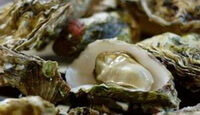 Shellfish Description: Ostrea talienwhanensis Crosse is a bivalve mollusk of the family Ostreidae and genus Crassostrea. It is commonly known as Ostrea talienwhanensis or Dàliánwān Mǔ Lì (“Oyster of Dalian Bay”). Shells are slightly triangular, medium to large in size, firm and thick, typically measuring 55–63 mm in length and 95–130 mm in height. The apex is pointed and gradually widens posteriorly. The right valve is flat and cover-like; scales near the apex are tightly packed and thickened, while those toward the ventrolateral edge become looser, undulating, and wavy—with no prominent radial ribs. The shell surface is pale yellow, often marked with purplish-brown (puce) blotches. The left valve is protuberant and bears several stout radial ribs extending from the apex; marginal rib scales are firm, thick, and inclined. The inner surface is sunken and box-like, white; the hinge area is small; and the ligament fossa is long, deep, and triangular. The adductor muscle scar is white or purplish and located in the posterior-dorsal region.
 Shellfish Description: Ostrea rivularis Gould is a bivalve mollusk belonging to the family Ostreidae and genus Crassostrea. It is commonly known as Ostrea rivularis or Jīn Jiāng Mǔ Lì; local names include Dà Háo, among others. Shell shape varies—circular, oval (egg-shaped), triangular, or slightly elongated—with firm, thick valves. Larger specimens measure 100–242 mm in length and 70–150 mm in height. The left valve is larger and thicker, with an irregularly shaped attachment surface on its dorsal region. The right valve is slightly flattened and smaller than the left; its surface bears thin, straight, concentric scales colored tawny (yellowish brown) or dull purple (dark violet). In 1–2-year-old individuals, scales are flat, thin, and crisp—sometimes with free (detached) margins; in 2-year-old to multi-year individuals, scales remain flat but the posterior margin may be undulating; in older individuals, scales overlap in dense, layered formations, becoming extremely firm and thick. The inner surface of the shell is white or ash-gray, with grayish-purple margins often exhibiting undulations (sags and crests). The hinge area lacks teeth; the ligament fossa is long and wide, horn-shaped; and the ligament is atropurpureus (purplish black). The adductor muscle scar is exceptionally large, located dorsally in the mid-region, pale yellow (faint yellow) in color, irregular in shape—and highly variable, commonly oval (egg-shaped) or reniform.
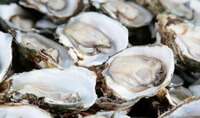 Ecological Environment: Ostrea rivularis Gould inhabits estuarine subtidal zones extending offshore to depths of up to 7 meters, where salinity ranges from 10‰ to 25‰. It is eurythermal, with an optimal temperature range of 10–33 °C (50–91.4 °F). It is a filter-feeding omnivore, consuming microscopic plankton. Its spawning season extends from May to September.
 Characteristics of the Herb: Shell of Ostrea rivularis: The shell is circular, oval (egg-shaped), triangular, or slightly elongated. The left valve is deeply concave, large, and thick; the right valve is flatter and slightly smaller. The outer surface of the right valve is mildly uneven, displaying variable colors—including gray, purple, brown, and yellow—with concentric scales arranged in circular patterns. Scales of juvenile oysters are thin and crisp; with age, they become progressively thicker and firmer. The inner surface is white, with margins occasionally exhibiting mauve (lilac) pigmentation. The shell texture is hard, with clearly defined laminar layers in the fracture surface, 2–10 mm thick. The herb is odorless and has a slightly salty taste.
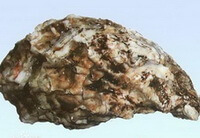 Shellfish Description: Ostrea denselamellosa Lischke is a bivalve mollusk of the family Ostreidae and genus Crassostrea. It is commonly known as Ostrea denselamellosa, Dense-lamellose Oyster, Slipper Oyster, or Mǐ Líng Mǔ Lì (“Oyster of dense scales”). Shells are large and thick—circular (rounded) or oval (egg-shaped)—with typical dimensions of 46–122 mm in length and 58–138 mm in height. Both valves are nearly equal in size. The left valve is larger and deeply concave, with an irregularly shaped attachment surface at the apex. On the right valve, scales near the apex are tightly packed and smooth; those toward the ventrolateral edge form dense, concentric circles—becoming progressively thinner, crisper, flakier, and closely imbricated, with numerous prominent radial ribs that render the ventrolateral margin distinctly undulating (wavy). The shell surface is grayish-blue, often marked with purplish-brown (puce) blotches. The inner surface is white, exhibiting a faint nacreous (pearly) luster. A single row of small cardinal teeth (5–8 in number) is typically present on each side of the hinge. The ligament fossa is short and triangular. The adductor muscle scar is large and well-defined.
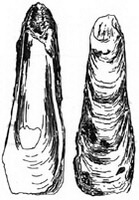 Ecological Environment: Ostrea denselamellosa Lischke inhabits offshore rocky reefs and hard substrata.
 URL QR code: