✵This article documents the herb Malt Sugar, including its English and Latin names, Pinyin name, properties and flavor, botanical source, and provides a detailed overview of its characteristics, pharmacological actions, medicinal efficacy, and administration guidelines.
Extractum Malti (Malt Sugar)
Pinyin Name: Yí Tánɡ
English Name: Malt Sugar
Latin Name:Extractum Malti Properties and Flavor: Warm in nature; sweet in taste.
Brief Introduction:Extractum Malti is an amber- or yellowish-brown, viscous liquid with a pleasant odor and sweet taste, prepared by fermentation and saccharification of malted grains of barley (Hordeum vulgare L.) or wheat (Triticum aestivum L.). It functions as a spleen-qi tonic for general debility and as an antitussive for chronic cough. Commonly known names include Saccharum Granorum, Glucidtemns, Malt Sugar, and Yí Tánɡ.
Botanical Source: Classical herbal works define Extractum Malti (Malt Sugar) as a preparation derived from malted starchy grains—such as barley (sprouts of Hordeum vulgare L.), broomcorn millet (Panicum miliaceum L.), rice (Oryza sativa L.), wheat (Triticum aestivum L.), foxtail millet (Setaria italica L.), or maize (Zea mays L.)—through fermentation and saccharification.
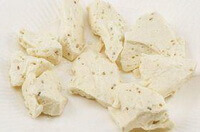
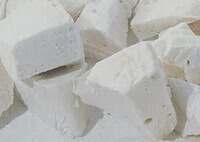
Characteristics of the Herb: Malt sugar is classified into soft and hard forms. Soft malt sugar is a yellowish-brown, highly viscous liquid; hard malt sugar is a porous, yellowish-white cake formed by aerating and cooling soft malt sugar. It has a sweet taste. Autumn-harvested malt sugar is considered superior for medicinal use.
Pharmacological Actions: (1) General physiological effects of maltose; (2) Nutritive and qi-tonifying effects; (3) Antitussive and antispasmodic effects.
Medicinal Efficacy: Strengthens the Spleen and Stomach (relieves central deficiency), tonifies Qi and nourishes Yin, generates body fluids, and moistens dryness. Indicated for: spleen deficiency due to overstrain or improper diet; abdominal and genital cramping pain; xeropulmonary cough (pulmonary dryness-induced cough); hematemesis; thirst; pharyngalgia; and constipation.
Administration of Extractum Malti (Yí Tánɡ):
Reference:
Administration Guide for Extractum Malti (Yí Tánɡ)
TCM Books:
(1) Internally: melt before use and add to herbal decoctions, 30–60 grams (1–2 liang); may also be formulated into ointments or pills. (2) Internally: melt before use and add to herbal decoctions, 30–60 grams; may also be formulated into ointments or pills.

 ✵This article documents the herb Malt Sugar, including its English and Latin names, Pinyin name, properties and flavor, botanical source, and provides a detailed overview of its characteristics, pharmacological actions, medicinal efficacy, and administration guidelines.
 Pinyin Name: Yí Tánɡ
 Characteristics of the Herb: Malt sugar is classified into soft and hard forms. Soft malt sugar is a yellowish-brown, highly viscous liquid; hard malt sugar is a porous, yellowish-white cake formed by aerating and cooling soft malt sugar. It has a sweet taste. Autumn-harvested malt sugar is considered superior for medicinal use.
 URL QR code: