✵This article documents the herb Honey, including its English and Latin names, properties and flavor, animal source—two bee species: (1) Apis cerana Fabricius and (2) Apis mellifera Linnaeus—as well as a detailed overview of their morphology, life history, ecological habits, and habitat; the characteristics of Honey itself; its pharmacological actions; medicinal efficacy; and administration guidelines.
Mel (Honey)
Pinyin Name: Fēnɡ Mì
English Name: Honey
Latin Name: Mel
Property and Flavor: Neutral in nature; sweet in taste.
Brief Introduction: Mel is a saccharine fluid produced by honeybees—primarily Apis cerana Fabricius and Apis mellifera Linnaeus—used clinically as an antitussive for dry cough and as a mild laxative for constipation in the elderly. Commonly known names include Mel, Honey, and Fēnɡ Mì.
Animal Source: Classical herbal works define Mel (Honey) as the saccharine secretion of honeybee species: (1) Apis cerana Fabricius and (2) Apis mellifera Linnaeus. These are small hymenopteran insects belonging to the genus Apis, family Apidae (the bee family), order Hymenoptera. The two primary source species are described below:
(1) Apis cerana Fabr
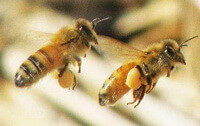
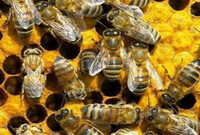
Insect Description: Commonly known as Zhōng Huá Mì Fēng or the Chinese honeybee, Apis cerana Fabricius exhibits regional variation in worker abdomen coloration—ranging from yellowish to dark brown. The proboscis averages 5 mm in length. The worker’s head is slightly triangular; the thorax comprises three segments and bears two pairs of membranous, transparent wings and three pairs of legs. Each leg possesses specialized pollen-collecting structures (corbiculae). The abdomen is conical, containing a venom gland and stinger; four pairs of wax glands—located on abdominal sternites—secrete beeswax.
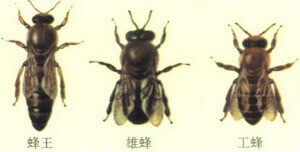
The queen bee displays two common color morphs: one with a distinct brown abdominal band and overall dark-brown abdomen; another lacking a conspicuous yellowish-brown band, with a uniformly black abdomen. Queens are the largest caste: their wings are relatively short, the abdomen is elongated, and reproductive organs are fully developed, conferring high fecundity.
Drones (males) are typically black and slightly larger than workers. Their heads are globular; they lack a venom gland and stinger; their legs lack pollen-collecting structures; and their abdomens bear neither wax glands nor wax plates.
Body size varies geographically: southern populations are generally smaller than northern ones. Worker body length ranges from 10–13 mm; drones measure 11–13.5 mm; queens range from 13–16 mm.
Habits: Apis cerana Fabricius (Chinese honeybee) exhibits rapid flight and acute olfaction. It departs the hive early and returns late—spending 2–3 hours more per day foraging than Italian honeybees (A. mellifera ligustica). It shows strong resistance to Varroa mites and American foulbrood but is susceptible to Chinese sacbrood virus, wax moths, and robbing behavior. Under nectar dearth, colonies are prone to disease, absconding (especially when threatened), natural swarming, and reduced royal jelly secretion. It does not collect propolis.
Bees are eusocial insects living in colonies comprising one queen, numerous sterile female workers, and a few males (drones). Castes differ markedly in morphology, physiology, and function: the queen specializes in reproduction; drones exist solely for mating (and die post-copulation); workers perform all colony maintenance tasks—including nest construction, foraging, brood rearing, queen feeding, nest cleaning, and thermoregulation. Colonies demonstrate remarkable resilience to cold and heat via clustering behavior. Nectar and pollen constitute their primary dietary resources.
The term “Chinese honeybee” historically refers to Apis cerana Fabricius—a subspecies of the Oriental honeybee—but multiple subspecies of A. cerana are distributed across China. Due to ongoing taxonomic uncertainty regarding subspecific classification within China, the collective population is conventionally referred to as the Chinese honeybee. It is a native, ecologically adapted species—particularly well-suited to mountainous regions of China.
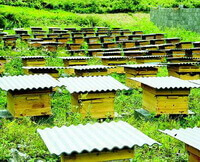
Ecological Environment: In China, honeybees are widely distributed. Artificially managed colonies exceed 2 million—accounting for approximately one-third of the nation’s total honeybee population.
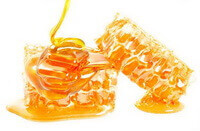
Characteristics of the Herb: Honey is a translucent, glossy, thick, and viscous liquid, ranging from white to pale yellow or from orange to tawny (yellowish brown). White granular crystals gradually precipitate when it is stored for a long time or in a cold environment. Honey has a sweet aroma and an intensely sweet taste.
Chemical Constituents: Glucose and fructose are the main saccharides in honey produced by honey bees in honeycombs. It also contains sucrose, dextrin, organic acids, proteins, volatile oils, wax, pollen grains, vitamin B1, B2, B6, C, K, H, amylase, zymose, peroxidase, esterase, growth hormone, acetylcholine, nicotinic acid, pantothenic acid (vitamin B5), carotene, and inorganic elements—including calcium, sulfur, phosphorus, magnesium, potassium, sodium, and iodine.
(2) Apis mellifera L.
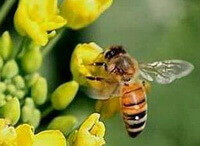
Insect Description: Apis mellifera L., commonly known as the Italian honey bee (Apis mellifera ligustica Spinola), is also referred to in Chinese as Yì Dà Lì Mì Fēng. Individuals of Apis mellifera are slightly smaller than European black bees. The abdomen is slender and elongated; the proboscis (trophi) is long, measuring approximately 6.3–6.6 mm; and the abdominal tergites exhibit a bright chitinous sheen. On worker bees, the anterior margins of the second to fourth uromeres bear a yellow band (annulus). However, the size and shade of this yellow band vary considerably—some are broad and light, others narrow and dark. Light-colored Italian bees often display only a small yellow shield; the lightest variants may show merely black or brown spots at the abdominal tip and are known as “golden bees” (Aurea). The pubescence of Apis mellifera is yellowish, especially conspicuous on drones. Worker bees possess relatively long proboscises, averaging 6.5 mm in length. The setae on the dorsal surface of the fourth abdominal segment are of medium width, averaging 0.9 mm. The dorsal setae on the fifth tergite are short, with an average length of 0.3 mm; the cubital index is moderate, averaging 2.2–2.5.
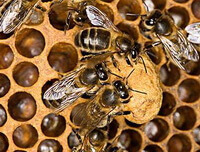
After the queen begins laying eggs in early spring, her egg-laying rate remains largely unaffected by climate, nectar availability, or other environmental factors. Even during hot summers or late autumn, when temperatures drop, she maintains extensive brood production. Colonies tend to remain populous even when weak. Foraging capacity for abundant nectar sources is strong, but efficiency in collecting scattered nectar and pollen is comparatively poor. Pollen collection is substantial. In summer and autumn, more propolis (resin) is gathered. Wax secretion and comb-building ability are well developed. Royal jelly secretion exceeds that of all other honey bee species. Feed consumption is high during dearth periods, predisposing colonies to food shortages. Temperament is gentle; bees are not photophobic and remain remarkably quiet during hive inspections. Homing instinct is strong, minimizing nest confusion and facilitating robbing behavior. Nest-cleaning behavior is vigorous. Apis mellifera overwinters as a large, cohesive colony; however, overwintering feed consumption is high, and its performance in cold regions is suboptimal. Disease resistance is weak: colonies are highly susceptible to American foulbrood, paralysis viruses, Nosema disease (spore disease), and chalkbrood. Varroa mite resistance is poor, rendering them vulnerable to infestation. Brood-nursing capacity is comparatively weak.
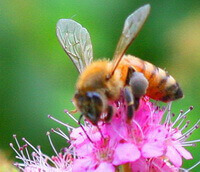
Origin and Habitat: The Italian bee is native to the Apennine Peninsula of Italy—a region characterized by a typical Mediterranean climate and ecological setting. It is believed to have originated through natural hybridization between the indigenous European black bee and imported Cyprian bees on the Apennine Peninsula. Climatic and floral conditions there feature short, mild, and humid winters; summers are hot and dry, with abundant nectar plants and extended flowering periods. Under similar environmental conditions, Italian honey bees exhibit excellent economic traits. However, they adapt poorly to regions with prolonged, cold winters or frequent spring cold snaps.
Italian bees are adapted to the Mediterranean climate, which features mild, wet, and brief winters and long, dry summers. They perform exceptionally well under such conditions. Yet they struggle to adapt to areas with extended winters and highly variable early-spring weather. For over a century, attempts to establish them in the northern Alps of Europe have met with limited success.
The Italian bee exhibits strong honey- and royal jelly–producing capabilities, making it an ideal variety for simultaneous production of honey, pollen, and propolis. Consequently, its breeding range has expanded far beyond its native range and it has become a globally widespread and widely adopted subspecies.
Ecological Environment: Italian bees play a vital role in apiculture in China and are widely kept across the country. They are well suited to nomadic beekeeping—following seasonal nectar and pollen sources throughout the year. During the blooming periods of major nectar plants such as rape (Brassica napus), violet (Viola spp.), kiwifruit (Actinidia chinensis), linden (Tilia spp.), lychee (Litchi chinensis), and tung tree (Aleurites fordii), colonies commonly produce over 5 kg of honey per day, with high-performing hives yielding more than 50 kg daily. Their honey-production capacity is superior to that of all other honey bee subspecies. Selected elite strains can produce 5–7 kg of royal jelly annually. They are also suitable for producing bee pollen, propolis, bee brood (larvae and pupae), and bee venom.
Characteristics of the Herb: Honey is a translucent, glossy, and viscous liquid, ranging from white to pale yellow or from orange to yellowish brown. White granular crystals gradually precipitate when it is stored for a long time or in a cold environment. Honey has a sweet aroma and an intensely sweet taste.
Chemical Constituents: Glucose and fructose are the primary saccharides in honey produced by honey bees in honeycombs; it also contains small amounts of sucrose, dextrin, organic acids, proteins, volatile oils, waxes, vitamins B1, B2, B6, C, K, and biotin (vitamin H), amylase, zymose, peroxidase, esterase, alpha-glycerophosphate dehydrogenase, acetylcholine, growth hormone, pantothenic acid (vitamin B5), niacin (vitamin B3), carotene, pollen grains, and trace elements—including calcium, phosphorus, sulfur, magnesium, potassium, sodium, and iodine.
Pharmacological Actions: (1) Enhancement of humoral immunity; (2) Mild laxative effect; (3) Detoxification; (4) Antitumor activity; (5) Astringent properties; etc.
Medicinal Efficacy: Tonifies the Spleen and Stomach (invigorates the Middle Jiao), moistens dryness, alleviates pain, relieves spasm, moistens the Lung to stop coughing, lubricates the intestines to relieve constipation, nourishes and regenerates skin tissue, and detoxifies. Externally, it promotes granulation and wound healing. It is indicated for: epigastric pain due to deficiency, dryness of the Lung with dry cough, constipation due to intestinal dryness, gastric pain, acute and chronic sinusitis, conjunctivitis ("red-eye"), oral ulcers (aphthae), and as an antidote for herbal toxicity—particularly Aconitum poisoning. Externally, it is used for non-healing ulcers and sores, urticaria (nettle rash), burns and scalds (caused by hot liquids or fire), and cheilitis/manus/pedis (chapped skin of lips, hands, and feet).
Administration of Mel (Fēnɡ Mì):
Reference:
Administration Guide for Mel (Fēnɡ Mì)
TCM Books:
(1) Internally: 15–30 grams; (2) Internally: dissolve or decoct in warm water, 9–30 g (0.3–1 liang); or formulate into pills or ointments. External use: apply topically as needed. (3) Internally: dissolve or decoct in warm water, 15–30 grams; or formulate into pills or ointments. External use: apply topically in appropriate amount.

 ✵This article documents the herb Honey, including its English and Latin names, properties and flavor, animal source—two bee species: (1) Apis cerana Fabricius and (2) Apis mellifera Linnaeus—as well as a detailed overview of their morphology, life history, ecological habits, and habitat; the characteristics of Honey itself; its pharmacological actions; medicinal efficacy; and administration guidelines.
 Pinyin Name: Fēnɡ Mì
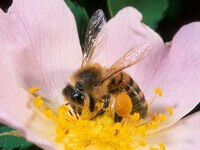 Insect Description: Commonly known as Zhōng Huá Mì Fēng or the Chinese honeybee, Apis cerana Fabricius exhibits regional variation in worker abdomen coloration—ranging from yellowish to dark brown. The proboscis averages 5 mm in length. The worker’s head is slightly triangular; the thorax comprises three segments and bears two pairs of membranous, transparent wings and three pairs of legs. Each leg possesses specialized pollen-collecting structures (corbiculae). The abdomen is conical, containing a venom gland and stinger; four pairs of wax glands—located on abdominal sternites—secrete beeswax.
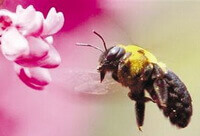 Habits: Apis cerana Fabricius (Chinese honeybee) exhibits rapid flight and acute olfaction. It departs the hive early and returns late—spending 2–3 hours more per day foraging than Italian honeybees (A. mellifera ligustica). It shows strong resistance to Varroa mites and American foulbrood but is susceptible to Chinese sacbrood virus, wax moths, and robbing behavior. Under nectar dearth, colonies are prone to disease, absconding (especially when threatened), natural swarming, and reduced royal jelly secretion. It does not collect propolis.
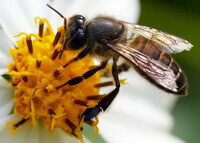 Bees are eusocial insects living in colonies comprising one queen, numerous sterile female workers, and a few males (drones). Castes differ markedly in morphology, physiology, and function: the queen specializes in reproduction; drones exist solely for mating (and die post-copulation); workers perform all colony maintenance tasks—including nest construction, foraging, brood rearing, queen feeding, nest cleaning, and thermoregulation. Colonies demonstrate remarkable resilience to cold and heat via clustering behavior. Nectar and pollen constitute their primary dietary resources.
 The term “Chinese honeybee” historically refers to Apis cerana Fabricius—a subspecies of the Oriental honeybee—but multiple subspecies of A. cerana are distributed across China. Due to ongoing taxonomic uncertainty regarding subspecific classification within China, the collective population is conventionally referred to as the Chinese honeybee. It is a native, ecologically adapted species—particularly well-suited to mountainous regions of China.
 Ecological Environment: In China, honeybees are widely distributed. Artificially managed colonies exceed 2 million—accounting for approximately one-third of the nation’s total honeybee population.
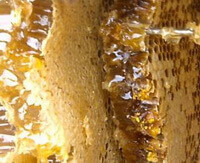 Characteristics of the Herb: Honey is a translucent, glossy, thick, and viscous liquid, ranging from white to pale yellow or from orange to tawny (yellowish brown). White granular crystals gradually precipitate when it is stored for a long time or in a cold environment. Honey has a sweet aroma and an intensely sweet taste.
 Chemical Constituents: Glucose and fructose are the main saccharides in honey produced by honey bees in honeycombs. It also contains sucrose, dextrin, organic acids, proteins, volatile oils, wax, pollen grains, vitamin B1, B2, B6, C, K, H, amylase, zymose, peroxidase, esterase, growth hormone, acetylcholine, nicotinic acid, pantothenic acid (vitamin B5), carotene, and inorganic elements—including calcium, sulfur, phosphorus, magnesium, potassium, sodium, and iodine.
 Insect Description: Apis mellifera L., commonly known as the Italian honey bee (Apis mellifera ligustica Spinola), is also referred to in Chinese as Yì Dà Lì Mì Fēng. Individuals of Apis mellifera are slightly smaller than European black bees. The abdomen is slender and elongated; the proboscis (trophi) is long, measuring approximately 6.3–6.6 mm; and the abdominal tergites exhibit a bright chitinous sheen. On worker bees, the anterior margins of the second to fourth uromeres bear a yellow band (annulus). However, the size and shade of this yellow band vary considerably—some are broad and light, others narrow and dark. Light-colored Italian bees often display only a small yellow shield; the lightest variants may show merely black or brown spots at the abdominal tip and are known as “golden bees” (Aurea). The pubescence of Apis mellifera is yellowish, especially conspicuous on drones. Worker bees possess relatively long proboscises, averaging 6.5 mm in length. The setae on the dorsal surface of the fourth abdominal segment are of medium width, averaging 0.9 mm. The dorsal setae on the fifth tergite are short, with an average length of 0.3 mm; the cubital index is moderate, averaging 2.2–2.5.
 After the queen begins laying eggs in early spring, her egg-laying rate remains largely unaffected by climate, nectar availability, or other environmental factors. Even during hot summers or late autumn, when temperatures drop, she maintains extensive brood production. Colonies tend to remain populous even when weak. Foraging capacity for abundant nectar sources is strong, but efficiency in collecting scattered nectar and pollen is comparatively poor. Pollen collection is substantial. In summer and autumn, more propolis (resin) is gathered. Wax secretion and comb-building ability are well developed. Royal jelly secretion exceeds that of all other honey bee species. Feed consumption is high during dearth periods, predisposing colonies to food shortages. Temperament is gentle; bees are not photophobic and remain remarkably quiet during hive inspections. Homing instinct is strong, minimizing nest confusion and facilitating robbing behavior. Nest-cleaning behavior is vigorous. Apis mellifera overwinters as a large, cohesive colony; however, overwintering feed consumption is high, and its performance in cold regions is suboptimal. Disease resistance is weak: colonies are highly susceptible to American foulbrood, paralysis viruses, Nosema disease (spore disease), and chalkbrood. Varroa mite resistance is poor, rendering them vulnerable to infestation. Brood-nursing capacity is comparatively weak.
 Origin and Habitat: The Italian bee is native to the Apennine Peninsula of Italy—a region characterized by a typical Mediterranean climate and ecological setting. It is believed to have originated through natural hybridization between the indigenous European black bee and imported Cyprian bees on the Apennine Peninsula. Climatic and floral conditions there feature short, mild, and humid winters; summers are hot and dry, with abundant nectar plants and extended flowering periods. Under similar environmental conditions, Italian honey bees exhibit excellent economic traits. However, they adapt poorly to regions with prolonged, cold winters or frequent spring cold snaps.
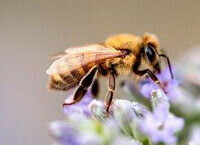 Ecological Environment: Italian bees play a vital role in apiculture in China and are widely kept across the country. They are well suited to nomadic beekeeping—following seasonal nectar and pollen sources throughout the year. During the blooming periods of major nectar plants such as rape (Brassica napus), violet (Viola spp.), kiwifruit (Actinidia chinensis), linden (Tilia spp.), lychee (Litchi chinensis), and tung tree (Aleurites fordii), colonies commonly produce over 5 kg of honey per day, with high-performing hives yielding more than 50 kg daily. Their honey-production capacity is superior to that of all other honey bee subspecies. Selected elite strains can produce 5–7 kg of royal jelly annually. They are also suitable for producing bee pollen, propolis, bee brood (larvae and pupae), and bee venom.
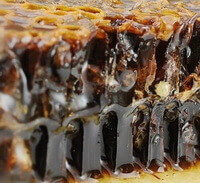 Characteristics of the Herb: Honey is a translucent, glossy, and viscous liquid, ranging from white to pale yellow or from orange to yellowish brown. White granular crystals gradually precipitate when it is stored for a long time or in a cold environment. Honey has a sweet aroma and an intensely sweet taste.
 URL QR code: