Introduction of Fu Long Gan: Calcined Yellow Earth
✵This article records the herb Calcined Yellow Earth—including its English name, Latin name, Pinyin name, properties and flavor, and source—calcined yellow earth—and provides a detailed description of its physical characteristics as a processed inorganic substance, its geographical distribution and ecological context, macroscopic features of the herb, pharmacological actions, medicinal efficacy, and administration guidelines.
Terra Flava Usta (Calcined Yellow Earth)
Pinyin Name:Fú Lóng Gān, Zào Xīn Tǔ, or Zào Zhōng Huáng Tǔ English Name: Calcined Yellow Earth
Latin Name:Terra Flava Usta (preferred); or Humus Flava Usta Properties and Flavor: Warm; pungent
Brief Introduction:Terra Flava Usta consists of clean, calcined yellow earth formed into small lumps. It is used as (1) an antiemetic for nausea and vomiting due to chronic gastric disorders or pregnancy; (2) an antidiarrheal for chronic diarrhea; and (3) a hemostatic agent for bleeding caused by spleen-Qi deficiency failing to control the blood. It is commonly known as Terra Flava Usta, Calcined Yellow Earth, or Fú Lóng Gān.
Source: Classical herbal works define Terra Flava Usta (Calcined Yellow Earth) as yellow earth from the central hearth of traditional wood-burning stoves or kilns, calcined over prolonged periods using straw or firewood. This substance is described below:
Terra Flava Usta (Calcined Yellow Earth)
Description: Also known as Fú Lóng Gān (“Hibernating Dragon Liver”), Zào Xīn Tǔ (“Stove-Center Earth”), or Zào Zhōng Huáng Tǔ (“Stove-Center Yellow Earth”). It refers to sintered clay blocks collected from the center of the hearth in aged wood-burning stoves or kilns. During stove repair or dismantling, the fused clay blocks are removed and trimmed—blackened surfaces and impurities are excised with a knife.
Ecological Environment: Found in rural areas throughout China.
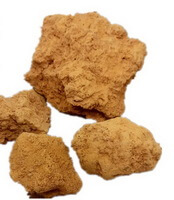
Characteristics of the Herb: Irregularly shaped blocks of varying sizes; overall color is orange to reddish-brown; surface bears visible knife marks. The material is lightweight, hard yet friable—easily crushed into powder that readily detaches; nail scratches can be made on the surface; fracture is soft, fine-grained, slightly dark, granular, and contains faveolate (honeycomb-like) pores. It has a smoky odor, mild taste, and hygroscopic property.
Chemical Constituents: Primarily composed of silicic acid (H2SiO3), aluminum oxide (Al2O3), and iron(III) oxide (Fe2O3). Also contains sodium oxide (Na2O), potassium oxide (K2O), magnesium oxide (MgO), calcium oxide (CaO), and calcium phosphate [Ca3(PO4)2].
Pharmacological Actions: (1) antiemetic effect; (2) astringent and hemostatic effect.
Medicinal efficacy: Warms the middle Jiao and dries dampness; exerts antiemetic, hemostatic, and antidiarrheal effects. It is indicated for nausea and vomiting (including regurgitation due to gastric dysfunction), abdominal pain with diarrhea, hematemesis, epistaxis, hematochezia, hematuria, hyperemesis gravidarum (severe nausea and vomiting in pregnancy—untreated, it may lead to hepatic, renal, or neurological complications), metrorrhagia, metrostaxis, pathological leukorrhea, carbuncles, swellings, and ulcerated sores.
Administration of Terra Flava Usta (Fú Lóng Gān):
Reference:
Administration Guide for Terra Flava Usta (Fú Lóng Gān)
TCM Books:
(1) Internally: water decoction (wrapped and boiled), 1–2 liang (approximately 30–60 grams); or prepared as powder; or used as a decoction substitute in herbal formulas. (2) Internally: water decoction (wrapped and boiled), 15–30 grams; for sedimentary use (i.e., decanted and consumed as a clear liquid), 60–120 grams; or prepared as powder.
External use: appropriate amount—powdered herb applied topically.
Article Link:
URL QR code:
References:
1.Introduction of Fu Long Gan: Calcined Yellow Earth

 ✵This article records the herb Calcined Yellow Earth—including its English name, Latin name, Pinyin name, properties and flavor, and source—calcined yellow earth—and provides a detailed description of its physical characteristics as a processed inorganic substance, its geographical distribution and ecological context, macroscopic features of the herb, pharmacological actions, medicinal efficacy, and administration guidelines.
 Pinyin Name: Fú Lóng Gān, Zào Xīn Tǔ, or Zào Zhōng Huáng Tǔ
 Description: Also known as Fú Lóng Gān (“Hibernating Dragon Liver”), Zào Xīn Tǔ (“Stove-Center Earth”), or Zào Zhōng Huáng Tǔ (“Stove-Center Yellow Earth”). It refers to sintered clay blocks collected from the center of the hearth in aged wood-burning stoves or kilns. During stove repair or dismantling, the fused clay blocks are removed and trimmed—blackened surfaces and impurities are excised with a knife.
 Characteristics of the Herb: Irregularly shaped blocks of varying sizes; overall color is orange to reddish-brown; surface bears visible knife marks. The material is lightweight, hard yet friable—easily crushed into powder that readily detaches; nail scratches can be made on the surface; fracture is soft, fine-grained, slightly dark, granular, and contains faveolate (honeycomb-like) pores. It has a smoky odor, mild taste, and hygroscopic property.
 URL QR code:

