✵The article records the herb Argyi Leaf—its English name, Latin name, Pinyin name, properties and flavor, botanical source—one plant species: Artemisia argyi Lévl. et Vant., and provides a detailed introduction to the botanical features, growth characteristics, and ecological environment of this species, as well as the macroscopic characteristics of the herb Argyi Leaf, its pharmacological actions, medicinal efficacy, and administration guidelines.
Pinyin Name: ài yè
English Name: Argyi Leaf, Argyi Wormwood Leaf
Latin Name:Folium Artemisiae Argyi Properties and Flavor: Warm, pungent, bitter
Brief Introduction:Folium Artemisiae Argyi is the dried leaf of Artemisia argyi Lévl. et Vant., used to warm the uterus and stop bleeding in cases of functional uterine bleeding, infertility, and dysmenorrhea. It is commonly known as Argyi Wormwood Leaf, ài yè, Aiye, Argyi Leaf, Chinese mugwort leaf, Folium Artemisiae Argyi, Artemisia, Artemisia leaf, Artemisiae Argyi Folium, dried leaf of Artemisia, or ài yè.
Botanical Source: Herbal classical works define Folium Artemisiae Argyi (Argyi Leaf, Argyi Wormwood Leaf) as the dried leaf of Artemisia argyi Lévl. et Vant.—a perennial herb of the genus Artemisia L., family Asteraceae (Compositae, daisy family), order Asterales. This commonly used species is described below:
(1) Artemisia argyi Lévl. et Vant.
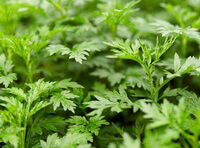
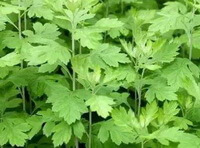
Botanical Description:Artemisia argyi Lévl. et Vant. is also known as A. argyi Lévl. et Vant. var. incana Pamp. It is commonly called ài or ài hāo. A perennial herb, strongly aromatic, growing up to 50–120 cm tall. Taproots are conspicuous, slightly stout, up to 1.5 cm in diameter; lateral roots are numerous. Underground rhizomes and vegetative branches are often decumbent. The whole plant is densely covered with white tomentum. Leaves are alternate; lower leaves wither during flowering; middle leaves are ovate-triangular or elliptic, 6–9 cm long and 4–8 cm wide, with bases rapidly or gradually narrowing into short to slightly longer petioles—or slightly enlarged into stipule-like structures; leaf blades are pinnately divided or lobed, with ~2 pairs of lateral lobes (often cuneate), and the central lobe frequently trilobed again; lobe margins are serrate; the upper surface bears arachnoid hairs and sparse to dense white glandular spots; the lower surface is densely covered with white or gray tomentum. Upper leaves gradually become smaller, trilobed or undivided, and sessile.
Capitula (flower heads) are numerous, arranged in compound inflorescences, ~3 mm long and 2–3 mm in diameter, nodding after flowering; the general involucre is ovoid (egg-shaped); involucral bracts are in 4–5 layers, with membranous margins and tomentose abaxial surfaces; flowers are reddish, numerous—female in the outer whorl, hermaphroditic in the inner whorl.
Achenes are nearly 1 mm long, glabrous. Flowering occurs from July to October.
Ecological Environment: The plant grows in wastelands, forest edges, roadsides, riverbanks, and hillsides at low to medium elevations. It is also found in forest-steppe and grassland ecosystems.
Growth Characteristics:Artemisia argyi prefers a warm, moist climate and is tolerant of drought and partial shade. Cultivation is best carried out in loose, fertile, humus-rich loam. It reproduces and grows readily and exhibits strong adaptability to climate and soil. Optimal growth occurs in moist, fertile soil. Artificial cultivation is feasible in hilly and low-mountain areas; the suitable temperature range is 24–30 °C (75.2–86 °F). Above 30 °C, stems age prematurely, branching declines, and incidence of diseases and insect pests increases. When winter temperatures fall below −3 °C (26.6 °F), perennial roots fail to develop properly.
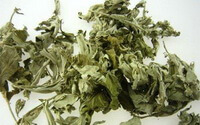
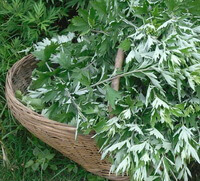
Characteristics of the Herb: The leaves are mostly shriveled and fragmented, with short petioles. When flattened, intact leaves are ovate-elliptic and pinnately divided; lobes are elliptic-lanceolate; margins are irregularly and coarsely serrated; the upper surface is celadon (sage green or grayish-green) or deep yellowish-green, sparsely pilose with glandular spots; the lower surface is densely covered with ash-gray (grayish-white) tomentum. The herb is soft in texture, with a faint aroma and a bitter taste.
Pharmacological Actions: (1) antiasthmatic, antitussive, and expectorant effects; (2) shortened coagulation time; (3) inhibition of platelet aggregation; (4) anti-allergic effect; (5) cardiac stimulation, cholagogue effect, and other actions.
Medicinal efficacy: Regulates Qi and blood, dispels cold and dampness, warms the meridians, stops bleeding, prevents miscarriage, disperses cold and alleviates pain, clears dampness and relieves itching. It is indicated for abdominal cold pain, diarrhea with spasm or convulsion, protracted dysentery, cholera-like muscle cramps, hematemesis, epistaxis, hematochezia, irregular menstruation, uterine bleeding, pathological leukorrhea, bleeding during pregnancy, threatened abortion, dysmenorrhea, eczema, carbuncles, hemorrhoids, and scabies.
Administration of Folium Artemisiae Argyi (ài yè):
Reference:
Administration Guide for Folium Artemisiae Argyi (ài yè):
TCM Books:
(1) Internally: water decoction, 1–3 qian (approximately 3–9 grams); or prepared as pills or powder. External use: processed into fine moxa wool and formed into moxa cones/sticks for moxibustion; mashed and applied topically; fumigation or wash with decoction; or stir-fried and applied warm. (2) Internally: water decoction, 3–10 grams; or prepared as pills, powder, or fresh juice. External use: appropriate amount—processed into moxa wool for moxibustion; mashed and applied; fumigation or wash with decoction; or stir-fried and applied warm.

 ✵The article records the herb Argyi Leaf—its English name, Latin name, Pinyin name, properties and flavor, botanical source—one plant species: Artemisia argyi Lévl. et Vant., and provides a detailed introduction to the botanical features, growth characteristics, and ecological environment of this species, as well as the macroscopic characteristics of the herb Argyi Leaf, its pharmacological actions, medicinal efficacy, and administration guidelines.
 Pinyin Name: ài yè
 Botanical Source: Herbal classical works define Folium Artemisiae Argyi (Argyi Leaf, Argyi Wormwood Leaf) as the dried leaf of Artemisia argyi Lévl. et Vant.—a perennial herb of the genus Artemisia L., family Asteraceae (Compositae, daisy family), order Asterales. This commonly used species is described below:
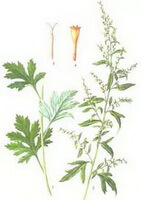 Botanical Description: Artemisia argyi Lévl. et Vant. is also known as A. argyi Lévl. et Vant. var. incana Pamp. It is commonly called ài or ài hāo. A perennial herb, strongly aromatic, growing up to 50–120 cm tall. Taproots are conspicuous, slightly stout, up to 1.5 cm in diameter; lateral roots are numerous. Underground rhizomes and vegetative branches are often decumbent. The whole plant is densely covered with white tomentum. Leaves are alternate; lower leaves wither during flowering; middle leaves are ovate-triangular or elliptic, 6–9 cm long and 4–8 cm wide, with bases rapidly or gradually narrowing into short to slightly longer petioles—or slightly enlarged into stipule-like structures; leaf blades are pinnately divided or lobed, with ~2 pairs of lateral lobes (often cuneate), and the central lobe frequently trilobed again; lobe margins are serrate; the upper surface bears arachnoid hairs and sparse to dense white glandular spots; the lower surface is densely covered with white or gray tomentum. Upper leaves gradually become smaller, trilobed or undivided, and sessile.
 Capitula (flower heads) are numerous, arranged in compound inflorescences, ~3 mm long and 2–3 mm in diameter, nodding after flowering; the general involucre is ovoid (egg-shaped); involucral bracts are in 4–5 layers, with membranous margins and tomentose abaxial surfaces; flowers are reddish, numerous—female in the outer whorl, hermaphroditic in the inner whorl.
 Ecological Environment: The plant grows in wastelands, forest edges, roadsides, riverbanks, and hillsides at low to medium elevations. It is also found in forest-steppe and grassland ecosystems.
 Characteristics of the Herb: The leaves are mostly shriveled and fragmented, with short petioles. When flattened, intact leaves are ovate-elliptic and pinnately divided; lobes are elliptic-lanceolate; margins are irregularly and coarsely serrated; the upper surface is celadon (sage green or grayish-green) or deep yellowish-green, sparsely pilose with glandular spots; the lower surface is densely covered with ash-gray (grayish-white) tomentum. The herb is soft in texture, with a faint aroma and a bitter taste.
 URL QR code: