How to Take Care of Yourself and Avoid Dampness in Spring.
How to Take Care of Yourself and Avoid Dampness in Spring.
Introduction: Dampness is a pathogenic factor arising from impaired transportation and distribution of body fluids. Once dampness forms internally, it manifests through characteristic signs—such as heaviness of the body, dizziness, chest tightness, abdominal distension, sticky mouth, sticky or loose stools, cloudy urine, greasy or profuse vaginal or nasal secretions, swollen tongue, and thick, greasy tongue coating—sometimes progressing to edema, sores, oozing rashes, or swollen joints.
After February, spring rain arrives, bringing warm, humid weather. During these "cold-and-warm" days—even walls appear to "sweat"—people often feel fatigued and drowsy when invaded by external dampness. Respiratory infections, common colds, gastrointestinal discomfort, and skin disorders may occur one after another.
Spring dampness impairs the Spleen and affects the Liver.
As spring arrives, many people experience "spring sleepiness," feeling mentally foggy and physically heavy, with limbs weak, muscle aches or swelling, and a thick, greasy tongue coating. These symptoms commonly stem from dampness. Yet many dismiss them, hoping they will simply pass. But is that advisable?
According to the ancient medical classic Huangdi Neijing (The Yellow Emperor’s Inner Canon), dampness is a pathogenic factor categorized as either external or internal. External dampness primarily arises from humid climates, wading in water, prolonged exposure to damp environments, or invasion by external damp pathogens. Typical symptoms include alternating chills and fever, headache with a sensation of fullness or pressure, heavy-headedness, limb swelling, bodily heaviness and pain—often reflecting patterns affecting the muscles, skin, and superficial collaterals. Internal dampness, by contrast, is an endogenous pathological factor resulting from Yang deficiency of the Spleen and Kidney, leading to dysfunction in fluid transformation and transportation, and consequent accumulation of internal damp-turbidity. Common manifestations include poor appetite, abdominal distension, diarrhea, dark or scanty urine, sallow complexion, and edema.
In spring, ambient humidity rises and atmospheric moisture increases. This external dampness obstructs the Yang Qi of the Spleen and Stomach, impairing free circulation of Blood and Qi and blocking the meridians. Moreover, spring corresponds to the Liver in the Five Elements system; Liver Qi naturally flourishes during this season. When Liver Qi becomes excessive, it over-controls the Spleen (Wood over-restricting Earth), further weakening the Spleen and Stomach’s ability to transform and transport water and dampness—thus predisposing to internal retention of dampness. Combined assault from internal dampness and external humidity explains why so many people feel unwell in spring. As Traditional Chinese Medicine (TCM) practitioners observe: "Cases of concurrent internal and external dampness are increasingly common. Some patients—especially the elderly, young children, or those with chronic illnesses—have inherently weak Spleen and Stomach function, resulting in poor fluid metabolism. Additionally, heavy external humidity makes them especially susceptible to damp invasion. Meanwhile, many young adults mistakenly assume robust health allows them to drink iced beverages, live irregularly, or walk barefoot in rain—thereby inviting external dampness." TCM experts emphasize that damp pathogens possess a "sticky" nature; consequently, cold-damp patterns prove more stubborn and difficult to resolve than ordinary colds.
Five Morning Signs of Dampness
Upon waking, observe five key indicators closely—such as stool consistency in the toilet or nausea while brushing teeth—as early clues to underlying health imbalances.
✵Self-Assessment Tip #1: Morning Fatigue
If you consistently wake up feeling unusually tired, lightheaded or dizzy, listless, mentally dull, or as though wearing wet clothing—lacking freshness and reluctant to move—dampness is likely burdening your body.
✵Self-Assessment Tip #2: Stool Observation
After morning bowel movement, observe your stool carefully—if it adheres to the toilet bowl and fails to flush cleanly with one flush, dampness may be present. If direct observation is inconvenient, examine toilet paper: normally one or two sheets suffice; if three to five sheets are needed repeatedly to achieve cleanliness, internal dampness is probable. Stool color and form also provide diagnostic clues.
A healthy stool resembles a banana—smooth, well-formed, and easy to pass. Few people today maintain such ideal bowel habits. With internal dampness, stools often appear bluish or cyanotic, soft, loose, and shapeless. Over time, accumulated toxins from poorly eliminated stools linger in the body, increasing risk of chronic or clustered disease onset.
✵Self-Assessment Tip #3: Observe the Tongue Coating
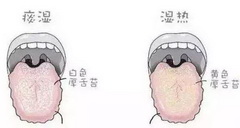
"The tongue is the 'sprout' of the Heart and the 'mirror' of the Spleen." The tongue serves as a sensitive indicator of one’s physical condition. Before brushing your teeth each morning, take a few seconds to examine your tongue in the mirror. A healthy tongue appears pale pink and moist, with a thin, white, clean coating—neither excessively dry nor overly slippery. If your tongue deviates from these characteristics, it may signal underlying dysfunction. A thick, white, glossy, and wet coating suggests internal Cold; a rough or excessively thick, yellowish, greasy coating indicates Damp-Heat; and a red, bare (uncoated) tongue reflects severe Internal Heat that has already damaged Yin.
✵Self-Assessment Tip #4: Nausea or Gagging While Brushing Teeth
Do you experience nausea or gagging when brushing your teeth in the morning? Some individuals vomit or feel queasy during this routine. A persistent sensation of stickiness or foulness in the throat also points to internal Dampness.
✵Self-Assessment Tip #5: Heaviness or Pain in the Lower Legs
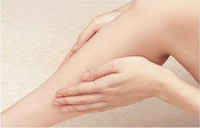
Upon waking, do you feel heaviness or dull ache in your lower legs (shins)? Such sensations are classic manifestations of internal Dampness.
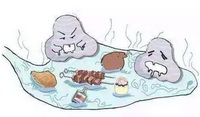
✵Clearing dampness—or eliminating pathological dampness—is precisely what the term implies: removing excess or abnormal fluid accumulation from the body. Effective damp-clearing must be tailored to individual body constitutions. Beyond the distinction between External Dampness and Internal Dampness, Internal Dampness itself further divides into Damp-Heat and Cold-Damp patterns. Damp-Heat manifests in spring with symptoms including a thick, yellow, greasy tongue coating; short, dark-yellow urine; and skin itching or eczema. Cold-Damp presents with a thick, white, greasy tongue coating and copious, clear, pale urine.
Therefore, before clearing dampness, consult a qualified TCM practitioner to determine your constitutional pattern. Without accurate constitutional diagnosis, avoid self-prescribing damp-clearing teas or decoctions.

 Introduction: Dampness is a pathogenic factor arising from impaired transportation and distribution of body fluids. Once dampness forms internally, it manifests through characteristic signs—such as heaviness of the body, dizziness, chest tightness, abdominal distension, sticky mouth, sticky or loose stools, cloudy urine, greasy or profuse vaginal or nasal secretions, swollen tongue, and thick, greasy tongue coating—sometimes progressing to edema, sores, oozing rashes, or swollen joints.
 After February, spring rain arrives, bringing warm, humid weather. During these "cold-and-warm" days—even walls appear to "sweat"—people often feel fatigued and drowsy when invaded by external dampness. Respiratory infections, common colds, gastrointestinal discomfort, and skin disorders may occur one after another.
 As spring arrives, many people experience "spring sleepiness," feeling mentally foggy and physically heavy, with limbs weak, muscle aches or swelling, and a thick, greasy tongue coating. These symptoms commonly stem from dampness. Yet many dismiss them, hoping they will simply pass. But is that advisable?
 Upon waking, observe five key indicators closely—such as stool consistency in the toilet or nausea while brushing teeth—as early clues to underlying health imbalances.
 ✵Self-Assessment Tip #2: Stool Observation
 A healthy stool resembles a banana—smooth, well-formed, and easy to pass. Few people today maintain such ideal bowel habits. With internal dampness, stools often appear bluish or cyanotic, soft, loose, and shapeless. Over time, accumulated toxins from poorly eliminated stools linger in the body, increasing risk of chronic or clustered disease onset.
 ✵Self-Assessment Tip #3: Observe the Tongue Coating
 ✵Self-Assessment Tip #4: Nausea or Gagging While Brushing Teeth
 ✵Self-Assessment Tip #5: Heaviness or Pain in the Lower Legs
 ✵Clearing dampness—or eliminating pathological dampness—is precisely what the term implies: removing excess or abnormal fluid accumulation from the body. Effective damp-clearing must be tailored to individual body constitutions. Beyond the distinction between External Dampness and Internal Dampness, Internal Dampness itself further divides into Damp-Heat and Cold-Damp patterns. Damp-Heat manifests in spring with symptoms including a thick, yellow, greasy tongue coating; short, dark-yellow urine; and skin itching or eczema. Cold-Damp presents with a thick, white, greasy tongue coating and copious, clear, pale urine.
