Introduction: Each breath carries the energy of life. Abdominal breathing allows for greater oxygen intake. Regular practice can strengthen the body and eliminate disease. It is a “breath exercise” for enhancing physical health.
Ancient Chinese herbalists long recognized that abdominal breathing could dispel illness and prolong life, and developed practices such as “tuna” (guiding and regulating breath) and “turtle breathing.” The renowned Tang-dynasty physician Sun Simiao held abdominal breathing in especially high regard. Every day between dawn and noon, he practiced breath regulation—inhaling deeply through the nose to fill the abdomen, holding the breath until reaching full capacity.
The Advantages of the Abdominal Breathing Method
The average human lung has a volume roughly equivalent to two footballs; however, most people use only about one-third of that capacity throughout their lives. Many breathe shallowly and exhale too quickly—often before the inhaled air reaches the lower lung lobes. Why do turtles and snakes enjoy exceptionally long lifespans? In part, because turtles breathe using their abdominal muscles, and snakes move with undulating abdominal motion. Today, most people rely primarily on chest breathing, which weakens abdominal movement—leading to accumulation of metabolic waste, sluggish blood circulation, and, in severe cases, reduced abdominal blood flow that may compromise cerebral perfusion.
✵How to Practice Abdominal Breathing: Belly-deep breathing can be performed while standing, sitting, or lying down—anytime and anywhere feasible; lying down is generally preferred. It should be practiced daily in fresh air for at least 20 minutes, consistently for a minimum of 100 days.
First, learn the basic method: After relaxing and focusing your attention, inhale slowly and deeply through your nose. Your lungs and abdomen will expand as they fill with air. Hold your breath for four seconds. A recommended inhalation–hold–exhalation ratio is 1:1:2; if holding the breath for four seconds is difficult, try 2:1:4. Generally, exhalation should last approximately twice as long as inhalation.
In reverse abdominal breathing, the pattern is inverted: during inhalation, the abdominal muscles contract and the abdominal wall draws inward (forming a concave shape), while the anus is gently contracted; during exhalation, the abdominal muscles relax and the abdomen rises, while the anus is slowly released. The timing ratio resembles that of standard abdominal breathing. With improved health, breath-holding duration can gradually increase, and the breathing rhythm can slow and deepen. Individuals with poor health may not be able to hold their breath comfortably—but even gentle, sustained breathing can deliver sufficient oxygen. Reverse abdominal breathing is suitable for those with visceral ptosis or gastrointestinal dysfunction, but it is contraindicated for elderly individuals, people with hypertension or heart disease, and pregnant women.
Benefits of Abdominal Breathing
✵1. Benefits for the Lungs: Abdominal breathing maximizes chest expansion, expands the alveoli in the lower lung regions, allows greater oxygen intake, increases lung capacity, improves cardiopulmonary function, and reduces the risk of pulmonary infections—especially pneumonia. It also enhances coughing efficiency, mucus clearance, and alleviates dyspnea.
✵2. Voice Modulation: Diaphragmatic (abdominal) breathing alters vocal resonance and projection. Actors and singers therefore practice it extensively. Inadequate breath support can result in a muffled or indistinct voice; one prominent English pronunciation coach has even suggested that abdominal breathing can improve English speech clarity and fluency.
✵3. Enhanced Physical Performance: Unlike shallow chest breathing—where ribcage descent due to gravity limits exhalation—abdominal breathing actively engages the diaphragm to fully expel air from the alveoli. Applying it while cycling enables longer, more efficient rides. Overall, abdominal breathing enhances athletic endurance and respiratory efficiency.
✵4. Regulation of Blood and Qi: Abdominal breathing “promotes blood and Qi circulation and nourishes Yin and Yang.” During practice, the male body produces prostaglandins—bioactive lipid compounds that diffuse from cells into blood vessels and lymphatic vessels, neutralizing reactive oxygen species, vasodilating, and improving microcirculation. It also strengthens spleen and stomach function, supports liver and gallbladder health, and stimulates bile secretion. By reducing intra-abdominal pressure, abdominal breathing contributes to lowering blood pressure—making it particularly beneficial for individuals with hypertension.
✵5. Calming the Mind and Regulating Qi: Abdominal breathing gently stimulates abdominal viscera, inducing alpha-wave dominance in electroencephalographic activity—the brain’s most relaxed and alert state. This reduces neural and vascular tension and alleviates visceral fatigue. Individuals with insomnia may benefit from performing 500 slow, rhythmic abdominal breaths before bed, combined with guided imagery; this helps harmonize internal Qi flow, optimize cerebral oxygenation, calm the mind, enhance cognitive function, and facilitate natural sleep onset.
✵6. Visceral Massage Effect: Abdominal breathing rhythmically contracts and relaxes the abdominal musculature, accelerating local blood flow and resolving congestion in the peritoneal cavity and mesentery. It improves gastrointestinal motility, strengthens abdominal wall muscle tone, provides gentle massage to the bladder and prostate, and heightens autonomic nervous system sensitivity—yielding clinically observable benefits in managing hypertension, chronic gastritis, insomnia, constipation, urinary frequency, and related conditions.
✵Tips: While walking or standing upright in daily life, consciously engage the transversus abdominis—avoiding forced abdominal retraction—and coordinate with diaphragmatic breathing. Over time, this strengthens core musculature and supports healthy weight management.

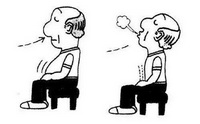 Introduction: Each breath carries the energy of life. Abdominal breathing allows for greater oxygen intake. Regular practice can strengthen the body and eliminate disease. It is a “breath exercise” for enhancing physical health.
 The average human lung has a volume roughly equivalent to two footballs; however, most people use only about one-third of that capacity throughout their lives. Many breathe shallowly and exhale too quickly—often before the inhaled air reaches the lower lung lobes. Why do turtles and snakes enjoy exceptionally long lifespans? In part, because turtles breathe using their abdominal muscles, and snakes move with undulating abdominal motion. Today, most people rely primarily on chest breathing, which weakens abdominal movement—leading to accumulation of metabolic waste, sluggish blood circulation, and, in severe cases, reduced abdominal blood flow that may compromise cerebral perfusion.
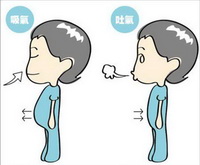 ✵How to Practice Abdominal Breathing: Belly-deep breathing can be performed while standing, sitting, or lying down—anytime and anywhere feasible; lying down is generally preferred. It should be practiced daily in fresh air for at least 20 minutes, consistently for a minimum of 100 days.
 ✵1. Benefits for the Lungs: Abdominal breathing maximizes chest expansion, expands the alveoli in the lower lung regions, allows greater oxygen intake, increases lung capacity, improves cardiopulmonary function, and reduces the risk of pulmonary infections—especially pneumonia. It also enhances coughing efficiency, mucus clearance, and alleviates dyspnea.
 ✵5. Calming the Mind and Regulating Qi: Abdominal breathing gently stimulates abdominal viscera, inducing alpha-wave dominance in electroencephalographic activity—the brain’s most relaxed and alert state. This reduces neural and vascular tension and alleviates visceral fatigue. Individuals with insomnia may benefit from performing 500 slow, rhythmic abdominal breaths before bed, combined with guided imagery; this helps harmonize internal Qi flow, optimize cerebral oxygenation, calm the mind, enhance cognitive function, and facilitate natural sleep onset.
