The Benefits of Napping and the Best Time to Take a Nap.
Introduction.
Introduction: Napping is also a natural physiological need for humans. It not only helps avoid the afternoon summer heat and compensates for lost sleep, but also delays aging, boosts immunity, and serves as a powerful tool for health preservation.
Ancient works such as Lao Lao Heng Yan (Old Age Constant Sayings) record: “Every day at noon, Yang Qi gradually declines; taking a short nap benefits Yang. At midnight, Yang Qi gradually rises; sleeping then nourishes Yin.” An ancient saying goes: “A summer nap is like eating when hungry or drinking when thirsty—it sustains good health.” Clearly, ancient people highly valued midday napping.
The Benefits of Napping and the Best Time to Take a Nap
Introduction: In traditional Chinese lifestyle, the concept of “three colds, two rests, and seven fullnesses” was widely followed. The “two rests” refer specifically to sleeping well during the “noon and midnight naps.” Ancient people even regarded this practice as one of the three essential methods for achieving longevity. According to traditional Eastern health principles, wakefulness and sleep result from the alternating dominance of Yin and Yang. Ancient texts such as the Huangdi Neijing (The Yellow Emperor’s Inner Canon) state: “When Yang Qi is exhausted, one lies down; when Yin Qi is exhausted, one falls asleep.” Midnight and noon are the times of daily Yin-Yang transition—and also the periods most conducive to Yin or Yang nourishment in the human body. Taking a brief nap at noon—or remaining quietly still if a nap isn’t possible—helps the body pass smoothly through this transition.
✵The Best Time to Nap:
Avoid eating overly oily or excessively large lunches. Take a nap 10–20 minutes after eating. Nap duration should be limited to 15–30 minutes. Naps longer than 30 minutes may cause the body to enter deep sleep, potentially resulting in mild headaches and general fatigue. Individuals needing recovery sleep may extend naps to 1.5 hours to complete a full sleep cycle; however, for healthy individuals, an ideal nap remains a light, restorative “power nap.”
Choose a quiet, warm place. Turn off your computer and mobile phone if convenient. Remove contact lenses and loosen your belt. The preferred nap posture is supine or side-lying; prone lying, napping at a desk, or dozing while seated are discouraged. Upon waking, do not sit up immediately—rise slowly. Chewing mint gum or sipping a cup of fragrant tea (a better choice than coffee or sugary drinks) can help refresh you. Floral scents may also aid mental clarity.
Developing a consistent, regular daily nap habit supports healthy circadian rhythm regulation. However, napping is generally not recommended for adults over age 65, those who are overweight, or individuals with poor circulation.
Six Benefits of Napping:
✵1. Boosts Immunity: Sleep deprivation causes physical fatigue; chronic sleep loss initiates a vicious cycle—even without overt illness, immune function weakens and resistance declines, increasing susceptibility to disease. Napping enhances immune function and strengthens the body’s disease-fighting capacity.
✵2. Compensates for Lost Sleep: A 24-minute nap significantly reduces pilots’ risk of midair control loss. A 10-minute afternoon nap effectively eliminates drowsiness—more effective than adding two extra hours of nighttime sleep. Many modern individuals suffer chronic nighttime sleep deficits, making daytime naps especially beneficial.
✵3. Protects Against Heart Disease: Populations in China, Greece, Italy, and Spain—all regions with relatively low heart disease rates—commonly practice daytime napping. Studies show that daytime nappers have a 34% lower risk of dying from heart disease. Among men, those who napped daily had a 64% lower risk compared to non-nappers.
✵4. Slows Aging: Daily work and activity trigger production of oxidative substances that accelerate cellular aging. Napping helps eliminate these compounds, thereby delaying aging and relieving bodily tension.
✵5. Enhances Mental Alertness: Research shows a 30–40 minute nap improves cognitive performance by up to 40% and strengthens memory. Experts explain that, prior to deep sleep, the brain replays recent experiences—producing dreamlike sensations and vivid, imaginative imagery.
✵6. Prevents Heatstroke: The summer noon is the hottest part of the day; many heatstroke cases occur around this time. Taking a nap then allows the body to rest and cool down, reducing heatstroke incidence.
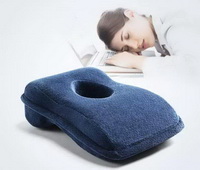
✵Tips: Travel-sized inflatable pillows double as convenient nap pillows—as long as your chair reclines.

 Introduction: Napping is also a natural physiological need for humans. It not only helps avoid the afternoon summer heat and compensates for lost sleep, but also delays aging, boosts immunity, and serves as a powerful tool for health preservation.
 Ancient works such as Lao Lao Heng Yan (Old Age Constant Sayings) record: “Every day at noon, Yang Qi gradually declines; taking a short nap benefits Yang. At midnight, Yang Qi gradually rises; sleeping then nourishes Yin.” An ancient saying goes: “A summer nap is like eating when hungry or drinking when thirsty—it sustains good health.” Clearly, ancient people highly valued midday napping.
 Introduction: In traditional Chinese lifestyle, the concept of “three colds, two rests, and seven fullnesses” was widely followed. The “two rests” refer specifically to sleeping well during the “noon and midnight naps.” Ancient people even regarded this practice as one of the three essential methods for achieving longevity. According to traditional Eastern health principles, wakefulness and sleep result from the alternating dominance of Yin and Yang. Ancient texts such as the Huangdi Neijing (The Yellow Emperor’s Inner Canon) state: “When Yang Qi is exhausted, one lies down; when Yin Qi is exhausted, one falls asleep.” Midnight and noon are the times of daily Yin-Yang transition—and also the periods most conducive to Yin or Yang nourishment in the human body. Taking a brief nap at noon—or remaining quietly still if a nap isn’t possible—helps the body pass smoothly through this transition.
 Avoid eating overly oily or excessively large lunches. Take a nap 10–20 minutes after eating. Nap duration should be limited to 15–30 minutes. Naps longer than 30 minutes may cause the body to enter deep sleep, potentially resulting in mild headaches and general fatigue. Individuals needing recovery sleep may extend naps to 1.5 hours to complete a full sleep cycle; however, for healthy individuals, an ideal nap remains a light, restorative “power nap.”
 Developing a consistent, regular daily nap habit supports healthy circadian rhythm regulation. However, napping is generally not recommended for adults over age 65, those who are overweight, or individuals with poor circulation.
 ✵1. Boosts Immunity: Sleep deprivation causes physical fatigue; chronic sleep loss initiates a vicious cycle—even without overt illness, immune function weakens and resistance declines, increasing susceptibility to disease. Napping enhances immune function and strengthens the body’s disease-fighting capacity.
 ✵3. Protects Against Heart Disease: Populations in China, Greece, Italy, and Spain—all regions with relatively low heart disease rates—commonly practice daytime napping. Studies show that daytime nappers have a 34% lower risk of dying from heart disease. Among men, those who napped daily had a 64% lower risk compared to non-nappers.
 ✵5. Enhances Mental Alertness: Research shows a 30–40 minute nap improves cognitive performance by up to 40% and strengthens memory. Experts explain that, prior to deep sleep, the brain replays recent experiences—producing dreamlike sensations and vivid, imaginative imagery.
