Introduction: Stretching is a natural, self-protective response to physical fatigue. Engaging in conscious, active stretching not only elongates muscles and enhances flexibility but also refreshes the mind—making it a beneficial habit for tonifying the kidneys and strengthening the body.
Ancient and Modern Insights: Among the most time-honored longevity practices is the principle: “Slenderness and suppleness promote blood circulation—the supreme benefit of stretching.” Sun Simiao of the Tang Dynasty aptly stated: “If blood fails to circulate freely, all diseases arise.” Stretching enhances microcirculation and systemic perfusion. Yu Shengguang, a centenarian who lived to age 110, developed this personal health philosophy: “When fatigued from work, I perform a set of White Tiger Boxing—or simply stretch my waist several times—before resuming tasks.”
The Practice of Stretching
Introduction: Due to bipedal posture and other anatomical factors, the upper body and brain are prone to relative hypoperfusion. Prolonged desk work limits physical movement; forward flexion of the neck impedes cerebral blood flow, and intensive cognitive activity further increases demand—potentially leading to cerebral hypoxia and ischemia, manifesting as dizziness, lower-limb numbness, and low-back pain. When fatigued, stretching induces whole-body comfort and mental clarity. Even without overt fatigue, intentional stretching yields similar benefits—because it compresses the thoracic cavity, gently stimulating cardiac and pulmonary activity, thereby enhancing oxygen delivery to visceral organs—especially the brain—and promoting immediate alertness and ease.
✵How to Stretch: No fixed angle, posture, location, or time is required: choose whatever feels most comfortable. Pause and breathe rhythmically—do not rush or force the movement. One effective method is as follows: Stand upright with feet hip-width apart. Raise both arms overhead, fully extended and unbent. Cross your hands behind your head (fingers interlaced), then lean slightly backward while engaging your core and focusing attention on the lumbar–abdominal region. Press your hands firmly against the back of your head, and slowly arc your arms downward and outward from behind—keeping elbows slightly bent—while initiating a gentle squat (do not strain). Inhale deeply as you descend. The motion resembles pulling a resistance band behind your head with both hands. Hold the bottom position briefly—2–5 seconds—then exhale steadily as you rise, using your gluteal and lumbar muscles to ascend gradually and with control. Practice duration varies individually; stop before fatigue sets in. If low-back discomfort occurs post-practice, gently tap the lumbar region with a loosely clenched fist.
The Benefits of Stretching
✵1. Fatigue Reduction: Stretching triggers strong, coordinated muscle contractions. During the final phase of many stretches, venous return is enhanced—effectively propelling accumulated blood back toward the heart. This improves systemic circulation. Moreover, the rhythmic systole and diastole of skeletal muscle act as an auxiliary pump, augmenting local blood flow and facilitating removal of metabolic waste—thereby alleviating muscular fatigue and invigorating the body. Additionally, expansive arm movements—such as opening the chest—promote psychological uplift, fostering mental ease and aesthetic appreciation.
✵2. Metabolic Enhancement: Thoracic extension and lumbar extension increase inspiratory volume, elevating oxygen intake. This boosts cellular metabolism and optimizes function of the heart, lungs, stomach, and other viscera—accelerating blood flow. Consequently, nutrient delivery improves and metabolic byproducts are cleared more efficiently.
✵3. Cerebral Refreshment: As a deep-breathing exercise, stretching encourages maximal cervical extension and full posterior arm extension—enhancing cerebral perfusion and nutrient delivery to the brain. This supports improved cognitive performance and visceral coordination.
✵4. Kidney Tonification and Physical Strengthening: Stretching mobilizes the lumbar region. Repetitive extension and contraction strengthen the psoas major and adjacent stabilizers, improving core power and spinal alignment. It helps maintain physiological lordosis, counteracting forward flexion and preventing kyphotic postural deviation—thus contributing meaningfully to overall physical resilience.
✵Tips: Perform each stretch for up to 20 repetitions per set; aim for 4–8 sets per session. This regimen is highly effective for preventing low-back pain.

 Introduction: Stretching is a natural, self-protective response to physical fatigue. Engaging in conscious, active stretching not only elongates muscles and enhances flexibility but also refreshes the mind—making it a beneficial habit for tonifying the kidneys and strengthening the body.
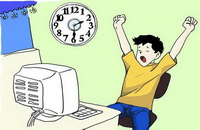 Introduction: Due to bipedal posture and other anatomical factors, the upper body and brain are prone to relative hypoperfusion. Prolonged desk work limits physical movement; forward flexion of the neck impedes cerebral blood flow, and intensive cognitive activity further increases demand—potentially leading to cerebral hypoxia and ischemia, manifesting as dizziness, lower-limb numbness, and low-back pain. When fatigued, stretching induces whole-body comfort and mental clarity. Even without overt fatigue, intentional stretching yields similar benefits—because it compresses the thoracic cavity, gently stimulating cardiac and pulmonary activity, thereby enhancing oxygen delivery to visceral organs—especially the brain—and promoting immediate alertness and ease.
 ✵How to Stretch: No fixed angle, posture, location, or time is required: choose whatever feels most comfortable. Pause and breathe rhythmically—do not rush or force the movement. One effective method is as follows: Stand upright with feet hip-width apart. Raise both arms overhead, fully extended and unbent. Cross your hands behind your head (fingers interlaced), then lean slightly backward while engaging your core and focusing attention on the lumbar–abdominal region. Press your hands firmly against the back of your head, and slowly arc your arms downward and outward from behind—keeping elbows slightly bent—while initiating a gentle squat (do not strain). Inhale deeply as you descend. The motion resembles pulling a resistance band behind your head with both hands. Hold the bottom position briefly—2–5 seconds—then exhale steadily as you rise, using your gluteal and lumbar muscles to ascend gradually and with control. Practice duration varies individually; stop before fatigue sets in. If low-back discomfort occurs post-practice, gently tap the lumbar region with a loosely clenched fist.
 ✵1. Fatigue Reduction: Stretching triggers strong, coordinated muscle contractions. During the final phase of many stretches, venous return is enhanced—effectively propelling accumulated blood back toward the heart. This improves systemic circulation. Moreover, the rhythmic systole and diastole of skeletal muscle act as an auxiliary pump, augmenting local blood flow and facilitating removal of metabolic waste—thereby alleviating muscular fatigue and invigorating the body. Additionally, expansive arm movements—such as opening the chest—promote psychological uplift, fostering mental ease and aesthetic appreciation.
 ✵3. Cerebral Refreshment: As a deep-breathing exercise, stretching encourages maximal cervical extension and full posterior arm extension—enhancing cerebral perfusion and nutrient delivery to the brain. This supports improved cognitive performance and visceral coordination.
