Introduction: Yawning is an instinctive physiological response. Like heartbeat and respiration, it operates involuntarily—outside conscious control. Yet it helps protect brain cells, enhances cerebral oxygenation, and improves the body’s stress resilience.
Ancient and Modern Insights: The classical works Jin Kui Yao Lüe (Synopsis of the Golden Chamber) states: “Those affected by cold pathogen often yawn.” Yawning may indicate deficiency of healthy Qi; conversely, it can also reflect Qi stretching and mobilization—thus serving as a positive sign of recovery following prolonged illness.
The Purpose and Function of Yawning
Severely ill individuals rarely yawn; patients with neuropsychiatric disorders likewise exhibit reduced yawning frequency. This suggests that spontaneous yawning is largely a privilege of robust health. It commonly occurs when the body experiences mild fatigue—and serves to promote alertness. “Contagious” yawning is an unconscious form of imitation: the brain region activated during yawning overlaps with areas governing empathy and sympathetic nervous activity. Consequently, people more prone to contagious yawning tend to demonstrate greater empathic capacity—the ability to recognize and understand others’ emotional states and circumstances (e.g., wincing reflexively when witnessing someone step on a tack). However, recent research indicates that yawning primarily functions to cool the brain; thus, individuals who predominantly breathe nasally yawn less frequently, as their brains are less prone to thermal overload.
✵How to Yawn Intentionally: If you’ve been seated at a computer for an extended period, initiate a yawn. Yawning pairs naturally with stretching. Standing is ideal, though sitting works too: extend your arms fully outward and backward, tilt your head gently upward, straighten your spine, and engage your upper-body muscles—then open your mouth wide and yawn deeply and fully. Follow with another slow inhalation, hold briefly, and exhale gradually. For a single intentional yawn, adopt either a seated or supine position: focus inward, relax mentally, keep your mouth closed, and breathe gently through your nose several times—then transition to open-mouth breathing; a natural, effortless yawn will often arise spontaneously. Yawning may also help diffuse social discomfort or awkwardness—but avoid excessive yawning in formal or high-stakes settings. When struggling to fall asleep, guided yawning exercises can calm the nervous system and ease the transition into sleep.
The Health Benefits of Yawning
✵1. Refreshment: Diaphragmatic movement during yawning gently massages internal organs, deepens respiration, increases systemic oxygen delivery, alleviates physical and mental fatigue, promotes venous return, and supports metabolic efficiency. Concurrent pharyngeal motion directs oxygen-rich blood toward the brain—enhancing alertness. Morning yawning facilitates cortical activation, shifting cerebral functional areas from inhibition to excitation. It uplifts vital energy (Qi) and spirit (Shen), transforming low mood into positivity and preparing the mind for new cognitive engagement.
✵2. Muscular Stretching: A full yawn engages muscles from scalp to toes. It eases lower-back muscle tension and swelling, and relaxes temporal and abdominal musculature. The wide oral aperture during yawning separates the nasopharynx and oropharynx, thereby markedly strengthening pharyngeal muscle tone and counteracting pharyngeal flaccidity.
✵3. Physiological Protection: Yawning rapidly expels excess carbon dioxide and serves as an early warning signal—indicating cerebral and visceral fatigue due to sleep deprivation or overexertion—prompting the need for rest.
✵4. Homeostatic Regulation: Yawning modulates blood pH and helps regulate systemic toxin levels. It supports hepatic detoxification and balances Qi flow along the Liver meridian.
✵6. Physiological Correlation: Both yawning and penile erection are mediated partly by nitric oxide (NO). As NO diffuses through the brain, it may activate respiratory centers—or descend via the spinal cord to dilate penile vasculature. Thus, higher yawning frequency correlates with improved erectile function. In patients with reducible hernias, yawning may assist spontaneous repositioning of the hernia sac—leading to significant symptomatic relief.
✵Tips: Frequent yawning is observed in 60%–80% of stroke patients during the 5–10 days preceding onset. Elderly individuals exhibiting this phenomenon should remain highly vigilant and seek medical evaluation promptly.

 Introduction: Yawning is an instinctive physiological response. Like heartbeat and respiration, it operates involuntarily—outside conscious control. Yet it helps protect brain cells, enhances cerebral oxygenation, and improves the body’s stress resilience.
 Severely ill individuals rarely yawn; patients with neuropsychiatric disorders likewise exhibit reduced yawning frequency. This suggests that spontaneous yawning is largely a privilege of robust health. It commonly occurs when the body experiences mild fatigue—and serves to promote alertness. “Contagious” yawning is an unconscious form of imitation: the brain region activated during yawning overlaps with areas governing empathy and sympathetic nervous activity. Consequently, people more prone to contagious yawning tend to demonstrate greater empathic capacity—the ability to recognize and understand others’ emotional states and circumstances (e.g., wincing reflexively when witnessing someone step on a tack). However, recent research indicates that yawning primarily functions to cool the brain; thus, individuals who predominantly breathe nasally yawn less frequently, as their brains are less prone to thermal overload.
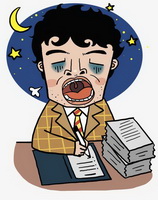 ✵How to Yawn Intentionally: If you’ve been seated at a computer for an extended period, initiate a yawn. Yawning pairs naturally with stretching. Standing is ideal, though sitting works too: extend your arms fully outward and backward, tilt your head gently upward, straighten your spine, and engage your upper-body muscles—then open your mouth wide and yawn deeply and fully. Follow with another slow inhalation, hold briefly, and exhale gradually. For a single intentional yawn, adopt either a seated or supine position: focus inward, relax mentally, keep your mouth closed, and breathe gently through your nose several times—then transition to open-mouth breathing; a natural, effortless yawn will often arise spontaneously. Yawning may also help diffuse social discomfort or awkwardness—but avoid excessive yawning in formal or high-stakes settings. When struggling to fall asleep, guided yawning exercises can calm the nervous system and ease the transition into sleep.
 ✵1. Refreshment: Diaphragmatic movement during yawning gently massages internal organs, deepens respiration, increases systemic oxygen delivery, alleviates physical and mental fatigue, promotes venous return, and supports metabolic efficiency. Concurrent pharyngeal motion directs oxygen-rich blood toward the brain—enhancing alertness. Morning yawning facilitates cortical activation, shifting cerebral functional areas from inhibition to excitation. It uplifts vital energy (Qi) and spirit (Shen), transforming low mood into positivity and preparing the mind for new cognitive engagement.
