What are the benefits of ear massage, its methods, and effects?
Introduction.
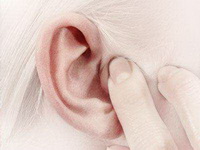
Introduction: This article outlines some benefits of ear massage, methods for performing ear massage, precautions for ear health protection, and related knowledge.
What are the benefits of ear massage, its methods, and effects?
Benefits of ear massage:
✵Preventing colds: Use the thumb and index finger to press the acupoints corresponding to the external nose, internal nose, and throat—specifically, the tragus on the auricle—by applying moderate, even pressure with a mild sensation of soreness. Perform 10–30 presses per acupoint, alternating between ears, for 4–7 days as one treatment course. Alternatively, use a small wooden stick with a blunt tip—or a matchstick—while facing a mirror and referring to an ear acupuncture chart, gently stimulating acupoints such as the external nose point, ear apex, “cold” point, “pillow” point, etc., with tolerable intensity; similarly, massage these points with the thumb. This method is highly effective for preventing colds, especially for individuals with weak constitutions.
✵Insomnia: Use the thumb and index finger to press the tripod, tragus, and posterior groove of the auricle, as well as acupoints including Shenmen, Yundian, Naoling, and Shimian, 10–30 times per point, 2–4 times daily—especially before bedtime. Alternatively, use a matchstick instead of finger massage. This method significantly improves sleep quality; pressing before bed yields particularly notable results, often inducing rapid onset of sleep.
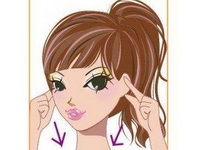
✵Obesity: Using the thumb and index finger in a pincer-like grip, apply pressure to areas of the auricle—including the tripod, antihelix, intertragic notch, and tragus—with emphasis on acupoints such as the constipation point, large intestine point, endocrine point, hunger point, and adrenal point. Apply pressure rhythmically—press and release—with moderate, even force. Press each area 10–35 times, 3–5 times daily—preferably before meals, but also acceptable after meals. Alternate between ears; one treatment course lasts 4–7 days. Alternatively, use a matchstick against a mirror with tolerable intensity.
✵Dysmenorrhea: Use the thumb and index finger to press the tripod, tragus, dorsum, and lateral portion of the earlobe, targeting acupoints corresponding to the uterus, ovaries, and perineum. Apply moderate, even pressure, performing 20–40 presses per area, 3–5 times daily—especially during pain episodes—and alternate ears.
Specific methods of ear massage:
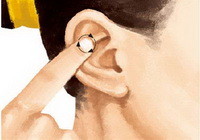
✵Pulling the tragus: Place the forefingers of both hands inside the tragus, then gently pull outward using the thumb and forefinger—starting lightly and gradually increasing intensity—until reaching a comfortable, pain-free limit. Perform for 3–5 minutes per session. This method helps alleviate headache, dizziness, neurasthenia, and tinnitus.
✵Sweeping the outer ear: Sweep backward and forward over the outer ear with both hands until a “scratching” sound is heard. Perform 20 sweeps per direction, several times daily. With long-term adherence, this strengthens kidney function and promotes overall fitness.
✵Pulling the ears: Extend both index fingers and insert them gently into the ear canals; rotate 180° three times back and forth, then quickly withdraw—producing a “pop” sound. Repeat 3–6 times. This enhances auditory sensitivity and benefits brain function.
✵Drumming the ears (“Day drums”): Cup both palms over the ears, securing them with the thumbs and little fingers while keeping the other three fingers together or slightly separated; then gently tap the occipital region—including acupoints such as the “head gate,” “wind mansion,” and “dumb point”—producing a resonant “dong-dong” sound within the ears, like beating a drum.
This method refreshes the brain, calms dizziness, and improves hearing. It serves not only as a daily health practice but also demonstrates therapeutic efficacy for tinnitus, vertigo, insomnia, headache, and neurasthenia—common conditions among middle-aged and elderly individuals.
✵Massaging the helix: Make loose fists with both hands and rub the helix up and down using the thumb and forefinger until the area becomes warm and slightly congested. This method nourishes the brain, strengthens the kidneys, sharpens hearing, clears vision, and helps prevent or alleviate impotence, frequent urination, constipation, lower back and leg pain, cervical spondylosis, palpitations, chest tightness, headache, and dizziness.
✵Massaging the whole ear: Rub both palms together until warm, then massage the anterior surface (front) of the ear, followed by the posterior surface (back), repeating this front-to-back sequence 5–6 times. This technique unblocks meridians and collaterals and supports kidney health and systemic organ wellness.
✵Knead the auricle: Place the palms of your hands over your ears and rub them clockwise and counterclockwise 30 times. Consider this one round; perform three rounds daily—once after waking up and once before going to bed.
✵Knead the tragus: The tragus is the small, rounded cartilaginous projection located at the front of the external ear. Use the thumbs and index fingers of both hands to gently pinch the tragi of both ears simultaneously—30 pinches per session. Perform this exercise once each morning.
✵Loosen the auricle: Place the palms of your hands over your ears, then gently press inward and release. Repeat 30 times each morning and evening.
✵Twist the ear: Gently insert your index finger into the external auditory meatus and rotate it back and forth 20 times. Apply even pressure; alternate between left and right ears; maintain a moderate speed to avoid damaging the delicate skin of the ear canal.
✵Pull the auricle: Each morning upon waking, use your right hand to gently pull the upper portion of the left auricle downward from the scalp 20 times; then use your left hand to pull the upper portion of the right auricle downward 20 times.
In fact, various regions of the auricle correspond internally to organs and systems throughout the body. Auricular health exercises are simple, convenient, and require no special equipment; regular self-massage—at any time—can help regulate physiological functions, relieve gastrointestinal discomfort, clear internal heat, improve local blood circulation in the ear, and enhance overall immunity—thereby supporting disease prevention and general wellness.
Pinching the ear apex (the highest point of the auricle): Massage downward first, then upward; repeat on the opposite ear. Perform for 3–5 minutes per session, up to 5–6 times daily—effectively alleviating dizziness and headache.
Pinch the stomach and large intestine points: These points lie in the concha cavity near the antitragus. Gently knead them back and forth using the thumb and index finger to relieve gastrointestinal discomfort.
Pinch the tragus: Also known as the “small ear,” the tragus can be gently pressed and released using the thumb and index finger—20–30 repetitions per session, performed bilaterally and simultaneously. Avoid excessive force; continue until mild erythema appears. You may also twist the ear: gently insert the index finger into the external auditory meatus and rotate it back and forth 20 times per ear. Maintain even pressure and moderate speed—never too fast—to prevent skin injury. Do not massage both ears simultaneously; always begin with the left ear, then proceed to the right.
Tips for ear protection:
In daily life, maintain emotional balance, regulate mood, consume light and balanced meals, and safeguard auditory function. In living and working environments, minimize exposure to noise; ambient noise levels should not exceed 65 decibels. If occupational noise exceeds 65 dB, use appropriate hearing protection—such as earplugs or earmuffs—to prevent irreversible hearing damage.
When bathing or swimming, prevent water or debris from entering the external auditory canal to avoid otitis externa. If water enters the canal, gently blot it dry with a sterile cotton swab; if needed, apply a small amount of alcohol for disinfection. Avoid routine cerumen removal with cotton swabs or sharp objects—cerumen naturally migrates outward and provides protective lubrication and antimicrobial properties. Only seek professional evaluation and safe removal by an otolaryngologist if cerumen impaction causes symptoms such as hearing loss, fullness, or pain.
✵Ear massage exercise routine:
(1) Begin in a seated position; rub your palms together vigorously until warm.
(2) Grasp the upper helix (auricular rim) of both ears with both hands: place your thumbs on the inner surface and the remaining four fingers on the outer surface; rub 36 times.
(3) Grasp the lower lobule region of both ears: position thumbs on the outer surface and bent index fingers on the inner surface; rub 36 times.
(4) Cup both palms over the ears, pointing the remaining four fingers posteriorly toward the occiput; lightly touch the middle fingers together. Then stack the index fingers atop the middle fingers and slide them downward along the occipital bone—tapping the “Fengfu” (GV16), “Yamen” (GV15), and “Tianzhu” (BL10) acupoints—36 times.
(5) Press the occipital region with the four fingers while gently covering the ear canals with the palms; then quickly lift the palms away—repeat 36 times.
(6) Place the tips of both index fingers at the entrances of the external auditory canals; rotate gently for 6 seconds, then lift rapidly. Repeat this cycle—massage-and-lift—six times consecutively. Upon completing the routine, grasp both ears with both hands and rub upward and downward approximately 20 times—cease when warmth is felt in the ears.

 Introduction: This article outlines some benefits of ear massage, methods for performing ear massage, precautions for ear health protection, and related knowledge.
 Benefits of ear massage:
 ✵Obesity: Using the thumb and index finger in a pincer-like grip, apply pressure to areas of the auricle—including the tripod, antihelix, intertragic notch, and tragus—with emphasis on acupoints such as the constipation point, large intestine point, endocrine point, hunger point, and adrenal point. Apply pressure rhythmically—press and release—with moderate, even force. Press each area 10–35 times, 3–5 times daily—preferably before meals, but also acceptable after meals. Alternate between ears; one treatment course lasts 4–7 days. Alternatively, use a matchstick against a mirror with tolerable intensity.
 ✵Pulling the tragus: Place the forefingers of both hands inside the tragus, then gently pull outward using the thumb and forefinger—starting lightly and gradually increasing intensity—until reaching a comfortable, pain-free limit. Perform for 3–5 minutes per session. This method helps alleviate headache, dizziness, neurasthenia, and tinnitus.
 In daily life, maintain emotional balance, regulate mood, consume light and balanced meals, and safeguard auditory function. In living and working environments, minimize exposure to noise; ambient noise levels should not exceed 65 decibels. If occupational noise exceeds 65 dB, use appropriate hearing protection—such as earplugs or earmuffs—to prevent irreversible hearing damage.
