Introduction: Wan Quan, a renowned herbalist of the Ming dynasty, was born into a family of herbalists. He studied under eminent teachers and engaged with many leading scholars. Proficient in health preservation practices, he summarized his lifelong insights in Yang Sheng Si Yao (The Four Essentials of Health Preservation): "Fewer desires; move with caution; follow the seasons; avoid illness."
Health Preservation Maxim of ancient herbalist.
Introduction: Wan Quan, a renowned herbalist of the Ming dynasty, was born into a family of herbalists. He studied under eminent teachers and engaged with many leading scholars. Proficient in health preservation practices, he summarized his lifelong insights in Yang Sheng Si Yao (The Four Essentials of Health Preservation): "Fewer desires; move with caution; follow the seasons; avoid illness." This theory of health preservation is simple yet profound and original—holding significant guiding value for daily health care.
Passionlessness:
Wan Quan held that minimizing desires is the foremost principle of health preservation, and its essence lies in stoic self-restraint—not indulging passions—to safeguard the body’s fundamental vital essence (jing). Specifically, this entails moderation in sexual activity and diet.
Moderation in Sexual Activity:
Maintaining health through regulated sexual conduct is a foundational tenet of Traditional Chinese Medicine (TCM). As ancient texts state: "Within the chamber, one may live without strangers, yet disturbance arises as easily as fire and water—if misused, life perishes." Wan Quan taught that appropriate sexual activity harmonizes yin and yang, fulfills physiological needs, and supports reproduction; thus, absolute abstinence is unnecessary, but excess must be avoided.
Dietary Regulation:
"If one favors certain flavors excessively, disease follows accordingly." Regarding diet, Wan Quan advocated avoiding flavor bias: sour injures the liver; bitter harms the heart; sweet damages the spleen; pungent impairs the lungs; salty harms the kidneys. He believed balanced nutrition nourishes the zang-fu organs, muscles, and vessels. As stated: "Food entering the mouth sustains the body’s life"; "Grains, meats, vegetables, and fruits are all bestowed upon humanity—each possesses five qi and five flavors. When consumed, they first enter the zang-fu organs, then nourish blood and bones." Though food is the primary source of qi and blood, dietary intake must remain moderate: first, avoid flavor (excessive preference); second, avoid overeating.
Gentle Movement:
The second key to health preservation is moving with caution—colloquially, avoiding excessive exertion and instead practicing "movement with measured restraint." Wan Quan wrote: "Frugality in speech nourishes the spirit; frugality in listening preserves emptiness; frugality in speech cultivates qi; frugality in desire conserves essence." Those who move with caution maintain steady qi; those whose qi remains steady do not deplete their limbs and meridians.
Cultivating the Mind and Calming the Spirit
The prerequisite for cultivating the mind and calming the spirit is prudence and vigilance. As recorded in Volume II of Yang Sheng Si Yao (The Four Essentials of Health Preservation): "Those cautious in conduct earn respect among scholars." The mind must be tranquil, the spirit stable, and thoughts peaceful—thus remaining unaffected by the Seven Emotions. Excessive fear injures the kidneys; excessive thinking harms the spleen. One should therefore master qigong methods—including meditation, tai chi, and breath regulation—to harmonize qi flow and calm the mind.
Avoiding Exhaustion:
Physical labor must be grounded in cherishing the body; its key is moderation, and its foundation remains stillness—while also incorporating regular, gentle exercise. Wan Quan emphasized that the body, hair, and skin are gifts from one’s parents and must be treasured: "Prolonged gazing injures the blood; prolonged lying injures qi; prolonged sitting injures the muscles; prolonged standing injures the bones; prolonged walking injures the tendons." Thus, labor must never become extreme, lest it damage the body. He further stressed: "The active person gains more from righteousness"—only inner stillness ensures mental stability and prevents overexertion.
Following the Seasons:
Traditional Chinese Medicine teaches that humans must align with nature; "following the seasons" means respecting natural laws and adapting to seasonal changes. Ancient texts declare: "The sage nurtures yang in spring and summer; nurtures yin in autumn and winter—to follow the root."
In spring and summer, yang qi rises and expands outward, supporting growth—thus human activity should harmonize with this ascending, expansive qi. In autumn and winter, yang qi converges inward; nourishing body fluids aligns with the contracting, consolidating qi of these seasons.
Away from disease:
"Away from disease" refers to preventing disease before it occurs and protecting healthy Qi. It emphasizes disease prevention and seizing the optimal timing for intervention.
Prevention before the disease:
"Isn’t it too late to dig a well when one is thirsty, or cast a net when one is hungry?" Preventing disease is more important than treating it. Protecting Vital Qi and preserving Essence and Spirit hold great significance in daily health maintenance. Wanquan advocated using mild-natured, mild-tasting herbal pills—cool and slightly cold in property—to regulate Yin and Yang and gently clear excess while replenishing deficiency.
Prevention of disease progression:
The ancient works Nei Jing (The Inner Canon) states: "Those who excel in treatment intervene when pathogens affect the skin; those who do not excel wait until pathogens reach the bones and marrow. When disease resides in the skin, the pathogenic influence is superficial and mild, causing no serious damage—thus, it can be readily expelled. But when disease reaches the bones and marrow, the pathogen has deeply penetrated, and healthy Qi has already declined." Wanquan also stressed that disease must be treated as early as possible; otherwise, "once the disease becomes severe, seeking treatment then makes recovery difficult." Therefore, he outlined five losses in health preservation: (1) failing to understand how to maintain health is the first loss; (2) delaying treatment until disease progresses is the second loss; (3) failing to select a competent herbalist is the third loss; (4) indiscriminately using herbs with strong potency is the fourth loss; and (5) trusting shamans instead of qualified herbalists is the fifth loss.

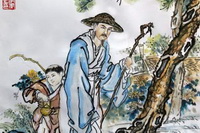 Introduction: Wan Quan, a renowned herbalist of the Ming dynasty, was born into a family of herbalists. He studied under eminent teachers and engaged with many leading scholars. Proficient in health preservation practices, he summarized his lifelong insights in Yang Sheng Si Yao (The Four Essentials of Health Preservation): "Fewer desires; move with caution; follow the seasons; avoid illness."
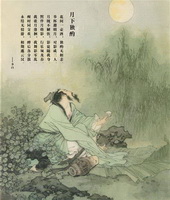 Introduction: Wan Quan, a renowned herbalist of the Ming dynasty, was born into a family of herbalists. He studied under eminent teachers and engaged with many leading scholars. Proficient in health preservation practices, he summarized his lifelong insights in Yang Sheng Si Yao (The Four Essentials of Health Preservation): "Fewer desires; move with caution; follow the seasons; avoid illness." This theory of health preservation is simple yet profound and original—holding significant guiding value for daily health care.
 Dietary Regulation:
 Cultivating the Mind and Calming the Spirit
