✵The article documents the herb Figwort Root, including its English name, Latin name, Pinyin name, properties and flavors, botanical sources—two plant species: (1) Scrophularia ningpoensis Hemsl. and (2) Scrophularia buergeriana Miq.—as well as detailed descriptions of the botanical features, growth characteristics, and ecological environments of these species; the characteristics of the herb Figwort Root; its pharmacological actions; medicinal efficacy; and administration guidelines.
Radix Scrophulariae (Figwort Root)
Pinyin Name: Xuán Shēn
English Name: Figwort Root
Latin Name:Radix Scrophulariae Properties and Flavors: Slightly cold; sweet, bitter, and salty
Brief Introduction:Radix Scrophulariae is the dried root of Scrophularia ningpoensis Hemsl. It clears heat, cools the blood, nourishes Yin, and resolves toxins. It is used to treat warm diseases at the nutrient stage—characterized by high fever, delirium, or skin eruptions—as well as pharyngeal inflammation, boils, and sores. Common names include Radix Scrophulariae, Figwort Root, and Xuán Shēn.
Botanical Source:Radix Scrophulariae (Figwort Root) is the dried root of (1) Scrophularia ningpoensis Hemsl. or (2) Scrophularia buergeriana Miq., both belonging to the genus Scrophularia, family Scrophulariaceae (figwort family), order Lamiales (classified into order Tubiflorae in past). These two commonly used species are described below:
(1) Scrophularia ningpoensis Hemsl.
Botanical Description:Scrophularia ningpoensis Hemsl. is a perennial herb in the Scrophulariaceae family and Scrophularia genus. It is commonly known as Xuan Shen, Ningpo figwort or Chinese figwort. Plants grow 60–120 cm tall. Roots are hypertrophic and subcylindrical (nearly cylindrical), often branched at the lower portion; the root cortex is grayish-yellow or taupe (grayish-brown). Stems are erect, prismatic, grooved, and either smooth or glandular-pilose. Lower leaves are opposite; upper leaves are sometimes alternate; all are petiolate. Leaf blades are oval (egg-shaped) or ovate-elliptic, 7–20 cm long and 3.5–12 cm wide; the apex is acuminate; the base is rounded to subtruncate; the margin is serrulate; surfaces are glabrous, or the lower surface veins bear sparse hairs.
The inflorescence is a sparsely unfolding, conical cyme; pedicels measure 1–3 cm; the inflorescence axis and peduncle are densely covered with glandular hairs. The calyx is 5-lobed; lobes are ovoid with blunt apices and membranous margins. The corolla is dark purple; the hypanthium (calyx tube) is obliquely urceolate, ~8 mm long, and 5-lobed at the apex, with unequal lobes. There are four stamens in a didynamous arrangement, one staminode (scale-like, attached to the corolla tube). The ovary is superior, bilocular; the style is slender; the stigma is shortly bifid.
The fruit is a capsule, ovoid, mucronate at the apex, ~8 mm long, deep green to dark green; the calyx persists. Flowering occurs from July to August; fruiting from August to September.
Ecological Environment:Scrophularia ningpoensis Hemsl. grows on mountain slopes and in forest understories.
Growth Characteristics: This plant prefers a warm, humid climate; it is cold- and drought-tolerant but sensitive to waterlogging. Stems and leaves withstand light frost. It exhibits strong adaptability and can be cultivated on plains, hills, and low mountain slopes. Soil requirements are not strict, though sandy loam with deep, loose, fertile, and well-drained soil is optimal. Continuous cropping should be avoided; crop rotation with Gramineae (grasses) is recommended.
Characteristics of the Herb: Figwort Root The herb is subcylindrical—slightly thickened in the middle or thicker at the upper end and tapering toward the base—and occasionally curved like a ram’s horn, measuring 6–20 cm in length and 1–3 cm in diameter. The surface is grayish-yellow or tan (chocolate brown), bearing prominent longitudinal grooves or transverse lenticels; short fine roots or rootlet scars may be present. The texture is dense and firm, difficult to fracture; the fracture surface is relatively flat, jet-black (corvinus), and slightly lustrous. The herb has a caramel-like aroma and tastes sweet with a slight bitterness. When soaked in water, the solution turns ink-black.
Pharmacological Actions: (1) Inhibitory effect against Staphylococcus aureus, Salmonella typhi, and other bacteria; (2) Antihypertensive effect; (3) Mild hypoglycemic effect; (4) Significant increase in coronary blood flow.
Medicinal Efficacy: Clears heat and cools blood, nourishes yin and eliminates internal heat, detoxifies and dissipates stagnation. It is indicated for febrile disease and warm disease with heat entering the Ying and blood levels, body heat or fever, polydipsia (excessive thirst), dark-red tongue, maculae, bone steaming fever (hectic fever due to yin deficiency), and over-strained cough; dysphoria and insomnia (vexation, restlessness, inability to sleep), depletion of body fluids and constipation, dry eyes and blurred vision, sore throat with swelling and pain, scrofula and subcutaneous nodules, carbuncles, ulcers, and toxic sores.
Administration of Radix Scrophulariae (Xuán Shēn):
Reference:
Administration Guide of Radix Scrophulariae (Xuán Shēn)
TCM Books:
(1) Internally: 9–15 grams; (2) Internally: Water decoction, 3–5 qián (≈9–15 grams), or prepared as pills or powder; Externally: fresh herb mashed and applied, or finely ground dried herb applied topically; (3) Internally: Water decoction, 9–15 grams, or prepared as pills or powder; Externally: appropriate amount, applied as a mash or as finely ground herb powder.
Contraindications, Precautions, and Adverse Reactions: Radix Scrophulariae should not be combined with Rhizoma Veratri Nigri (Black False Hellebore).
(2) Scrophularia buergeriana Miq.
Botanical Description:Scrophularia buergeriana Miq., also known as Scrophularia buergeriana Miq. var. buergeriana or Scrophularia oldhami Oliv., is a species of the family Scrophulariaceae (figwort family) and genus Scrophularia. It is commonly referred to as Scrophularia buergeriana Miq., Northern Scrophularia, or Běi Xuán Shēn ("Northern Figwort Root").
Scrophularia buergeriana Miq. is extremely similar to Scrophularia ningpoensis Hemsl. The main differences are as follows: the root is cylindrical, bearing vertical wrinkles; its surface is taupe (grayish-brown), with fine roots and root scars. The leaves are small; leaf blades are oval (egg-shaped) to ovate-oblong, 5–12 cm long and 2–5 cm wide. The inflorescence is a contracted cyme forming a spike-like structure; cymules lack peduncles or bear short peduncles up to 5 mm long, often alternate and not arranged in whorls; pedicels are ≈5 mm long; calyx lobes are oval; the corolla is yellow-green. The fruit is a capsule, oval (egg-shaped), ≈6 mm long.
Ecological Environment:Scrophularia buergeriana Miq. grows in moist soil.
Characteristics of the Herb:Scrophularia buergeriana Miq. is very similar to Scrophularia ningpoensis Hemsl. The main differences are: the root of S. buergeriana is cylindrical, with vertical wrinkles; its surface is taupe (grayish-brown), bearing radicels (fine roots) and radicel scars.

 ✵The article documents the herb Figwort Root, including its English name, Latin name, Pinyin name, properties and flavors, botanical sources—two plant species: (1) Scrophularia ningpoensis Hemsl. and (2) Scrophularia buergeriana Miq.—as well as detailed descriptions of the botanical features, growth characteristics, and ecological environments of these species; the characteristics of the herb Figwort Root; its pharmacological actions; medicinal efficacy; and administration guidelines.
 Pinyin Name: Xuán Shēn
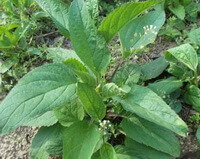 Botanical Description: Scrophularia ningpoensis Hemsl. is a perennial herb in the Scrophulariaceae family and Scrophularia genus. It is commonly known as Xuan Shen, Ningpo figwort or Chinese figwort. Plants grow 60–120 cm tall. Roots are hypertrophic and subcylindrical (nearly cylindrical), often branched at the lower portion; the root cortex is grayish-yellow or taupe (grayish-brown). Stems are erect, prismatic, grooved, and either smooth or glandular-pilose. Lower leaves are opposite; upper leaves are sometimes alternate; all are petiolate. Leaf blades are oval (egg-shaped) or ovate-elliptic, 7–20 cm long and 3.5–12 cm wide; the apex is acuminate; the base is rounded to subtruncate; the margin is serrulate; surfaces are glabrous, or the lower surface veins bear sparse hairs.
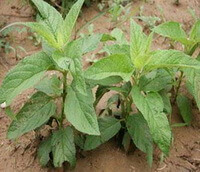 Ecological Environment: Scrophularia ningpoensis Hemsl. grows on mountain slopes and in forest understories.
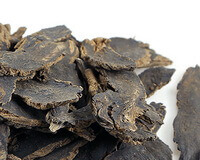 Characteristics of the Herb: Figwort Root The herb is subcylindrical—slightly thickened in the middle or thicker at the upper end and tapering toward the base—and occasionally curved like a ram’s horn, measuring 6–20 cm in length and 1–3 cm in diameter. The surface is grayish-yellow or tan (chocolate brown), bearing prominent longitudinal grooves or transverse lenticels; short fine roots or rootlet scars may be present. The texture is dense and firm, difficult to fracture; the fracture surface is relatively flat, jet-black (corvinus), and slightly lustrous. The herb has a caramel-like aroma and tastes sweet with a slight bitterness. When soaked in water, the solution turns ink-black.
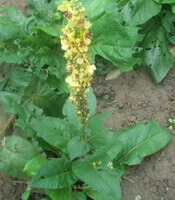 Botanical Description: Scrophularia buergeriana Miq., also known as Scrophularia buergeriana Miq. var. buergeriana or Scrophularia oldhami Oliv., is a species of the family Scrophulariaceae (figwort family) and genus Scrophularia. It is commonly referred to as Scrophularia buergeriana Miq., Northern Scrophularia, or Běi Xuán Shēn ("Northern Figwort Root").
 URL QR code: