✵The article records the herb Lalang Grass Rhizome—its English name, Latin name, Pinyin name, properties and flavor, botanical source (a single plant species: Imperata cylindrica (L.) Beauv. var. major (Nees) C.E. Hubb.), and provides a detailed introduction to the botanical features, growth characteristics, and ecological environment of this plant species, as well as the macroscopic and microscopic characteristics of the herb, its pharmacological actions, medicinal efficacy, and administration guidelines.
Rhizoma Imperatae (Lalang Grass Rhizome)
Pinyin Name: Bái Máo Gēn
English Name: Lalang Grass Rhizome
Latin Name:Rhizoma Imperatae Properties and Flavor: Cold, sweet
Brief Introduction:Rhizoma Imperatae is the dried rhizome of Imperata cylindrica (L.) Beauv. var. major (Nees) C.E. Hubb., used to cool the blood, arrest bleeding, clear heat, and promote diuresis in the treatment of epistaxis and hematuria due to blood-heat, edema, jaundice, and stranguria associated with heat. It is commonly known as Rhizoma Imperatae, Lalang Grass Rhizome, or Bái Máo Gēn.
Botanical Source:Rhizoma Imperatae is the dried rhizome of Imperata cylindrica (L.) Beauv. var. major (Nees) C.E. Hubb., a perennial herb belonging to the genus Imperata (family Poaceae, formerly Gramineae), order Poales. The commonly used species is described below:
(1) Imperata cylindrica (L.) Beauv. var. major (Nees) C.E. Hubb.
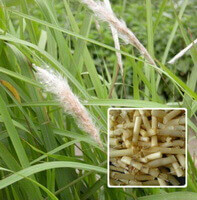
Botanical Description:Imperata cylindrica (L.) Beauv. var. major (Nees) C.E. Hubb. is a member of the Poaceae family and the genus Imperata. It is commonly known as Imperata cylindrica or Bái Máo. A perennial herb, it grows 20–100 cm tall. The rhizome is white, creeping, and transversely oriented, densely covered with scale leaves. Culms grow in clumps, are erect, cylindrical, smooth, and glabrous; their bases are sheathed by numerous old leaves and persistent leaf sheaths. Leaves are linear or linear-lanceolate; basal leaves are nearly as long as the culms; cauline leaves are shorter, 3–8 mm wide; leaf sheaths are brown, glabrous, or ciliate on the upper margins; leaf margins and sheath apertures are free, and each sheath bears a short ligule.
The panicle is dense, spiciform, terminal, and cylindrical, 5–20 cm long and 1–2.5 cm wide. Spikelets are lanceolate or oblong, grow in pairs along the rachis; one spikelet in each pair is pedicellate, the other is sessile. Flowers are hermaphroditic; each spikelet contains one floret. The base of the spikelet is covered with white, filamentous, soft hairs. The two glumes are subequal in length—or the first glume is slightly shorter and narrower, with 3–4 veins—while the second glume is broader, with 4–6 veins. The palea is membranous and glabrous: the first lemma is ovate-oblong; the palea is short; the second lemma is lanceolate and equal in length to the palea. There are two stamens; anthers are yellow and ~3 mm long. There is one pistil, with a relatively long style and plumose stigmas.
The caryopsis is elliptic and darkish brown. The mature infructescence is covered with white, pilose hairs. Flowering occurs from May to June; fruiting, from June to July.
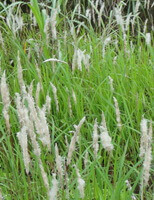
Ecological Environment:Imperata cylindrica grows in sunny grasslands, hillsides, and mountain slopes. It is widely distributed across China.
Growth Characteristics:Imperata cylindrica prefers a warm, humid climate and full sunlight; it is drought-tolerant. Cultivation is best carried out on gentle slopes or flat, well-drained fields.
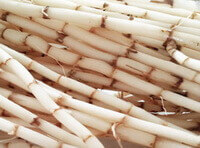
Characteristics of the Herb: The rhizome is long-cylindrical, sometimes branched, and variable in length (30–60 cm) and diameter (2–4 mm). The surface is yellowish-white or faintly yellow, slightly glossy, with longitudinal wrinkles and prominent nodes. Gray-brown scale leaves and fine roots (radicels) persist at the nodes; internodes vary in length, typically 1–3 cm. The herb is lightweight, tough in texture, and fibrous in fracture; the fracture surface is yellowish-white, often showing radial fissures and occasionally a small central pith cavity. It has a faint odor and a slightly sweet taste.
Pharmacological Actions: (1) Shortens coagulation time; (2) exhibits analgesic and anti-inflammatory effects; (3) inhibits Mycobacterium tuberculosis, Streptococcus pneumoniae, Staphylococcus aureus, Shigella dysenteriae, and the B-type pneumonia virus, among others.
Medicinal Efficacy: Cools the blood to arrest bleeding, clears heat and generates body fluids, clears heat and promotes diuresis, and relieves stranguria. The herb is indicated for blood-heat-induced vomiting of blood, hematemesis, epistaxis, hematuria, febrile diseases with irritability, stomach-heat-induced vomiting, jaundice, edema, lung-heat-induced cough and wheezing, heat-induced stranguria with pain, dribbling urination with pain, acute nephritis with edema, and other related conditions.
Administration of Rhizoma Imperatae (Bái Máo Gēn):
Reference:
Administration Guide for Rhizoma Imperatae (Bái Máo Gēn)
TCM Books:
(1) Internally: 9–30 grams of dried herb; 30–60 grams of fresh herb; (2) Internally: water decoction, 3–5 qián (≈9–15 grams) of dried herb; 1–2 liǎng (≈30–60 grams) of fresh herb; or juice extraction or powdered herb preparation. (3) Internally: water decoction, 10–30 grams of dried herb; 30–60 grams of fresh herb; or juice extraction. External use: apply an appropriate amount of freshly extracted juice topically.
Article Link:
URL QR code:
References:
1.Introduction of Bai Mao Gen: Lalang Grass Rhizome

 ✵The article records the herb Lalang Grass Rhizome—its English name, Latin name, Pinyin name, properties and flavor, botanical source (a single plant species: Imperata cylindrica (L.) Beauv. var. major (Nees) C.E. Hubb.), and provides a detailed introduction to the botanical features, growth characteristics, and ecological environment of this plant species, as well as the macroscopic and microscopic characteristics of the herb, its pharmacological actions, medicinal efficacy, and administration guidelines.
 Pinyin Name: Bái Máo Gēn
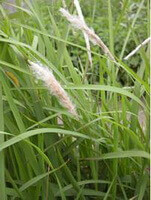 Botanical Description: Imperata cylindrica (L.) Beauv. var. major (Nees) C.E. Hubb. is a member of the Poaceae family and the genus Imperata. It is commonly known as Imperata cylindrica or Bái Máo. A perennial herb, it grows 20–100 cm tall. The rhizome is white, creeping, and transversely oriented, densely covered with scale leaves. Culms grow in clumps, are erect, cylindrical, smooth, and glabrous; their bases are sheathed by numerous old leaves and persistent leaf sheaths. Leaves are linear or linear-lanceolate; basal leaves are nearly as long as the culms; cauline leaves are shorter, 3–8 mm wide; leaf sheaths are brown, glabrous, or ciliate on the upper margins; leaf margins and sheath apertures are free, and each sheath bears a short ligule.
 The panicle is dense, spiciform, terminal, and cylindrical, 5–20 cm long and 1–2.5 cm wide. Spikelets are lanceolate or oblong, grow in pairs along the rachis; one spikelet in each pair is pedicellate, the other is sessile. Flowers are hermaphroditic; each spikelet contains one floret. The base of the spikelet is covered with white, filamentous, soft hairs. The two glumes are subequal in length—or the first glume is slightly shorter and narrower, with 3–4 veins—while the second glume is broader, with 4–6 veins. The palea is membranous and glabrous: the first lemma is ovate-oblong; the palea is short; the second lemma is lanceolate and equal in length to the palea. There are two stamens; anthers are yellow and ~3 mm long. There is one pistil, with a relatively long style and plumose stigmas.
 Ecological Environment: Imperata cylindrica grows in sunny grasslands, hillsides, and mountain slopes. It is widely distributed across China.
 Characteristics of the Herb: The rhizome is long-cylindrical, sometimes branched, and variable in length (30–60 cm) and diameter (2–4 mm). The surface is yellowish-white or faintly yellow, slightly glossy, with longitudinal wrinkles and prominent nodes. Gray-brown scale leaves and fine roots (radicels) persist at the nodes; internodes vary in length, typically 1–3 cm. The herb is lightweight, tough in texture, and fibrous in fracture; the fracture surface is yellowish-white, often showing radial fissures and occasionally a small central pith cavity. It has a faint odor and a slightly sweet taste.
 URL QR code: