✵This article documents the herb Germinated Barley, including its Pinyin name, English name, Latin name, properties and flavor, botanical source—exclusively Hordeum vulgare L.—and provides a detailed description of the plant’s botanical features, growth characteristics, and ecological environment; as well as the characteristics of the processed herb, its pharmacological actions, medicinal efficacy, and administration guidelines.
Fructus Hordei Germinatus (Germinated Barley)
Pinyin Name: Mài Yá
English Name: Germinated Barley
Latin Name:Fructus Hordei Germinatus Properties and Flavor: Neutral; sweet
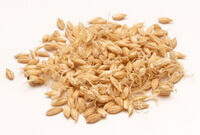
Brief Introduction:Fructus Hordei Germinatus is the dried, germinated caryopsis of barley (Hordeum vulgare L.). It is used (1) to promote digestion and treat dyspepsia, and (2) to suppress lactation and terminate breastfeeding. Common names include Fructus Hordei Germinatus, Germinated Barley, and Mài Yá.
Botanical Source: Classical herbal works define Fructus Hordei Germinatus (Germinated Barley) as the dried, germinated grain of Hordeum vulgare L., a species of the genus Hordeum L., family Poaceae (grass family), order Poales. The following describes the primary botanical source:
(1) Hordeum vulgare L.
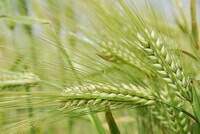
Botanical Description:Hordeum vulgare L. is a biennial herb. Culms are stout, smooth, glabrous, and erect, reaching 50–100 cm in height. Leaf sheaths are loosely amplexicaul; prominent auricles occur on both sides; the ligule is membranous, 1–2 mm long; leaf blades are flat, 9–20 cm long and 6–20 mm wide.
Spikes are 3–8 cm long (excluding awns) and ~1.5 cm in diameter; spikelets are densely arranged, with three fertile spikelets per rachis node; spikelets are usually sessile, 1–1.5 cm long (excluding awns). Glumes are linear-lanceolate, slightly pubescent, with apices extended into awns 8–15 mm long; margins bear minute spinules. The palea and inferior palea are subequal in length.
The caryopsis bears longitudinal grooves on its ventral surface or is slightly sunken; the apex is pubescent and adheres tightly to the inferior palea at maturity—making separation difficult—though some cultivated varieties separate more readily. Flowering occurs from March to April; fruiting from April to May.
Barley has nourished humans for millennia, though its popularity declined in recent centuries as it came to be associated with subsistence fare. Today, it is commonly used in soups and stews, where it functions both as a plump, chewy grain and a natural thickener; it also serves well as a side dish or salad ingredient. In most markets, two main types are available: hulled barley—the most nutritious, retaining the bran layer after only the tough outer hull is removed—and pearl barley, which undergoes further polishing to remove the bran; it is less nutritious but more widely consumed due to its milder texture and shorter cooking time.
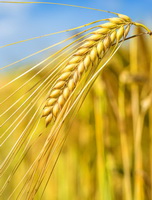
Ecological Environment:Hordeum vulgare L. is widely cultivated throughout China.
Growth Characteristics:Hordeum vulgare L. exhibits strong environmental adaptability and broad geographical distribution, thriving in both cold and warm climates. Optimal cultivation requires loose, fertile, slightly alkaline soil; strongly acidic red loam is unsuitable.
Characteristics of the Herb: The caryopsis is slightly fusiform at the ends, 8–15 mm long and 1–3 mm in diameter. The surface is pale yellow; the dorsal surface is convex and fully rounded, enveloped by the inferior palea and bearing five longitudinal veins; the apical awn is typically broken and absent. The ventral surface is covered by the palea and features a distinct longitudinal groove. After removal of the inferior palea and palea, plumules and fibrous roots emerge from the basal radicle. Plumules are lanceolate-linear, yellowish-white, ~5 mm long; several slender, curved fibrous roots are present. The herb is hard in texture; the fracture surface is white and mealy (farinaceous). It is odorless and tastes mildly sweet.
Pharmacological Actions: (1) Digestive-enhancing effects; (2) Hypoglycemic effects; (3) Dual regulatory effects on lactation (stimulatory at low doses, inhibitory at higher doses); (4) Antifungal activity; (5) Hypolipidemic and hepatoprotective effects.
Medicinal Efficacy: Promoting the circulation of Qi and aiding digestion, relieving indigestion, tonifying the spleen and stimulating appetite, regulating the middle energizer, descending Qi, promoting lactation cessation and alleviating abdominal distension. It is indicated for dyspepsia and indigestion, abdominal fullness and distension, abdominal fullness with diarrhea, spleen deficiency with poor appetite, anorexia (inappetence), vomiting and diarrhea, nausea and vomiting, milk stagnation and accumulation, breast distending pain, breast distension, lactation cessation, liver-depressed hypochondriac pain, stomachache due to emotional depression, and hyperactive liver-Qi invading the stomach, etc. The raw germinated barley functions to benefit the spleen and harmonize the stomach, soothe the liver and promote the circulation of Qi; it is indicated for spleen deficiency with poor appetite and milk stagnation and accumulation. The fried germinated barley functions to promote the circulation of Qi, aid digestion and promote lactation cessation; it is indicated for dyspepsia and indigestion (food stagnation and indigestion) and lactation cessation. The charred germinated barley functions to aid digestion and eliminate stagnant food; it is indicated for dyspepsia and indigestion (food stagnation and indigestion), abdominal fullness and distension, etc.
Administration of Fructus Hordei Germinatus (Mài Yá):
Reference:
Administration Guide of Fructus Hordei Germinatus (Mài Yá)
TCM Books:
(1) Internally:10–15 grams; for lactation cessation, use the fried herb at 60 grams; (2) Internally: water decoction, 3–5 qian (≈9–15 grams); or prepared as pills or powder; (3) Internally: water decoction, 10–15 grams, higher doses may reach 30–120 grams; or prepared as pills or powder.
Contraindications, Precautions and Adverse Reactions: Fructus Hordei Germinatus is contraindicated in conditions involving fire-phlegm (phlegm with heat), asthma and panting, or during pregnancy.
Pinyin Name: Jiāo Mài Yá
English Name: Charred Germinated Barley
Latin Name:Fructus Hordei Germinatus Preparatus Property and Flavor: Neutral; sweet
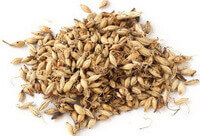
Brief Introduction:Fructus Hordei Germinatus Preparatus is germinated barley grain stir-baked until brown, used to improve digestion—particularly for dyspepsia caused by cereal foods and infantile lactodyspepsia. It is commonly known as Fructus Hordei Germinatus Preparatus, Charred Germinated Barley, or Jiāo Mài Yá.
Common official herbal works and other authoritative herbal compendia define Fructus Hordei Germinatus Preparatus (charred germinated barley) as stir-baked germinated barley grains. The botanical origin and description of Germinated Barley were provided in the preceding entry: "Fructus Hordei Germinatus (Germinated Barley)."
Medicinal Efficacy: Charred germinated barley aids digestion and eliminates stagnant food; it is indicated for dyspepsia and indigestion (food stagnation and indigestion), abdominal fullness and distension, etc.
Administration of Fructus Hordei Germinatus Preparatus (Jiāo Mài Yá):
Reference:
Administration Guide for Fructus Hordei Germinatus Preparatus (Jiāo Mài Yá)
TCM Books:
(1) Internally: 10–15 grams; for lactation cessation, use the fried herb at 60 grams; (2) Internally:water decoction, 3–5 qian (≈9–15 grams); or prepared as pills or powder; (3) Internally:water decoction, 10–15 grams, higher doses may reach 30–120 grams; or prepared as pills or powder.

 ✵This article documents the herb Germinated Barley, including its Pinyin name, English name, Latin name, properties and flavor, botanical source—exclusively Hordeum vulgare L.—and provides a detailed description of the plant’s botanical features, growth characteristics, and ecological environment; as well as the characteristics of the processed herb, its pharmacological actions, medicinal efficacy, and administration guidelines.
 Pinyin Name: Mài Yá
 Botanical Description: Hordeum vulgare L. is a biennial herb. Culms are stout, smooth, glabrous, and erect, reaching 50–100 cm in height. Leaf sheaths are loosely amplexicaul; prominent auricles occur on both sides; the ligule is membranous, 1–2 mm long; leaf blades are flat, 9–20 cm long and 6–20 mm wide.
 Ecological Environment: Hordeum vulgare L. is widely cultivated throughout China.
 Pinyin Name: Jiāo Mài Yá
 URL QR code: